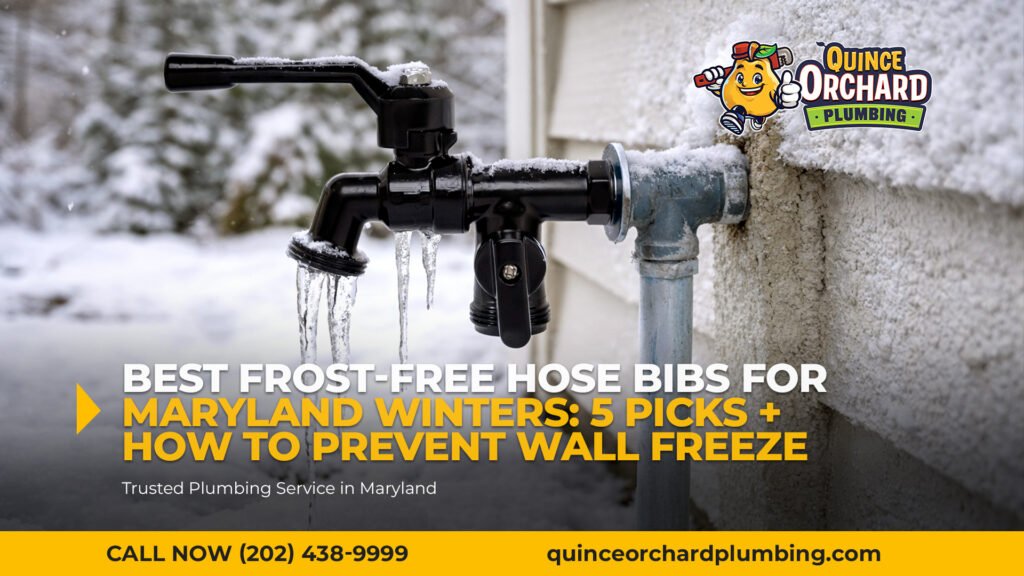
Outdoor Spigot Leaking Inside the Wall? Freeze Damage Signs + What to Do Next
If you suspect an outdoor spigot leaking inside the wall, treat it as urgent. A hidden leak can soak insulation, rot wood, and trigger mold long before you see a puddle. However, you can reduce damage quickly if you take the right steps in the first 10 minutes. This guide is written for homeowners in Gaithersburg (20878) and nearby Montgomery County areas including Rockville, Germantown, North Potomac, Darnestown, Montgomery Village, Potomac (north), Derwood, Kentlands, and Washington Grove. Estudio de Mercado – Quince Orc… Outdoor spigot leaking: why it often happens after a freeze An outdoor spigot leaking inside the wall usually comes from freeze damage. When water freezes in the pipe, it expands and cracks the line or fitting behind the wall. Then, when temperatures rise (or you turn the spigot on), the pipe leaks quietly into the wall cavity. Additionally, “frost-free” hose bibs can still freeze if you leave a hose, splitter, or timer attached. If the faucet can’t drain, it can still burst. WSSC specifically recommends disconnecting hoses as part of winter readiness: https://www.wsscwater.com/winterready Outdoor spigot leaking inside wall: freeze damage signs If you see any of these, assume the leak is real until you prove otherwise: 1) Damp drywall or bubbling paint near an exterior wall First, check the wall behind the spigot line (often in a basement, utility room, or crawlspace). Bubbling paint, soft drywall, or staining can show up quickly. 2) Musty smell that wasn’t there before Next, trust your nose. A new musty odor often means wet insulation or hidden moisture. 3) Water appears only when you use the spigot If water shows up shortly after you open the faucet, you likely have a split pipe or cracked fitting behind the wall. 4) Dripping from the rim joist or ceiling below Meanwhile, water can travel along framing and appear far from the break. 5) Sudden water bill jump Finally, an outdoor spigot leaking behind a wall can run continuously and waste a surprising amount of water. Outdoor spigot leaking: what to do in the first 10 minutes Step 1: Shut off water to the spigot (or shut off the main) First, look for a dedicated interior shutoff feeding the spigot (many homes have one near the rim joist). Turn it off. If you can’t find a dedicated shutoff, turn off the main water shutoff to the home. It’s better to lose water briefly than to feed a hidden leak. Step 2: Open the outdoor spigot to relieve pressure Next, open the outdoor faucet to drain the line. This reduces pressure and slows ongoing leaking. Step 3: Remove hoses, splitters, and timers Then, disconnect everything from the spigot so it can drain properly. Step 4: Check the interior side for active dripping After that, look behind the wall from inside (basement/crawlspace). Use a flashlight and check insulation, wood, and pipe joints. Step 5: Start drying right away if anything is wet Finally, dry and ventilate the area. For cleanup guidance after water events, see EPA: https://www.epa.gov/mold If you suspect an outdoor spigot leaking inside the wall, call Quince Orchard Plumbing for fast diagnosis and Water Line Repair in Gaithersburg and Montgomery County, MD. Outdoor spigot leaking: quick checks that confirm the source Outdoor spigot leaking: faucet body vs pipe behind the wall Dry the area and test patterns: Outdoor spigot leaking: the “thaw day” clue Freeze-cracked pipes often leak more when ice thaws. Therefore, many homeowners notice the problem on the first warmer day after a cold snap. Outdoor spigot leaking: optional meter check If you can access the water meter: If the meter shows flow and you can’t locate the leak, call a pro and avoid guesswork. Outdoor spigot leaking: what NOT to do When you suspect an outdoor spigot leaking inside the wall, avoid these mistakes: Outdoor spigot leaking: the right fix (what a plumber typically does) 1) Replace the hose bib with a frost-free model (correct length) If the spigot is outdated or keeps freezing, replacement is often the best long-term solution. A plumber chooses the correct stem length so the shutoff point sits inside conditioned space. Additionally, they install it so it drains properly. 2) Repair the split pipe or fitting inside the wall If the line cracked behind the wall, the correct repair usually includes: That’s exactly the type of work covered under Water Line Repair. 3) Add or replace an interior shutoff valve If your home lacks a reliable interior shutoff for the spigot, adding one makes winterizing easier and reduces future risk. 4) Confirm backflow protection (when needed) Outdoor hose connections can create back-siphon risk if you attach sprayers/chemicals. If you want potable-water safety evaluated, we can help through Backflow Prevention Services. Outdoor spigot leaking: when to call a plumber immediately Call right away if: For fast, safe repair, start here: Water Line Repair. If you suspect an outdoor spigot leaking inside the wall, call Quince Orchard Plumbing for fast diagnosis and Water Line Repair in Gaithersburg and Montgomery County, MD. Outdoor spigot leaking: how to prevent wall freeze damage next season 1) Disconnect hoses early First, remove hoses, splitters, and timers before the first hard freeze (WSSC guidance): https://www.wsscwater.com/winterready 2) Use the interior shutoff + drain Next, close the interior valve and open the outdoor spigot until it drains fully. 3) Insulate and air-seal the rim joist area Meanwhile, drafts can freeze pipes even when the basement feels “not that cold.” 4) Upgrade to frost-free if you’ve had one freeze failure Finally, one freeze repair often costs more than doing the upgrade correctly once. Service Area (Maryland only) Quince Orchard Plumbing serves Gaithersburg (20878), Rockville, Germantown, North Potomac, Darnestown, Montgomery Village, Potomac (north), Derwood, Kentlands, and Washington Grove. Estudio de Mercado – Quince Orc…