
If you own a home in Gaithersburg (or nearby places like Rockville, Germantown, North Potomac, Kentlands, Montgomery Village, and the rest of North Montgomery County), you already know how quickly a normal rainy week can turn into basement water problems—especially in neighborhoods with older plumbing, mature trees, and lots of stormwater.
At Quince Orchard Plumbing, we’ve been serving local homeowners and property managers for 10+ years, and the pattern is always the same: most “basement floods” aren’t random. They’re predictable. And once you understand why your basement gets water, you can choose the right plumbing upgrades to stop it—without throwing money at fixes that don’t match the problem.
Below, I’ll walk you through the upgrades that make the biggest difference for basement flooding prevention, with a focus on what’s realistic for homes in the Gaithersburg area (many of them 25–40 years old and due for proactive plumbing updates).
Step 1: Identify what kind of basement flooding you’re dealing with

Before you upgrade anything, I separate basement “flooding” into three buckets. This matters because the best solution depends on the source:
1) Groundwater seepage
Water shows up after heavy rain, often near foundation walls or the lowest corner.
✅ Best matches: sump pump system, drainage improvements, discharge routing.
2) Sewer backup
Water comes up through a floor drain, basement toilet, shower, or sink—sometimes with odor.
✅ Best matches: sewer-line evaluation, blockage/root solutions, and (in some cases) backwater protection.
3) Plumbing failure
Water appears when it hasn’t rained—from a water heater, supply line, washing machine hose, or hidden leak.
✅ Best matches: shutoff upgrades, leak detection, water line repair, and water-heater prevention.
If you’re unsure which one applies, start with this rule:
- Only during storms → likely groundwater or sewer stress
- Anytime, rain or shine → likely plumbing failure
The most effective plumbing upgrades for basement flood prevention
1) Upgrade your “risk visibility” first: leak sensors + high-water alarms
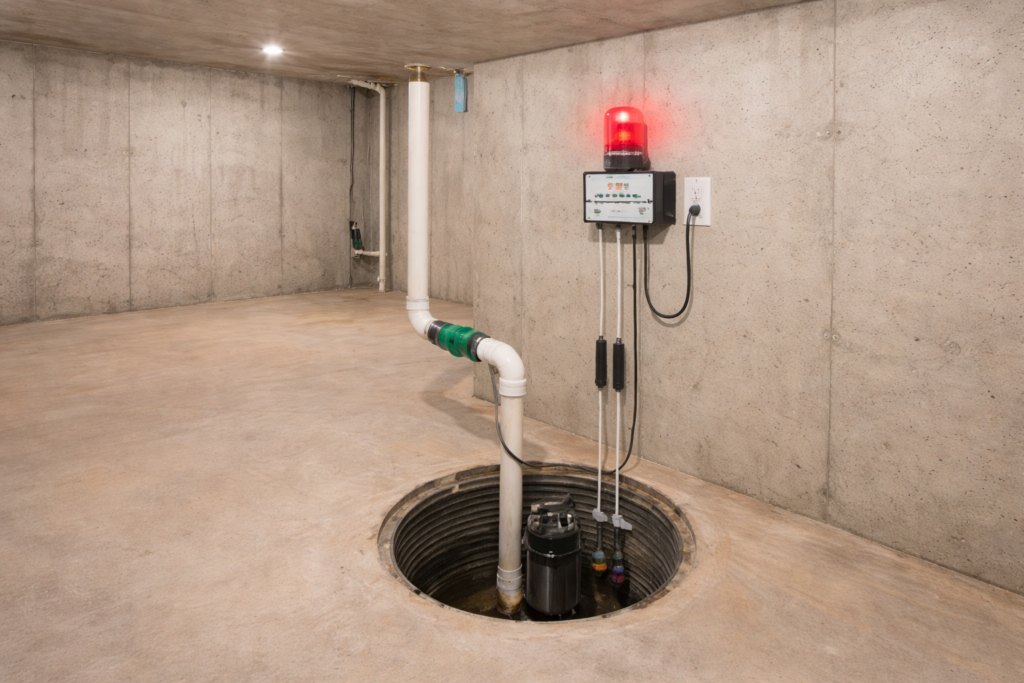
This is the simplest win and one of the highest-ROI upgrades.
What I recommend for Gaithersburg basements:
- High-water alarm near the sump pit (or lowest point)
- Leak sensors near the water heater, laundry area, basement bath, and utility sink
- Optional: sensors that alert your phone (great for busy homeowners and property managers)
Why this matters: early detection turns a “disaster” into a “minor cleanup.”
And if your basement flood risk is tied to aging plumbing, sensors are your first warning system.
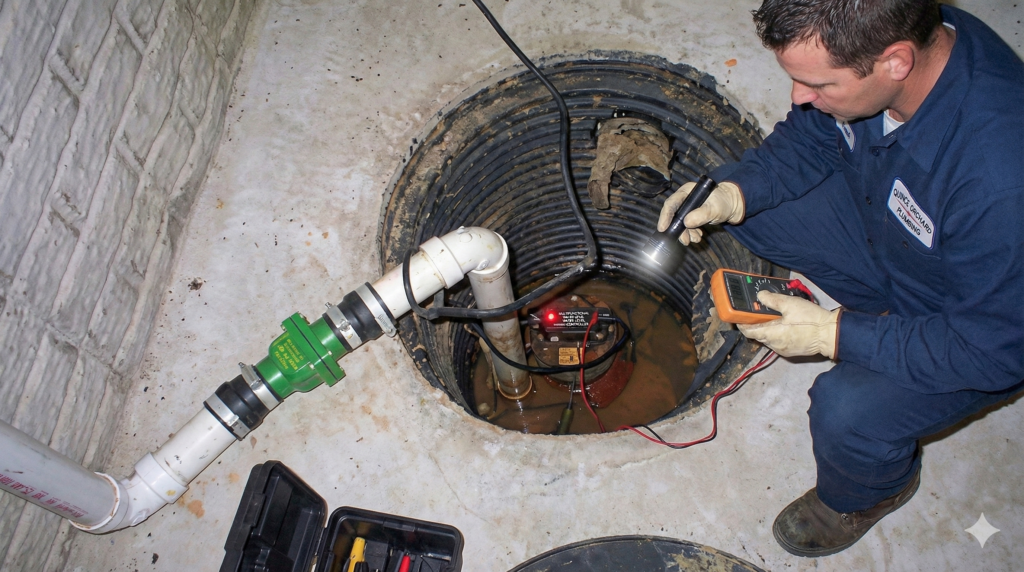
2) Sump pump improvements: not just “a pump,” but a system
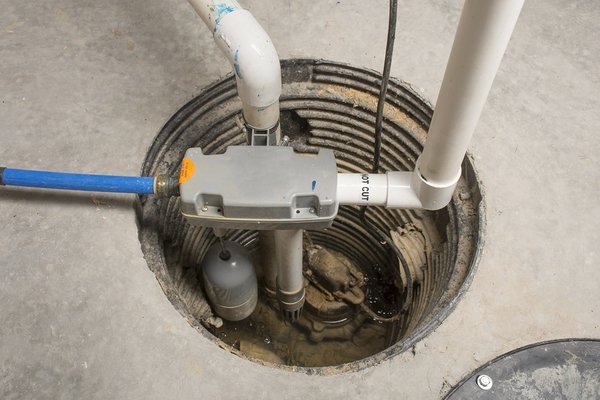
If groundwater is the main issue, you want a sump setup that’s designed to protect your home—especially during the exact storms that strain power and drainage.
Key upgrades I look for:
- Correct pump sizing (too small = overwhelmed; too big without a proper pit = short cycling)
- Reliable check valve on the discharge line
- Discharge routing that moves water far away from the foundation (this is where many systems fail)
- Backup plan (more on this next)
If you already have a sump pump, don’t assume it’s “fine.” Many older pumps are undersized, or they discharge too close to the foundation and recycle water right back toward the slab.
3) Add a backup plan: battery backup + redundancy
Storm season is when you need protection most—and it’s also when power outages are most likely.
If you rely on a sump pump to protect your basement, consider:
- Battery backup sump system
- Secondary pump (set slightly higher) for redundancy
- High-water alarm so you get warned before water reaches finished areas
For finished basements in Gaithersburg townhomes and single-family homes, redundancy is often what separates “we caught it in time” from “we replaced drywall.”
4) Sewer line protection: the upgrade that prevents the worst kind of basement flooding
Sewer backups are messy, expensive, and stressful—especially for homes with basement bathrooms or floor drains.
In our area, backups often come from:
- roots in older lines
- grease buildup
- partial collapses or offsets
- recurring blockages that worsen during heavy rain
This is where two services become essential:
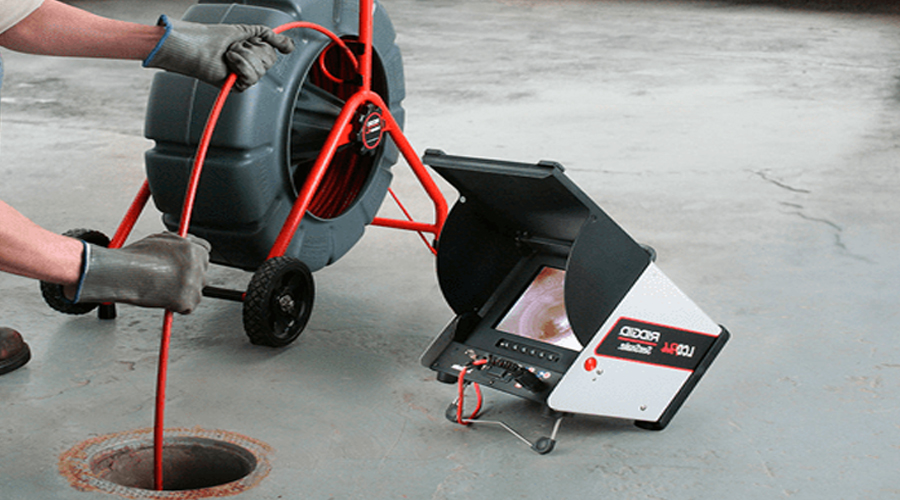
- Diagnose the line with a camera:
👉 Video Camera Sewer Inspection
A camera inspection shows what’s actually happening in the pipe—roots, breaks, bellies, or blockages—so you’re not guessing. - Repair or replace the damaged section when needed:
👉 Sewer Line Repair & Replacement
If the line is compromised, “snaking it again” may only buy time. A targeted repair can eliminate repeat backups.
If your basement has ever backed up through a floor drain or toilet, I’d treat it as a high-priority plumbing issue—not something to wait on.
5) Water line upgrades: prevent surprise flooding from supply-side failures
Not all basement flooding is storm-related. In many homes, the worst floods come from pressurized water lines: when something fails, it fails fast.
Common culprits:
- aging shutoff valves that don’t fully close
- old copper with pinhole leaks
- failed fittings
- corrosion, shifting, or past DIY work
If you’ve had a mystery leak, low pressure, or signs of corrosion, get ahead of it with:
👉 Water Line Repair
A proactive water-line fix can prevent the kind of basement flood that happens when nobody is home.
6) Water heater prevention: one of the most overlooked basement flood risks
Water heaters quietly cause major basement floods, especially when:
- the tank is older
- the relief valve discharges unnoticed
- the unit rusts from the bottom and finally gives out
If your water heater is in the basement, flood prevention means:
- replacing aging tanks before failure
- checking the T&P relief valve and drain pan setup (when applicable)
- ensuring proper connections and shutoff condition
If you’re unsure whether your unit is near end-of-life, start here:
👉 Water Heater Services
This is one of the easiest “prevent a basement flood” moves you can make.
7) Backflow vs “backups”: don’t confuse the terms
Homeowners often say “backflow” when they mean “sewer backup.” They’re not the same.
- Backflow prevention protects the clean water supply from contamination.
- Sewer backup prevention focuses on stopping wastewater from coming back into the home.
If you’re a homeowner, property manager, or HOA dealing with compliance, testing, or installation needs, our dedicated service is here:
👉 Backflow Prevention Services
Even when it’s not a “basement flood” issue, it’s a critical safety and compliance upgrade for many properties.
The upgrade roadmap I recommend for Gaithersburg homes
If you want the fastest protection (today/this week)
- Leak sensors + high-water alarm
- Inspect/upgrade sump discharge routing
- Check shutoff valve accessibility + function
If you’ve had storm-related water in the basement
- Sump pump improvement + backup plan
- Evaluate whether water is groundwater vs drain-related
- Add redundancy for finished basements
If you’ve had sewer backup or drain overflow
- Start with 👉 Video Camera Sewer Inspection
- Resolve root cause with 👉 Sewer Line Repair & Replacement
If your “flood” is really plumbing failure
- 👉 Water Heater Services
- 👉 Water Line Repair
- Add sensors and verify shutoff reliability
Why this matters specifically in our service area

Our market in Gaithersburg and nearby North Montgomery County has:
- lots of homeowners (not just renters)
- many older homes that are due for repair/replacement cycles
- busy households that value fast response, clean work, and fair pricing
- property managers and HOAs that need reliable vendors + clear reporting
That’s why we focus on upgrades that don’t just “handle emergencies,” but actually reduce repeat events—because in a market like ours, the best outcome is peace of mind.
Worried about basement flooding in Gaithersburg? Schedule a fast inspection with Quince Orchard Plumbing today—so you’re protected before the next storm hits.
Signs you should call a plumber before the next big storm
If you notice any of the following, I wouldn’t wait:
- gurgling drains during heavy rain
- water around floor drains
- recurring clogs that “come back”
- sump pump cycling constantly or not at all
- water heater older than you’re comfortable trusting
- shutoff valve that’s stuck or doesn’t fully stop flow
A quick inspection often prevents a five-figure cleanup.