
If you’ve ever stared at that bright yellow energy label on a water heater and thought, “Okay… but what does this actually mean for my bill?”—you’re not alone. I’ve seen plenty of homeowners in Maryland pick a unit based on price or brand, then wonder why their utility costs don’t improve (or get worse).
Here’s how I read a water heater’s energy label so you can compare models accurately, choose the right size, and stop paying for efficiency you’ll never actually get.
What energy label you’re looking at (and where it matters)
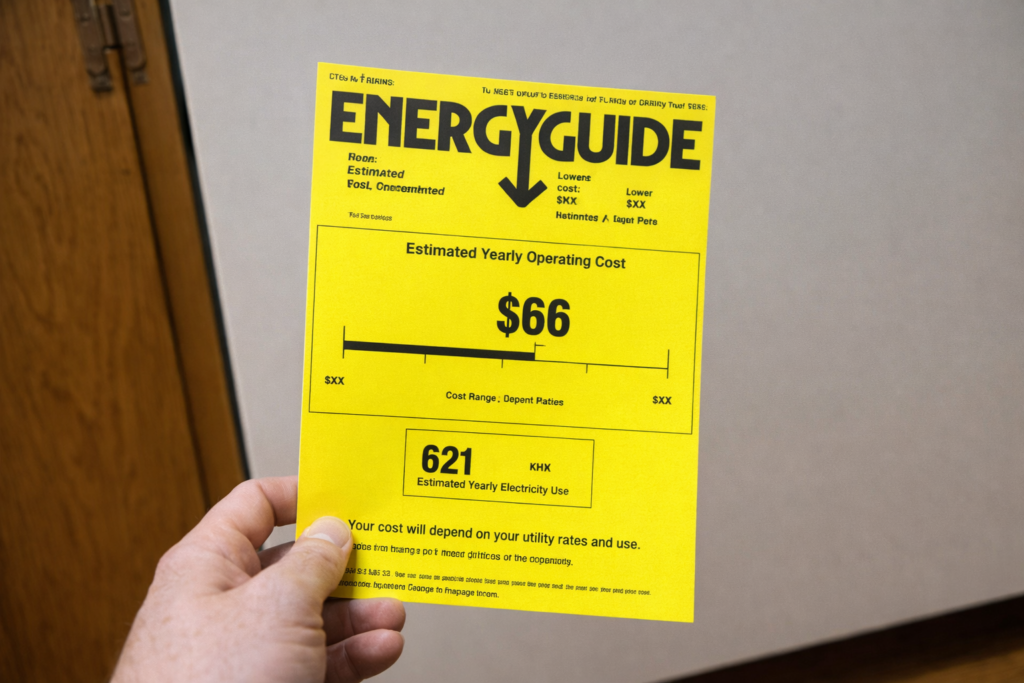
Most water heaters come with an EnergyGuide-style label that includes:
- Estimated yearly energy cost
- Estimated yearly energy use
- An efficiency metric (often UEF on many modern units)
- A comparison range (how this model stacks up vs similar models)
That label is useful—but only if you know how to interpret it for your household.
Step 1: Start with the “Estimated Yearly Energy Cost” (but don’t treat it like a promise)
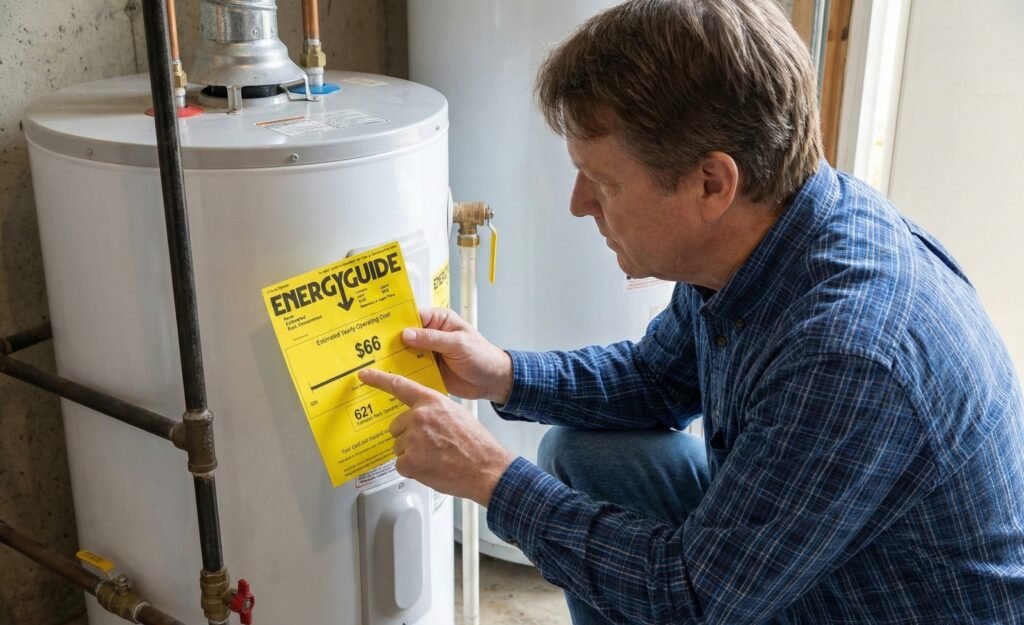
This number is a baseline estimate, not your actual bill. It assumes typical usage patterns, standard rates, and standardized testing conditions.
I use it for one thing:
✅ Comparing apples-to-apples models (same fuel type, similar capacity)
I don’t use it for:
❌ Predicting your exact bill to the dollar
If you’re comparing two similar tanks and one has a noticeably lower yearly cost estimate, that’s often the first sign you’re looking at a better efficiency/value option.
Step 2: Check the efficiency metric (the number that usually predicts long-term cost)
Most newer labels reference an efficiency rating (commonly UEF). In simple terms:
- Higher efficiency rating → less energy used for the same hot water output
- Lower efficiency rating → more energy waste → higher utilities over time
My rule of thumb:
If your goal is to stop overpaying, you should weigh efficiency heavily—especially if you’re in the home long-term.
If you’re not sure whether your current water heater is underperforming, leaking, or simply outdated, this is where an inspection helps:
👉 Water Heater Services
Step 3: Match the label to your household size (capacity beats “best efficiency” when you’re undersized)
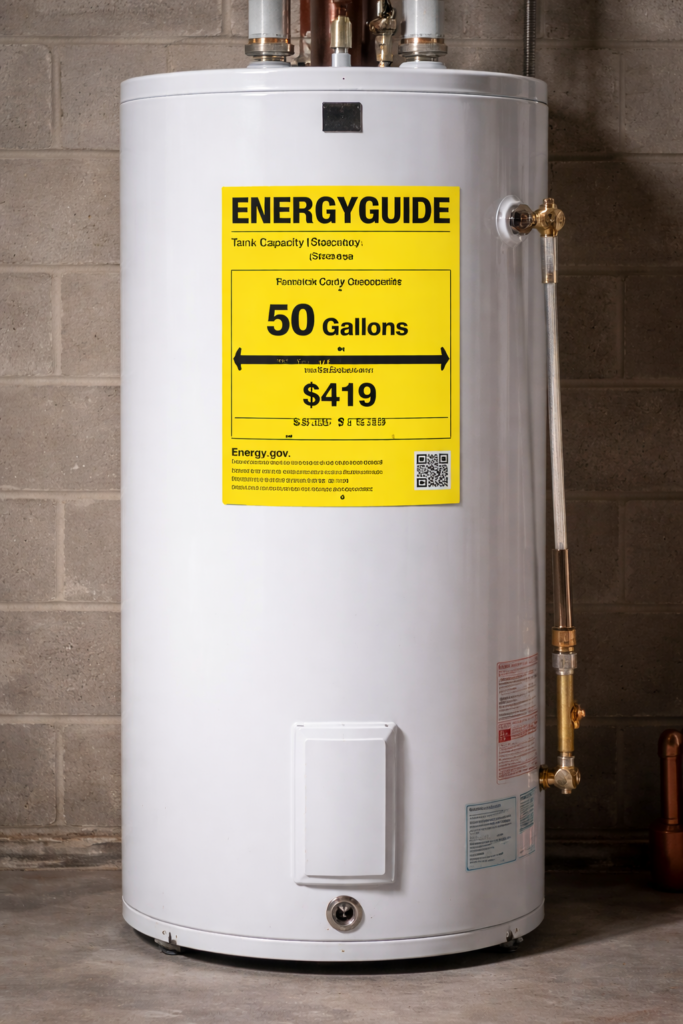
A super-efficient unit can still cost you more if it’s the wrong size.
Here’s why: if your household “outgrows” the heater, you end up doing things that increase cost and wear:
- cranking temperature higher than needed
- longer recovery cycles
- running the system harder and more often
What I look for:
- Tank capacity (gallons) on tank models
- On tankless or advanced systems, the label/specs should still help you compare performance and energy use
If you constantly run out of hot water, choosing purely based on efficiency can backfire. You need right-sized + efficient.
Step 4: Use the comparison range the right way (it tells you if you’re near the top or bottom)
The label usually shows a scale comparing your model to similar units. This is one of the quickest “at a glance” checks:
- If your model is near the efficient end of the range → good long-term cost potential
- If it’s near the low end → cheaper upfront, often more expensive monthly
When two models have similar price tags, the one positioned better on that comparison range often wins over time.
Need a 24/7 emergency plumber in Gaithersburg? Call Quince Orchard Plumbing for fast dispatch, clean service, and a clear plan to stop the damage now.
Step 5: Know which type of water heater typically saves the most (without getting too “salesy”)
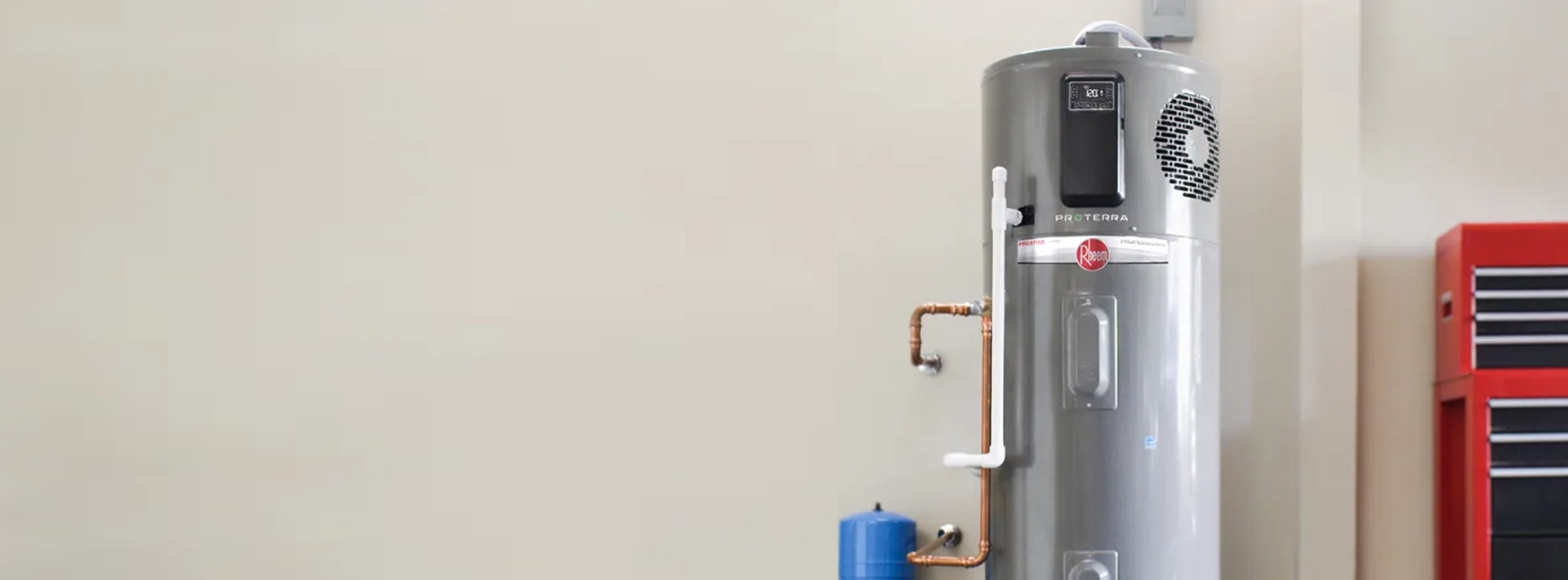
Different technologies land on different parts of the efficiency spectrum. In many homes:
- Basic electric tank units can be cheaper upfront but cost more monthly
- Higher-efficiency systems may cost more upfront but reduce long-term utilities
- Gas vs electric can behave very differently depending on usage and setup
The energy label helps you compare within a category, but if you’re switching categories (like changing fuel type or upgrading to a different system), you’ll want guidance so you don’t end up with the wrong fit.
That’s exactly what we do during an evaluation:
👉 Water Heater Services
The hidden reasons people overpay (even with a “good” energy label)
This is the part most labels don’t tell you: your plumbing conditions can make a great heater perform like an average one.
The big culprits:
- Sediment buildup (especially in tank heaters) → reduces efficiency and shortens life
- Temperature set too high → higher standby losses and higher bills
- Leaking hot water lines or fixtures → constant reheating
- Low water pressure or supply issues → inconsistent performance and longer run time
- Aging valves or corroded lines that restrict flow
If you suspect supply-side problems are affecting performance, it may be a broader plumbing issue:
👉 Water Line Repair
“Stop overpaying” checklist (fast wins that usually show up on the next bill)
Here’s what I recommend before you replace anything:
- Set water heater temperature to a safe, reasonable level (most households don’t need extreme temps)
- Fix dripping hot-side faucets (a small leak becomes a constant energy drain)
- Flush/maintain the heater if sediment is likely
- Insulate accessible hot-water piping in utility areas (simple improvement)
- If the unit is older and struggling, don’t keep feeding it repair money blindly—compare replacement options using the label
And if you want the quickest path to a clear recommendation:
👉 Water Heater Services