

If your current disposal sounds like a blender full of rocks, you’re not alone. In many Montgomery County, MD homes—especially with stainless sinks or older plumbing—a “standard” disposer can feel way louder than it needs to be.
In this guide, we’ll walk you through 7 reliable, quieter-running picks for 2026, plus the pre-install checklist that prevents leaks, clogs, and the classic “it doesn’t fit under my sink” surprise.
Quick plumber mindset: If your kitchen drain backs up often (even after you replace the disposal), the problem may be downstream—not the disposer. That’s when a Video Camera Sewer Inspection can save you money by showing exactly what’s happening in the line.
What makes a garbage disposal “quiet” (and why some are still loud)
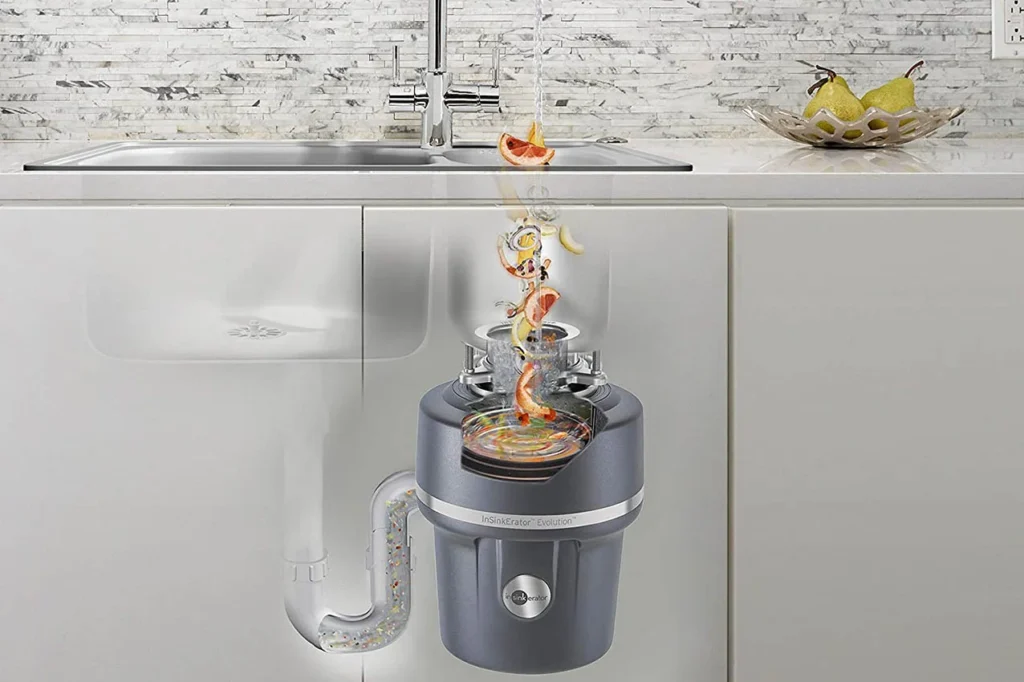
Quiet disposals typically combine:
- Sound insulation around the grind chamber
- Anti-vibration mounting
- Multi-stage grinding (finer particles = fewer jams and less rattling)
- A motor design tuned for smoother operation
What makes them loud (even “good” models)?
- Thin stainless sinks that amplify vibration
- Loose mounting rings or old plumbing connections
- Hard items (bones, fruit pits) or fibrous waste (celery, corn husks) bouncing in the chamber
7 Reliable, Quieter Picks for 2026 (with who each is best for)
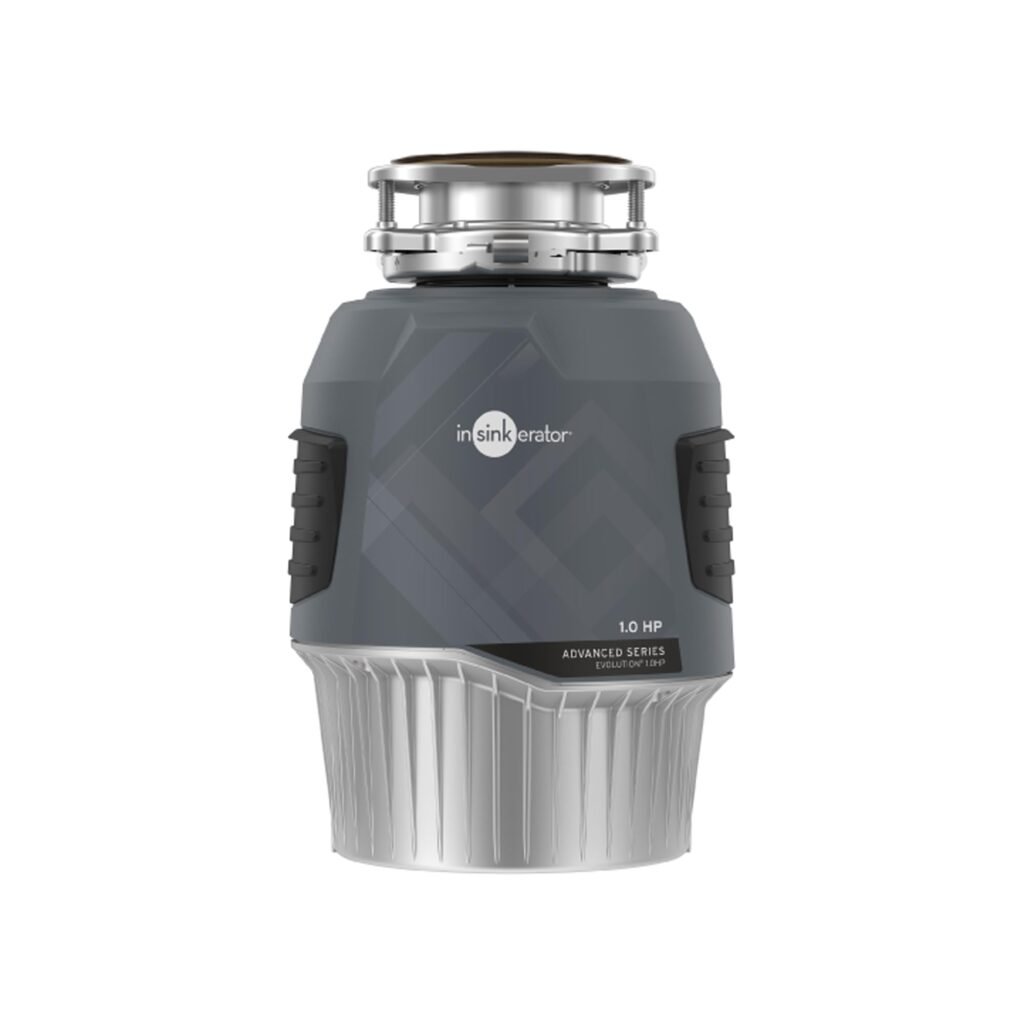
1) InSinkErator Evolution 1HP (Advanced Series) – Best overall for quiet + heavy use
Best for: households that cook a lot and want a premium “quiet but powerful” setup.
Why it’s a strong pick: multi-stage grinding and sound-dampening design make it a top performer without the harsh noise profile you get from many basic units.
2) Moen GX Series 1HP (GXL1000C) – Best for fast grinding with noise control
Best for: busy kitchens that want quick grinding, fewer jams, and a quieter housing.
Why it’s a strong pick: Moen’s sound-deadening design + high-speed performance is a great combo when you want power without the roar.
3) Moen Host Series 3/4HP (GXS75C / similar Host models) – Quietest feel for many homes
Best for: homeowners who are noise-sensitive and want a noticeably calmer sound profile.
Why it’s a strong pick: strong day-to-day performance, quieter operation, and easy replacement compatibility in many setups.
4) InSinkErator Evolution Cover Control Plus (Batch Feed, 3/4HP) – Quiet + safer operation
Best for: families who want a quieter unit and prefer batch-feed safety (it only runs when the cover is in place).
Why it’s a strong pick: batch feed tends to reduce the “open-chamber” noise and keeps utensils out more effectively.
5) InSinkErator Evolution 0.75HP (Advanced Series) – Best “sweet spot” for most homes
Best for: typical households that want quieter operation without paying for 1HP.
Why it’s a strong pick: strong enough for most food scraps, quieter than entry-level disposals, and usually fits more cabinets than taller 1HP bodies.
6) KitchenAid 3/4HP Continuous Feed (KCDS075T line) – Quiet insulation + reliable daily performance
Best for: homeowners who want a dependable midrange disposer with sound insulation and steady performance.
Why it’s a strong pick: solid balance of noise control and everyday grinding capability.
7) Waste King L-8000 (1HP) – Best value for power + fast grinding (with some noise caveats)
Best for: people who want 1HP performance at a competitive price and don’t mind a slightly sharper sound profile.
Why it’s a strong pick: fast, strong grinding with insulation—just keep expectations realistic: high-speed units can sound “higher-pitched,” even when insulated.
Need help choosing or installing a garbage disposal in Montgomery County, MD? Call Quince Orchard Plumbing for fast, local service.
What to check before you buy (so the install doesn’t turn into a mess)
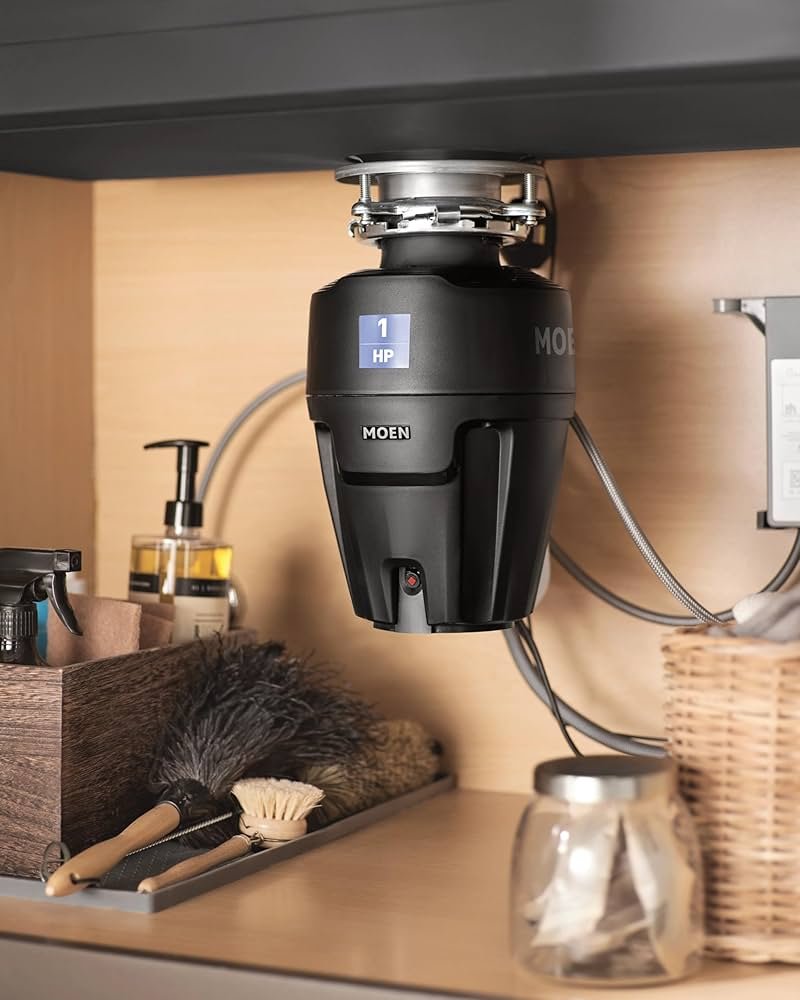
1) Under-sink clearance (this is the #1 surprise)
Measure from the sink bottom to:
- the cabinet floor
- nearby drawers/rollout shelves
- the trap and drain line
Quiet models with more insulation can be taller/wider than basic disposals.
2) Mounting compatibility (saves time + prevents leaks)
Check whether your existing unit uses:
- a 3-bolt mount (common on many premium units)
- a brand-specific mounting ring
If you’re replacing an older unit, choosing a model that matches your existing mount can make replacement much faster.
3) Power: corded vs hardwired
Look under your sink:
- If you have a plug-in outlet, a disposer with a power cord is easy.
- If it’s hardwired, you’ll either hardwire the new unit or use the correct conversion method.
If you’re not comfortable with electrical work under a wet sink cabinet, call a pro.
4) Dishwasher connection (knockout plug + hose routing)
If your dishwasher drains into the disposer:
- confirm the disposer supports a dishwasher inlet
- remember the knockout plug must be removed during install (a very common “my dishwasher won’t drain” mistake)
5) Drain setup: trap condition + discharge alignment
A quieter disposer won’t help if the drain is already struggling. Before install:
- verify the P-trap isn’t corroded or misaligned
- check for evidence of past leaks or sloppy repairs
- confirm the outlet height matches your drain line
If you’re seeing chronic clogs, slow drains, or gurgling, the issue may be deeper in the system—sometimes requiring Sewer Line Repair & Replacement after proper diagnosis.
6) Noise is often the sink—not the disposer
Thin stainless sinks amplify vibration. Two upgrades that help a lot:
- a better sink baffle/splash guard
- vibration damping pads (or a sink that already has factory insulation)
7) Septic vs municipal sewer (important)
If you’re on septic, you’ll want to be more conservative about what goes down the drain and how often the disposer is used. A disposal can increase solids load on the tank.
Horsepower guide (simple and practical)
- 1/2 HP: light use, softer scraps, smaller households
- 3/4 HP: best all-around for most homes
- 1 HP: frequent cooking, heavier scraps, fewer jams—usually quieter than cheap units, but not always “silent”
Need help choosing or installing a garbage disposal in Montgomery County, MD? Call Quince Orchard Plumbing for fast, local service.
Quiet kitchen use rules (this prevents jams and sewer headaches)
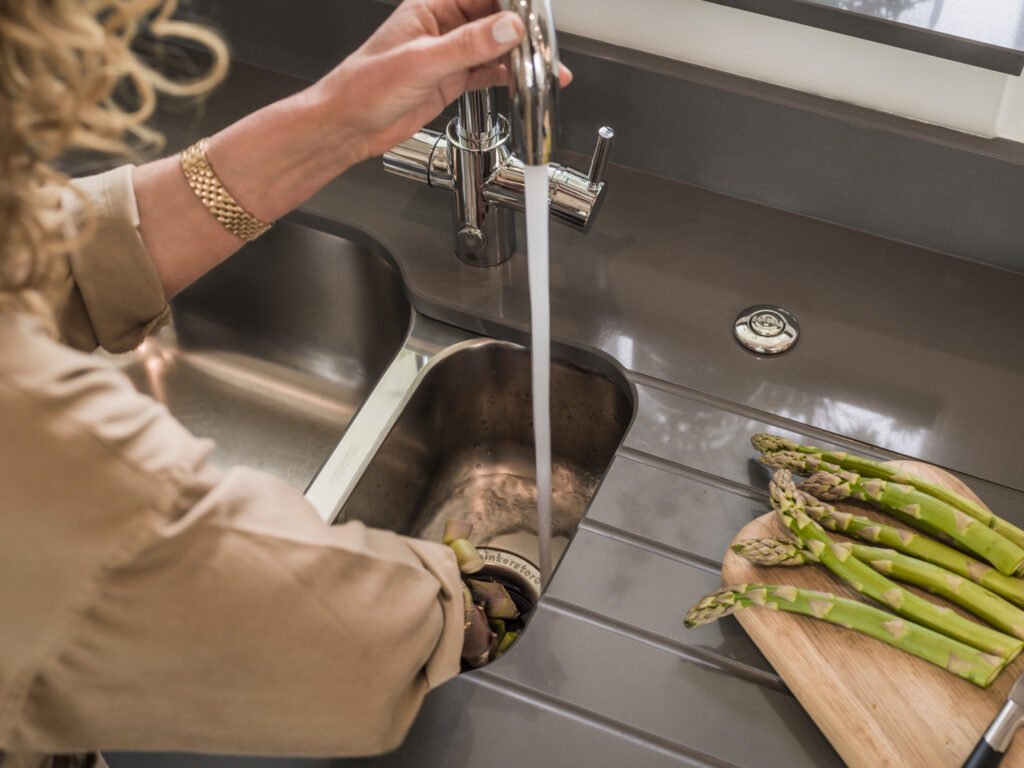
Do:
- run cold water before, during, and after grinding
- feed scraps gradually
- grind small amounts, not a full plate at once
Avoid grinding:
- grease, fat, coffee grounds (in bulk)
- fibrous foods (celery, onion skins, corn husks)
- large bones, fruit pits
If you have recurring backups (especially affecting multiple fixtures), schedule a Video Camera Sewer Inspection—it’s the fastest way to confirm roots, buildup, offsets, or a belly in the line.
When to call a plumber (not a disposal problem)
Call us if you have:
- water leaking at the sink flange or drain connections
- repeated clogs even after replacing the disposal
- foul odors that keep coming back
- gurgling across multiple drains
And if you discover any supply-side leaks under the sink (shutoff valve, supply line, corrosion), that’s a Water Line Repair issue—don’t ignore it.
For kitchen remodels or plumbing safety questions (including cross-connection concerns), our Backflow Prevention Services can help you verify the setup is safe and compliant.
Service Area (Maryland only)
Quince Orchard Plumbing serves Gaithersburg (20878), Rockville, Germantown, North Potomac, Darnestown, Montgomery Village, Potomac (north), Derwood, Kentlands, and Washington Grove.