
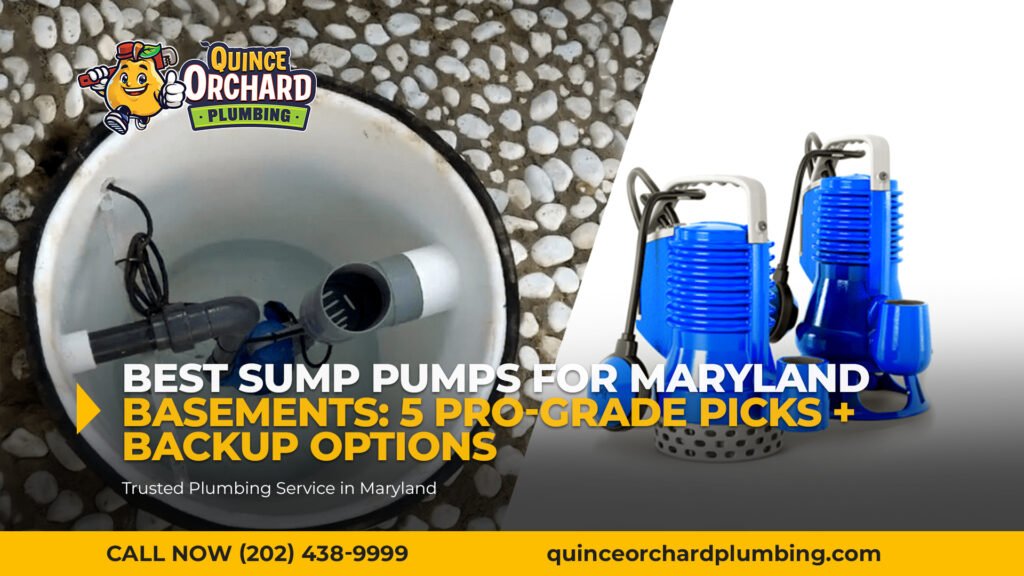
If you have a basement in Maryland, you already know the pattern: heavy rain, saturated soil, rising groundwater—and suddenly the sump pit becomes the most important “appliance” in the house. In Montgomery County (Gaithersburg 20878 and nearby areas like Rockville and Germantown), we see sump pumps fail for the same reasons over and over: undersized pumps, poor float setups, no backup, and discharge lines that freeze or clog.
This guide breaks down what matters in real homes, then gives you five pro-grade sump pump picks plus the backup options that actually prevent basement flooding during storms and power outages.
If you want a pro to size it, install it cleanly, and verify your discharge setup, we can help through Water Heater Services (we frequently coordinate water-heater protection and basement mechanical areas when water intrusion is involved).
First: confirm you actually need a sump pump solution (not a plumbing emergency)
A sump pump is for groundwater and rainwater seepage, not plumbing failures.
Call a plumber right away if you notice:
- Water that’s hot, rust-colored, or smells like water-heater discharge
(Start here: Water Heater Services) - A sudden rush of water that seems tied to a supply leak
(Start here: Water Line Repair) - Water with a sewage smell, toilet bubbling, or floor drain backups
(Start here: Video Camera Sewer Inspection and Sewer Line Repair & Replacement)
If it’s clean groundwater in the sump pit, keep reading.
What “pro-grade” really means for sump pumps
When we say “pro-grade,” we’re usually looking for:
- Cast iron construction (durability + better heat dissipation)
- A reliable float/switch design (this is where cheap pumps fail)
- Standard 1-1/2″ discharge compatibility
- Solid handling suitable for typical sump pit debris
- A real warranty and parts support
For a deep, homeowner-friendly overview of sump pumps and what to look for, This Old House has a helpful guide (external):
This Old House – Best Sump Pumps
Need a sump pump upgrade or backup system installed? Call Quince Orchard Plumbing for fast, local help in Montgomery County, Maryland.
How to choose the right sump pump for a Maryland basement
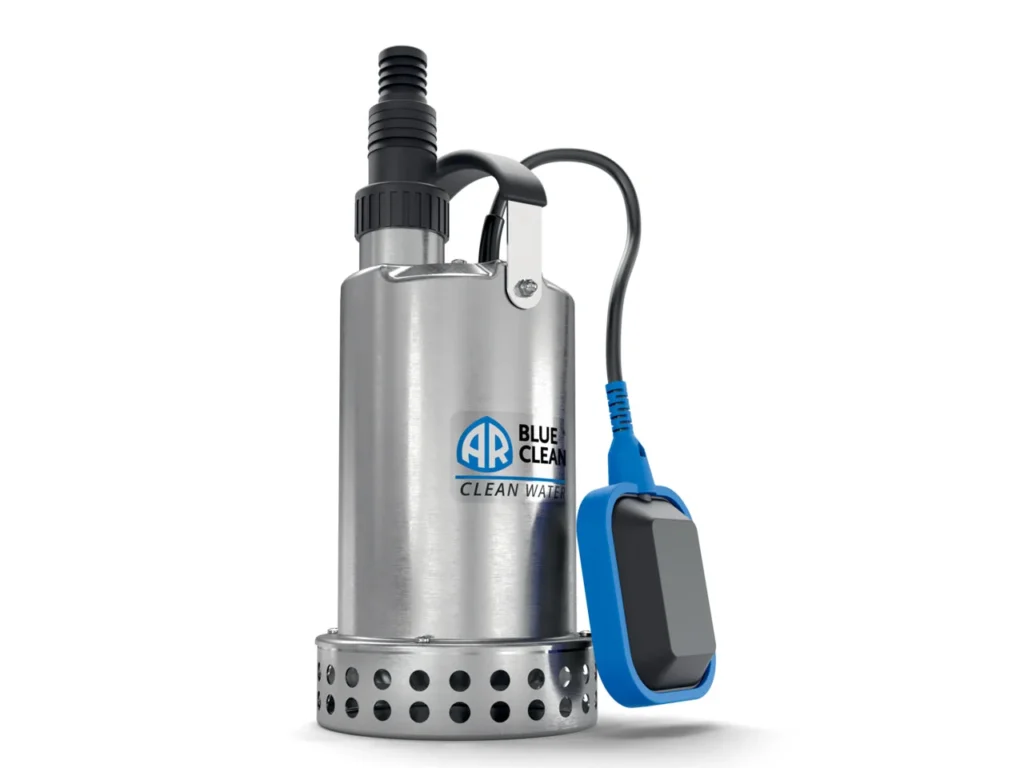
1) Pick submersible for most basements
Submersible pumps are quieter, safer, and more typical for modern installs. Pedestal pumps can work, but they’re less common for finished basements.
2) Size by your “worst day,” not your average day
Most homes do well with a 1/3 HP cast iron pump. If you have a high water table, frequent heavy inflow, or a history of storm flooding in North Potomac, Darnestown, or Montgomery Village, stepping up to 1/2 HP can make sense—especially if your discharge run is long or has significant vertical lift.
3) Don’t ignore the switch
The pump body matters, but the float/switch setup is often the real failure point.
- Vertical floats are great in tight pits (less side-to-side travel).
- Tethered floats can be very reliable when there’s enough pit space to move freely.
- Dual-float setups add redundancy (especially on backups).
4) Make sure your discharge is done right
A great pump still fails if the discharge is wrong.
- Include a check valve to prevent backflow
- Discharge water away from the foundation
- Protect against freezing in winter (common in Maryland cold snaps)
The 5 pro-grade picks we like (and why)
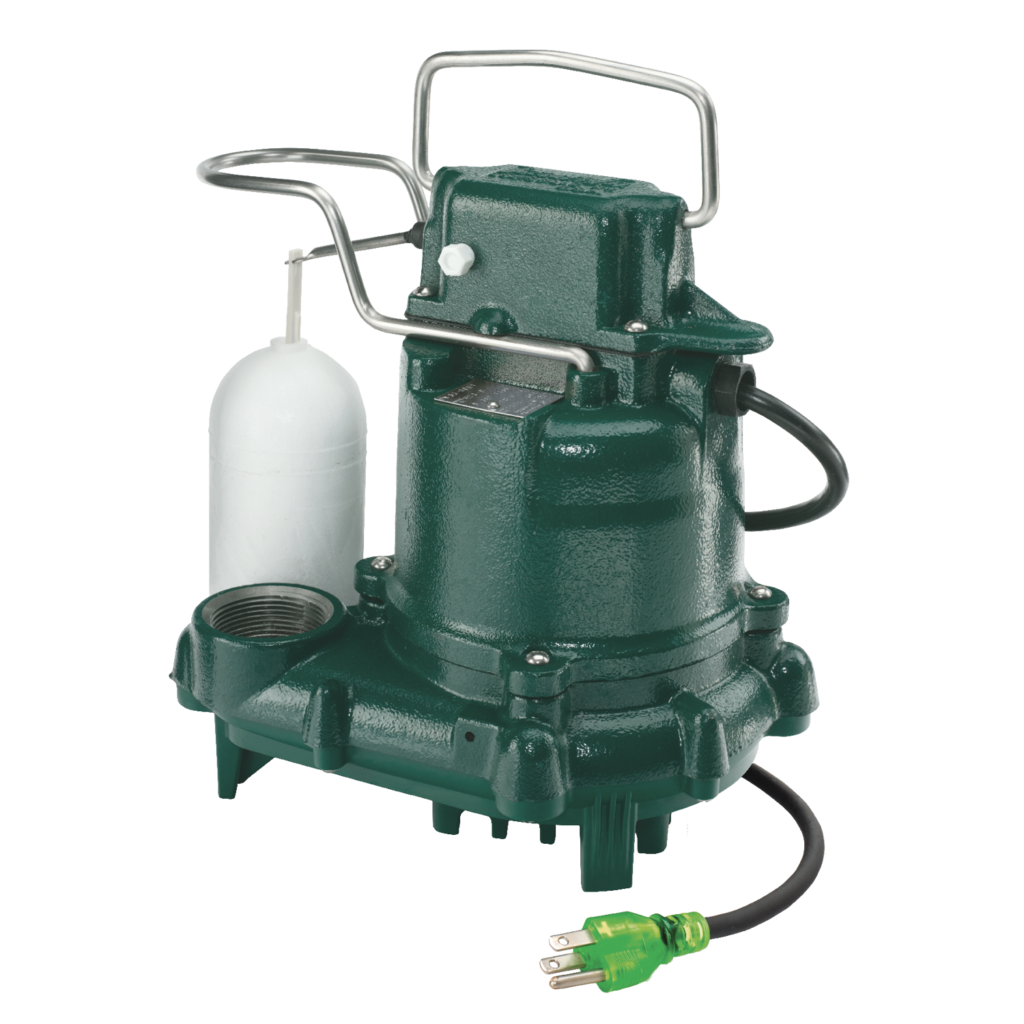
These are widely used, contractor-trusted models. Exact configurations can vary (switch type, cord length, etc.), so match the model style to your pit and layout.
1) Zoeller M53 (cast iron, workhorse for most homes)
Best for: Most typical Maryland basements with standard seepage
Why it’s a pro favorite: Durable cast iron build, strong reliability track record, and a “just works” profile for average residential needs.
2) Liberty Pumps 257 (cast iron, excellent for tight sump pits)
Best for: Smaller pits or setups where a compact float design matters
Why it’s pro-grade: Liberty’s heavy cast iron construction and professional switching options make it a great fit when space is limited.
3) Little Giant 6EC-CIA-RF / 6-CIA (cast iron, continuous-duty style)
Best for: Homeowners who want a robust cast-iron pump with a long service life
Why it’s pro-grade: Cast iron body and a solid reputation in sump/light effluent applications (ideal for many residential pits).
4) Zoeller M63 (step-up option when you want more performance headroom)
Best for: Homes with heavier inflow, frequent storms, or more demanding discharge runs
Why it’s pro-grade: A higher-capacity step-up that keeps you safer on the worst-weather days without jumping into extreme commercial territory.
5) Liberty Pumps 287 (step-up, high-inflow basements)
Best for: Higher water table neighborhoods, bigger pits, or homes that have overwhelmed smaller pumps
Why it’s pro-grade: A stronger class option for “my sump runs hard during storms” situations—great when you want extra margin.
Backup options (this is what prevents the disaster)
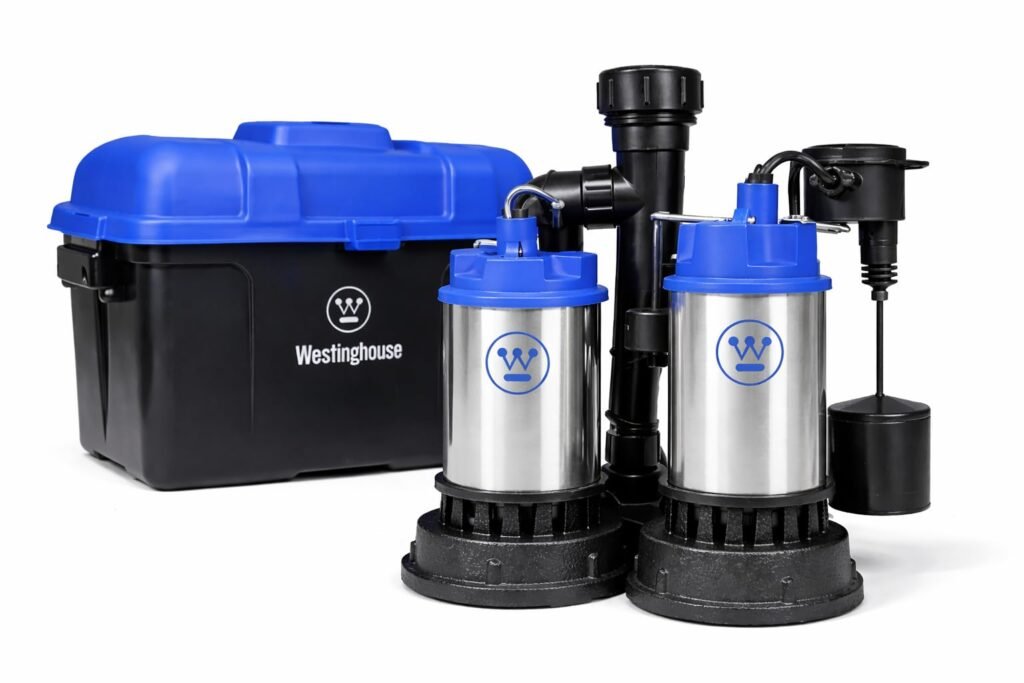
A sump pump without backup is a gamble—because storms and outages often happen together.
Option A: Battery backup pump (most common, best overall protection)
A dedicated 12V battery backup pump sits in the same pit and activates when:
- Power is out, or
- The primary pump can’t keep up
What to look for:
- Alarm + monitoring
- Good float design (dual-float preferred)
- Battery capacity appropriate for your risk level
Option B: Water-powered backup (works during outages without a battery)
Water-powered backups use municipal water pressure to move sump water out—no electricity required. This can be a strong option in areas with reliable municipal pressure and no well system.
A well-known example is Liberty’s water-powered backup concept (external):
Liberty Pumps – SumpJet (water-powered backup)
Important: Water-powered backups rely on municipal water (not ideal for well systems), and performance depends on water pressure and plumbing layout.
Option C: Backup power for your primary pump (inverter/power station or generator)
This can work well if:
- You already have a strong primary pump you trust, and
- You want to keep that same pump running during outages
But it’s only as good as your backup power plan (fuel, maintenance, runtime, safe setup).
Need a sump pump upgrade or backup system installed? Call Quince Orchard Plumbing for fast, local help in Montgomery County, Maryland.
Quick “what should I buy?” decision guide
Most Maryland homes (standard seepage, typical pit)
- Pro-grade 1/3 HP cast iron primary pump
- Add a battery backup system if you’ve ever had water on the floor or you have a finished basement
Higher-risk homes (history of flooding, high water table, heavy storms)
- Step-up primary (more capacity margin)
- Battery backup + alarm (non-negotiable)
- Consider a second layer: water-powered backup or backup power plan
Finished basements (Kentlands, Derwood, Rockville neighborhoods with finished lower levels)
- Primary pump + backup
- Leak alarms
- Make sure discharge is correct and protected from freezing
- Consider adding protection for potable system cross-connection risks after flooding with Backflow Prevention Services
Maintenance checklist (do this before storm season)
A simple inspection routine prevents most “it failed when I needed it” problems.
- Test the pump by pouring water into the pit until the float activates
- Confirm water exits outside and doesn’t recycle back toward the foundation
- Check the check valve and discharge line for vibration, leaks, or blockage
- Remove debris from the pit that could jam the float
- Test the backup system (battery health, alarms, float activation)
For a thorough inspection overview, InterNACHI has a solid guide (external):
InterNACHI – Sump Pump Operation & Inspection
DIY vs calling a pro
DIY may be reasonable if:
- You’re swapping a similar pump in an accessible pit
- You’re comfortable with check valves, discharge connections, and safe electrical shutdown
- You don’t need a new pit, new discharge routing, or backup integration
Call a pro if:
- Your basement has ever flooded (you need real sizing + backup planning)
- Your discharge line is long/complex or has freezing issues
- You want a backup system installed and tested correctly
- You’re not sure whether the problem is groundwater vs sewer backup
If you’re unsure, we can evaluate the setup and recommend the correct configuration for your home through Water Heater Services (we often address basement mechanical areas holistically) or, if drainage symptoms point to backups, start with Video Camera Sewer Inspection.
Need a sump pump upgrade or backup system installed? Call Quince Orchard Plumbing for fast, local help in Montgomery County, Maryland.
Service Area (Maryland only)
Quince Orchard Plumbing serves Gaithersburg (20878), Rockville, Germantown, North Potomac, Darnestown, Montgomery Village, Potomac (north), Derwood, Kentlands, and Washington Grove.