
If you’ve dealt with the same slow drain or clog more than once, you’ve probably asked the exact question I hear all the time in Gaithersburg: “Do I need hydrojetting, or will snaking do the job?”
Here’s the truth: both work, but they solve different problems. Snaking is often the fastest way to restore flow. Hydrojetting is usually the better choice when your goal is long-term performance—especially if buildup, grease, soap scum, or roots keep coming back.
At Quince Orchard Plumbing, our approach is simple: we show up fast, work clean, and focus on fixes that actually hold up, not just quick relief.
What “snaking” really does (and why it’s still useful)

A drain snake (auger) is designed to break through a blockage and reopen the pathway so water can move again.
Snaking is best for:
- Single, localized clogs (hair, wipes, small obstructions)
- Drains that suddenly stopped and you need flow back quickly
- Situations where buildup isn’t heavy and the pipe condition is stable
Snaking is not ideal for:
- Thick grease layers that coat the pipe walls
- Sludge/biofilm that narrows the line over time
- Root intrusion that repeatedly catches debris
- “Recurring clogs” where the pipe is damaged, bellied, offset, or collapsing
In plain terms: snaking often creates a hole through the clog, but it doesn’t always “reset” the pipe back to clean.
What hydrojetting really does (and why it lasts longer)

Hydrojetting uses high-pressure water to scour the inside of the pipe, removing:
- grease buildup
- soap scum and sludge
- food and organic residue
- scale and recurring buildup that snaking leaves behind
Hydrojetting is best for:
- Recurring clogs
- Kitchen lines with grease buildup
- Slow drains throughout the home
- Maintenance cleaning for homes that have repeated drain issues
Hydrojetting isn’t always the first step if:
- The pipe is old and potentially fragile
- There’s suspected damage (crack, collapse, belly)
- Roots are severe and the line integrity is unknown
That’s why, when a clog is repetitive or severe, I often recommend confirming what’s happening inside the pipe first.
A camera inspection takes you from “guessing” to knowing—and it helps you avoid paying for the wrong solution.
The big difference: “restore flow” vs “restore performance”
Here’s how I frame it:
- Snaking = restores flow now
- Hydrojetting = restores flow and improves the pipe’s inside condition so it stays clear longer
If your drain backs up once every few years, snaking may be perfectly fine.
If it backs up every few weeks or months, you’re usually dealing with a deeper cause—buildup, roots, or pipe condition.
Which option is best for Gaithersburg homes long-term?
In Gaithersburg and nearby townhome communities, I see recurring drain issues most often tied to:
- older sewer lines
- root intrusion (especially seasonal)
- kitchen grease buildup
- “repeat clogs” that were never fully diagnosed
That’s when the best long-term path tends to look like this:
Step 1: Diagnose the line (if it’s recurring or severe)
If you’ve had repeat backups, slow drains that return, or multiple fixtures acting up, start here:
👉 Video Camera Sewer Inspection
Step 2: Choose the right cleaning method
- If it’s a simple obstruction: snaking is often enough
- If it’s heavy buildup: hydrojetting is typically the long-term winner
Step 3: Fix the root cause if the pipe is damaged
If the camera reveals offsets, bellies, cracks, or collapse risk, cleaning alone won’t be the “forever” solution.
👉 Sewer Line Repair & Replacement
That’s how you stop paying for the same problem repeatedly.
Common scenarios (and what I’d recommend)
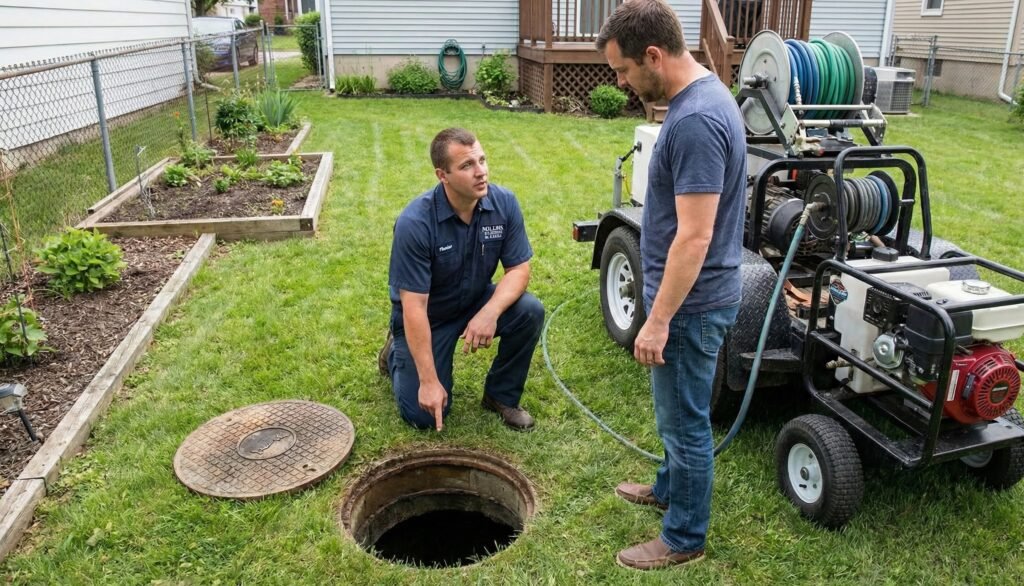
1) “My kitchen sink clogs every couple months”
This is often grease + buildup.
Best long-term option: hydrojetting (after confirming the line can handle it if needed).
2) “One bathroom sink is slow, everything else is fine”
This is usually localized (hair/soap).
Best option: snaking, plus cleaning the trap/aerator as appropriate.
3) “Basement drain backs up during heavy usage or storms”
This can be a mainline issue, root intrusion, or sewer line condition.
Best first step: camera inspection.
👉 Video Camera Sewer Inspection
If the line is compromised:
👉 Sewer Line Repair & Replacement
4) “We’ve snaked it twice and it keeps coming back”
That’s a red flag for buildup, roots, or damage.
Best next step: stop guessing—inspect and decide from evidence.
Tired of repeat clogs? Book a camera inspection with Quince Orchard Plumbing and get a clear plan—then choose the right fix (snaking, hydrojetting, or repair) based on what’s actually in the line.
How to keep drains clear long-term (without constant calls)
If you want fewer surprises, this is the maintenance mindset I recommend:
- Don’t wait for a full blockage—address slow drains early
- If clogs are repeat offenders, prioritize diagnosis, not repeated quick fixes
- Treat hydrojetting as a reset when buildup is the real problem
- If the pipe is damaged, invest in the repair so you’re not stuck in the same cycle
This is exactly how we operate at Quince Orchard Plumbing: fast response when you need it, clean work, and a fix that’s built to last—because long-term trust matters more than a temporary patch.