

When spring hits Gaithersburg, I run a focused plumbing sweep to stay ahead of rains, thaw cycles, and surprise leaks. Use this checklist to prevent backups, protect your basement, and keep water bills in check.
Why this matters in Gaithersburg

Between March and May our area sees frequent rain and rapid warmups. That combo stresses sump pumps, gutters, outdoor faucets, and older pipes. Getting ahead of it now keeps moisture away from foundations and stops small leaks from becoming costly repairs.
Local note: Gaithersburg falls under WSSC Water for public water/sewer service. Street-side issues go to them; anything on private property is the homeowner’s responsibility.
Exterior: move water away from the house

1) Gutters & downspouts (15–45 min)
- Clear leaves and grit; ensure downspouts discharge 6–10 ft from the foundation.
- After a rain, check for damp basement walls—often a sign of clogged gutters or short downspouts.
2) Sump pump test + backup (10–20 min)
- Bucket test: pour water into the pit until the float lifts; it should switch on, discharge, then off cleanly.
- Add a battery backup so you’re covered during storm outages.
3) Outdoor faucets / hose bibs (10–15 min each)
- Open/close fully and watch for leaks from freeze damage.
- Remove winter covers; flush the irrigation line; aim sprinkler heads away from siding and windows.
4) Yard drainage & tree roots
- Eliminate low spots that pond near the foundation.
- Be mindful of roots near the sewer lateral—spring growth can invade joints and cause slow drains or backups.
Interior: hunt invisible leaks and wasted water
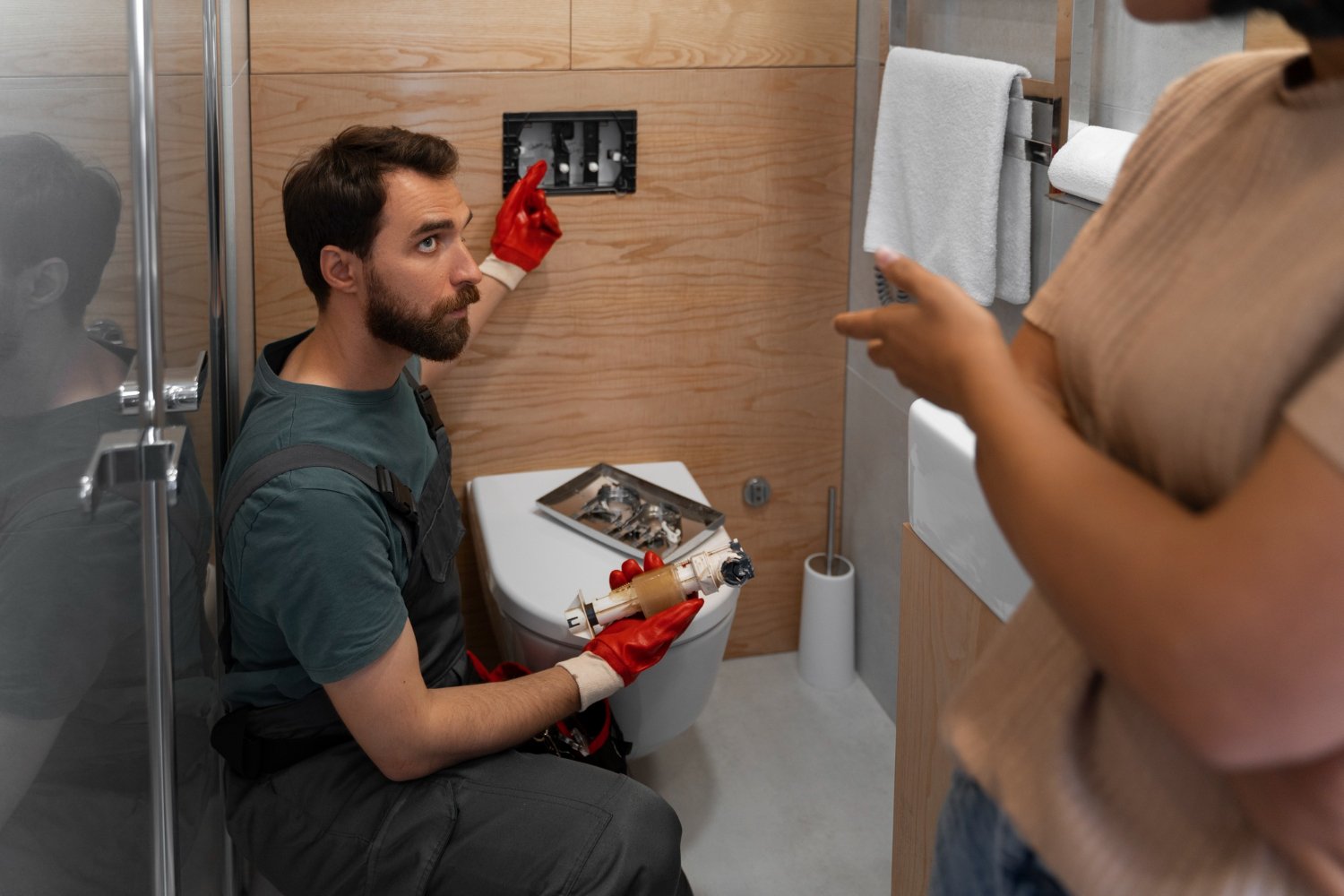
5) Quick leak check (15 min total)
- Meter test: shut everything off and check if the meter still moves—if yes, track a hidden leak.
- Look under sinks, around toilet bases, and at ceilings below bathrooms for fresh stains.
6) Toilets (10 min per fixture)
- Dye test: a few drops in the tank; if the bowl tints within 30 minutes, replace the flapper or tank-to-bowl seals.
7) Faucets, showers & mineral buildup (10–20 min)
- Fix drips; descale aerators/showerheads to restore flow and reduce pressure on supply lines.
8) Drains & odors (5–10 min each)
- Top up unused traps with water to stop sewer odors.
- Add hair/food strainers to showers and sinks to prevent clogs.
Critical equipment
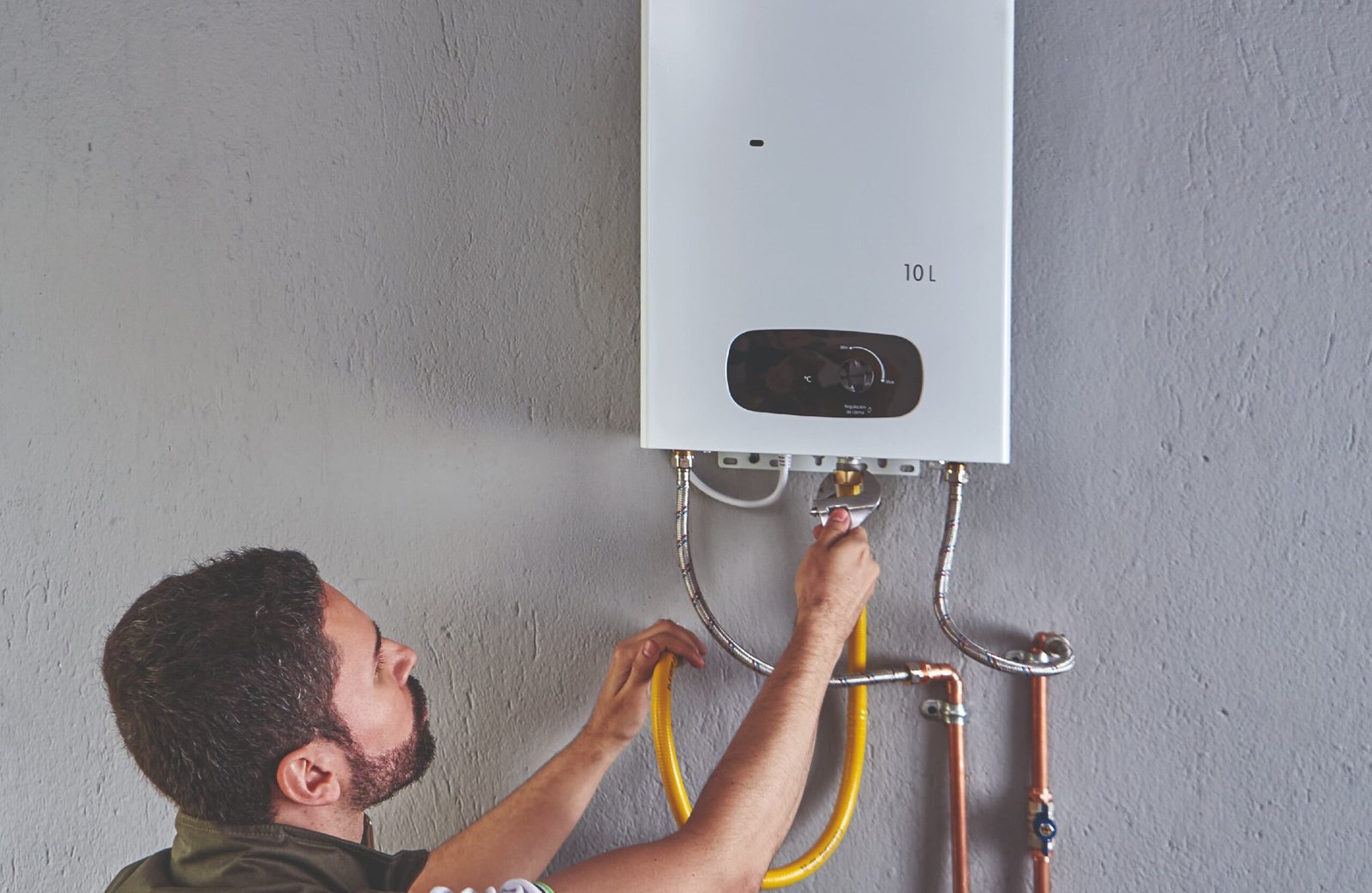
9) Water heater (20–40 min)
- Set to 120°F for safety/efficiency.
- Drain a few gallons to flush sediment; older tanks deserve extra attention and may be due for proactive replacement.
10) Laundry, dishwasher, ice maker (5–10 min each)
- Inspect hoses for bulges, cracks, or corrosion; replace worn lines before they burst.
11) Garbage disposal & kitchen sink
- Deep-clean the disposal and avoid fibrous, starchy, or greasy waste that causes springtime slowdowns.
12) Water alarms & prevention
- Place inexpensive leak alarms by the water heater, under sinks, and near the sump pit to catch problems early.
Get your Gaithersburg home spring-ready — schedule a full plumbing inspection or tune-up today.
Sewer line & heavy rain
13) Sewer line readiness
- After big storms, schedule a camera inspection if you notice gurgling, slow drains, or recurring clogs—roots and infiltration are common in spring.
Timing tips for our area
14) Late frost vs. outdoor systems
- Wait until after the typical early-April last frost window to fully open exterior lines and irrigation. If a cold snap looms, delay a few days.
15) Rainy spells & basements
- Prioritize gutters, downspouts, and sump pump testing in March–April to stay ahead of wet weeks that raise groundwater.
Red flags—call a pro if you see these
- Sump pump fails any part of the bucket test.
- New wall stains or musty odors after rainfall.
- Persistent gurgling or simultaneous slow drains (possible main line issue).
- Meter movement with all fixtures off (hidden supply leak).
Quick printable checklist
- Clean gutters; extend downspouts 6–10 ft from foundation.
- Test sump pump (on, discharge, off) + verify battery backup.
- Check hose bibs; flush irrigation; remove winter covers.
- Run meter test; do toilet dye test.
- Set water heater to 120°F; drain a few gallons to flush sediment.
- Inspect/replace washer, dishwasher, and ice maker hoses.
- Clean disposal; use strainers; refill dry traps.
Schedule a sewer camera check if backups or gurgling persist.