
A running toilet is one of the easiest ways to silently waste water—and the worst part is, many homeowners don’t notice it until the bill jumps or the toilet starts “refilling” every few minutes.
The good news: most running-toilet issues come from a few common parts, and you can often stabilize the problem quickly. Below are 6 practical fixes I recommend for homeowners across Montgomery County (Gaithersburg included).
Quick safety tip: If water is rising close to the rim or you suspect overflow, shut off the toilet’s angle stop valve behind the toilet first (turn clockwise).
First: confirm what “running” means
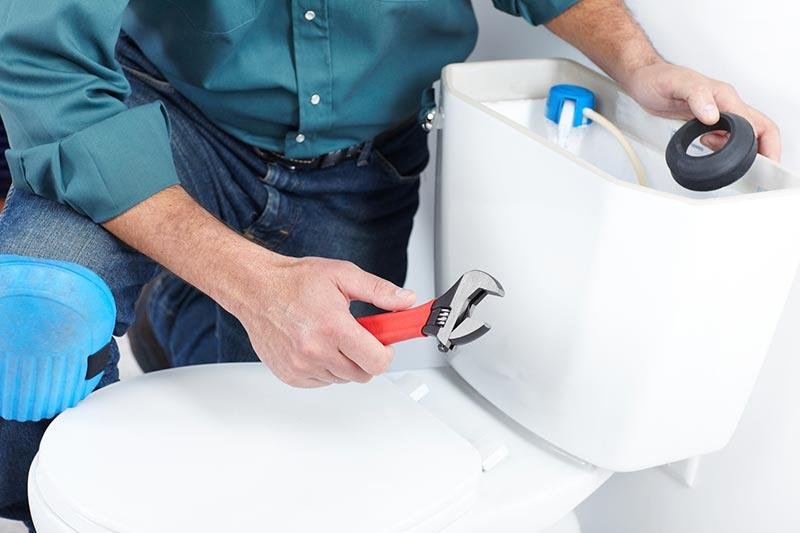
A toilet usually “keeps running” in one of these ways:
- You hear constant water in the bowl or tank
- The tank refills on its own every few minutes
- You hear a hissing sound after flushing
- The flush feels weak, and the tank never seems to stop filling
Now let’s fix it.
Fix #1: Check the handle + chain (the fastest win)
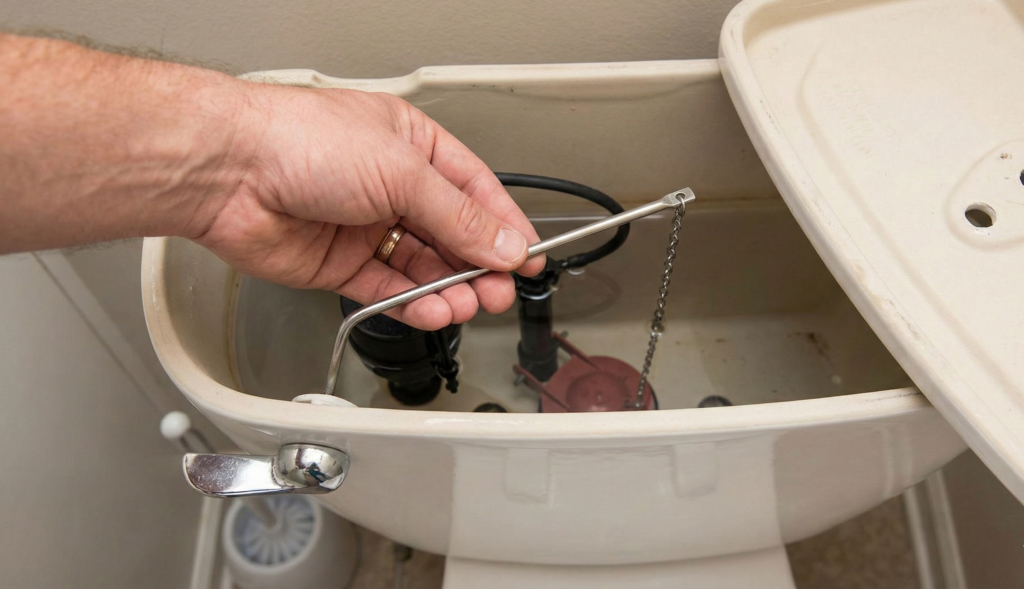
Sometimes the handle doesn’t fully reset, and the flapper stays slightly lifted.
What to do:
- Open the tank lid
- Press the handle down and let it return
- Make sure the chain has a little slack (not tight, not tangled)
- Ensure the chain isn’t catching on the flush valve or float
If the chain is too short, it can hold the flapper open and cause nonstop running.
Fix #2: Replace or reseat the flapper (the #1 cause of “ghost refills”)
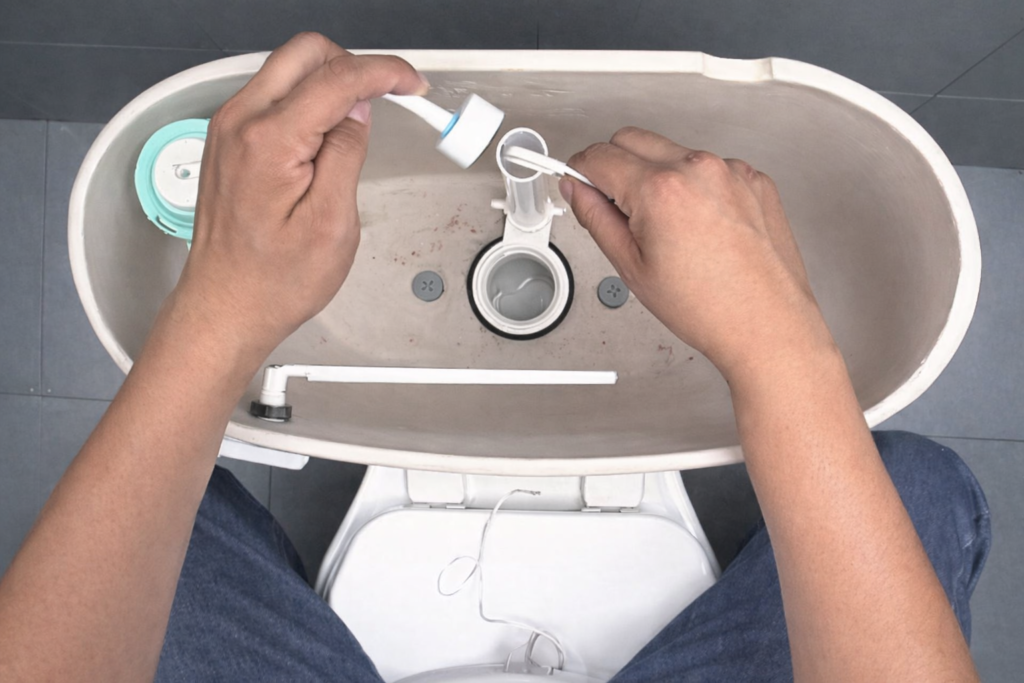
A worn flapper doesn’t seal the flush valve opening, so water slowly leaks from tank to bowl—then the fill valve turns on to “top off” the tank.
What to check:
- Is the flapper warped, slimy, cracked, or stiff?
- Is it sitting flat on the flush valve seat?
- Are the flapper ears aligned evenly on the pegs?
Fast test: Press the flapper down gently. If the running stops, the seal is the issue.
Fix #3: Adjust the float so the tank stops at the right level
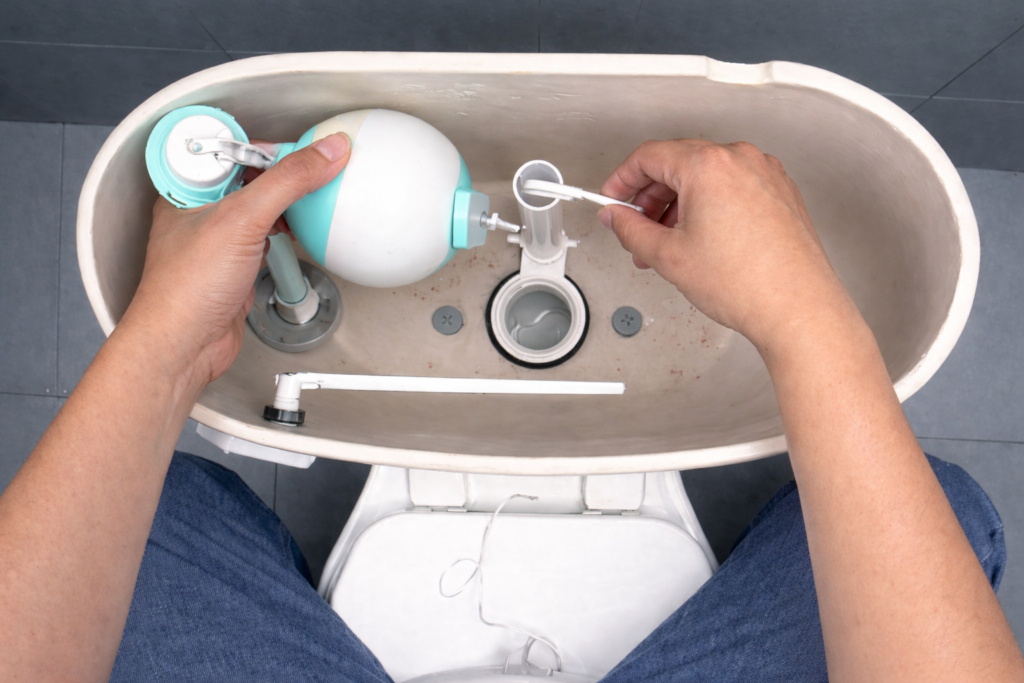
If the water level is set too high, it can spill into the overflow tube, causing continuous refill.
What to do:
- Look for the overflow tube in the middle
- The water level should sit below the top of the overflow tube
- Adjust the float (screw or clip depending on your fill valve) so the toilet shuts off sooner
This is one of the simplest water-saving tweaks you can make.
Fix #4: Clean or replace the fill valve (hissing, slow shutoff, constant refill)
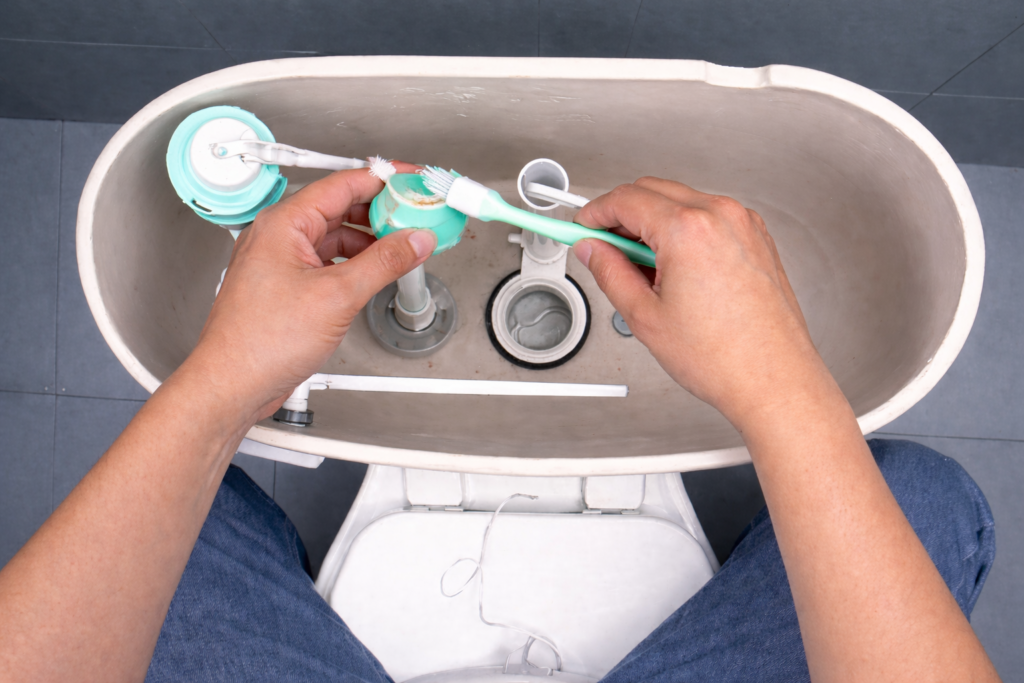
Fill valves can get worn or clogged with debris, leading to poor shutoff and constant running.
Symptoms it’s the fill valve:
- Hissing sound that doesn’t stop
- Toilet takes forever to fill
- Water level creeps upward after it “shuts off”
If you replace it, do it cleanly and check for leaks afterward at the supply connection.
If you notice supply-line leaking or a shutoff valve that won’t fully close, that’s when you want a pro involved:
👉 Water Line Repair
Fix #5: Inspect the overflow tube + refill tube placement
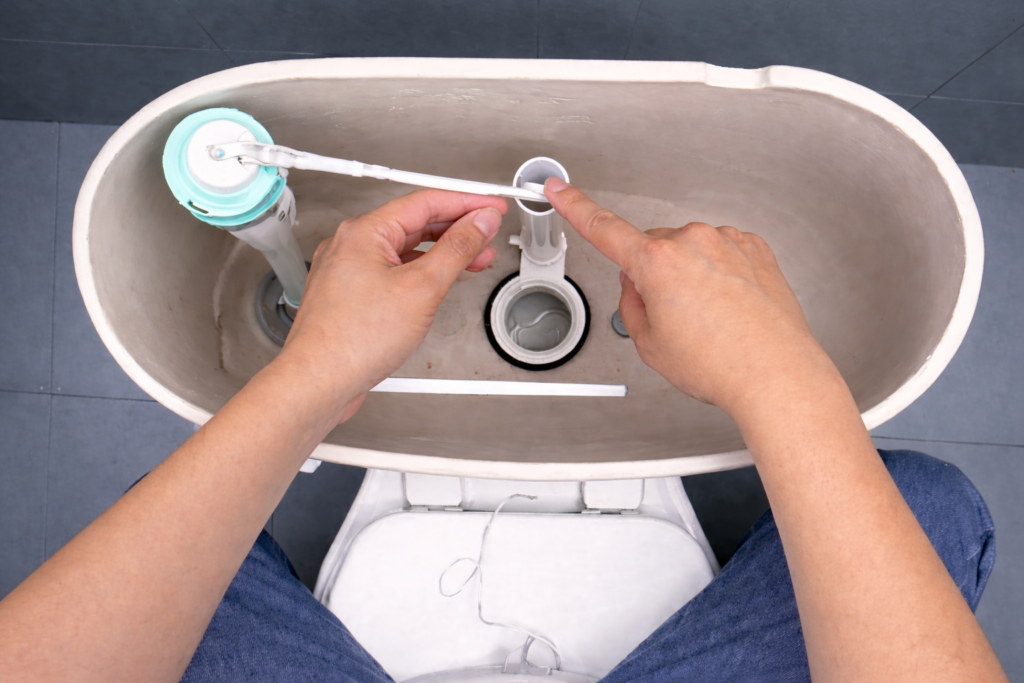
The small refill tube should direct water into the overflow tube—but it shouldn’t be shoved deep into it. If it’s inserted too far, it can siphon water and keep the fill cycle going.
What to do:
- Make sure the refill tube is clipped above the overflow tube opening
- Confirm the overflow tube isn’t cracked or loose
A cracked overflow tube or flush valve assembly often means a more involved tank repair.
Fix #6: If you still have issues, it may be pressure, a failing shutoff, or a bigger drain problem
Most running toilets are tank-part issues. But if you’re also seeing:
- inconsistent pressure throughout the home
- a shutoff valve that’s stuck or failing
- leaks at the supply line
- bubbling toilets, slow drains, or repeat overflows
…you may be dealing with something beyond the tank.
If it’s supply-side hardware (valves/lines):
👉 Water Line Repair
If multiple fixtures are backing up or the toilet overflows repeatedly: start with diagnosis:
👉 Video Camera Sewer Inspection
If the line is damaged or repeatedly obstructed:
👉 Sewer Line Repair & Replacement
Still hearing your toilet refill or hiss? Contact Quince Orchard Plumbing—we’ll stop the water waste fast and fix the root cause the right way.
A quick “save water now” checklist
Before you close the tank lid, confirm:
- No constant water movement in the bowl
- Tank waterline is below overflow tube
- Flapper closes smoothly and seals
- Handle returns cleanly
- No drips at supply connection