

If you’ve ever poured a glass of water in Gaithersburg and thought, “Why does this taste off?” or noticed a weird smell, cloudiness, or tiny particles in the bottom of the cup—you’re not alone. The good news is that most water-quality complaints come from a handful of predictable causes, and once you know what to look for, you can usually fix the problem (or at least pinpoint whether it’s a plumbing issue inside the home vs. something coming from the main supply).
In this guide, I’m going to walk you through taste, odor, and sediment—what they typically mean, what you can check in 5–10 minutes, and when it’s time to call a plumber.
First: Is the issue on all faucets, or just one?

This is my favorite “fast diagnostic” because it narrows things down immediately.
- Only one faucet → likely that fixture (aerator, cartridge, old supply line).
- Hot water only → often the water heater.
- Cold water only → supply-side or water-line issue.
- Whole house (every faucet) → could be incoming supply, water service line, or widespread plumbing condition.
If you do nothing else, do this:
- test kitchen cold, kitchen hot, bathroom cold, bathroom hot
- note whether it’s taste, odor, sediment, or all three
- check if it’s worse at certain times (morning, after rain, after hydrant flushing)
Taste issues: what “metallic,” “chlorine,” or “earthy” usually means
Chlorine taste
A mild chlorine taste can happen in municipal systems, especially after certain maintenance events. If the taste is temporary and doesn’t show up as discoloration, it’s often not a plumbing failure.
What I do at home first
- Run cold water for 30–60 seconds and retaste.
- Check if the taste is only at one faucet (aerator buildup can “hold” odors/tastes).
When I’d call a plumber
- If the taste is persistent and you’re seeing other symptoms like sediment, pressure changes, or discoloration.
Metallic taste
Metallic taste often points to older internal plumbing, corroded fittings, or a failing service line.
Quick checks
- Does the taste get stronger after water sits overnight? (first-draw water)
- Is it worse at certain faucets? (some fixtures have older parts)
If you’re seeing metallic taste along with rusty tint, it’s worth having your supply side evaluated. In many cases, addressing aging piping or a compromised line is the long-term fix.
👉 Water Line Repair
Earthy / musty taste
Sometimes this is seasonal, but if it’s only one fixture, it can be localized buildup.
What I check
- Remove and clean the faucet aerator (you’d be shocked what collects there).
- If you have a fridge dispenser, replace the filter and flush it properly.
Odor issues: the most common smells and what they actually indicate

“Rotten egg” smell (sulfur smell)
If the odor is strongest on hot water, I immediately suspect the water heater. Water heaters can develop odor issues depending on age, maintenance, and internal conditions.
How to confirm
- Smell cold water vs. hot water.
- If cold is fine but hot smells, your next step is the heater.
This is a very fixable problem, and it’s often cheaper to address early than to wait for a bigger failure.
👉 Water Heater Services
“Sewage” smell
This one gets misdiagnosed all the time. A “sewage” smell is frequently not the water itself—it’s often drain/sewer gas coming from a dry trap, venting issue, or a deeper sewer-line problem.
Fast test
- If the smell is strongest near a sink or drain (not in the glass), it’s likely the drain system.
If odor is recurring—especially in basements or lower-level fixtures—a camera inspection can quickly confirm whether there’s a blockage, damage, or buildup contributing to sewer odors.
👉 Video Camera Sewer Inspection
And if the line is damaged or repeatedly obstructed:
👉 Sewer Line Repair & Replacement
Chemical smell
If water smells strongly chemical (or the smell suddenly changes across the whole home), treat it seriously:
- avoid drinking it until you confirm what’s going on
- check if neighbors notice the same issue
- then have your plumbing and the incoming supply evaluated
Sediment in water: why you’re seeing particles, cloudiness, or “brown water”

Sediment usually shows up as:
- tiny grains in the glass
- cloudy water that clears after a minute
- brown/orange tint (especially after the water has sat)
Common causes inside the home
- buildup in a water heater (hot water sediment)
- corrosion in older piping or fittings
- disturbed debris in the line (after nearby work)
Quick checks I recommend
- Fill a clear glass from cold water and let it sit 2 minutes.
- If it clears → could be aeration
- If particles settle → actual sediment
- Compare hot vs. cold.
- Hot only → strongly points to heater sediment
👉 Water Heater Services - Cold + hot → more likely supply-side, service line, or widespread pipe condition
👉 Water Line Repair
- Hot only → strongly points to heater sediment
If you’re seeing recurring brown water, don’t ignore it. Sediment can shorten fixture life, clog aerators, and create bigger plumbing issues over time.
Backflow prevention: a “water safety” piece homeowners overlook
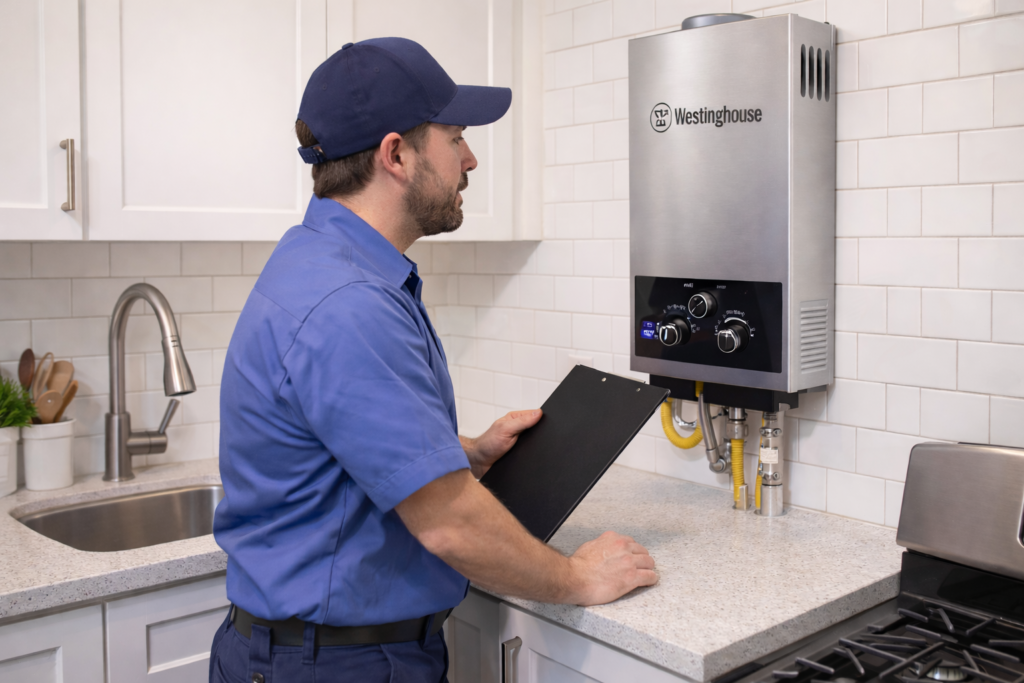
When we talk about water quality, most people think taste and odor—but water safety matters just as much. Backflow prevention is about protecting the potable water supply from contamination due to reverse flow conditions.
If your property needs testing, repair, or installation, this is where you want a licensed pro handling it.
👉 Backflow Prevention Services
When this is a “wait and see” vs. a “call now” situation
Usually OK to monitor (briefly)
- mild chlorine taste that fades after flushing
- cloudiness that clears quickly
- minor sediment right after known neighborhood work (and then stops)
Call a plumber if you have any of these
- persistent metallic taste + discoloration
- rotten egg smell on hot water (water heater likely involved)
- recurring sediment that clogs aerators or stains fixtures
- “sewage smell” that seems tied to drains or basements
- sudden whole-house change that doesn’t resolve after flushing
Not sure what’s causing the taste, odor, or sediment in your water? Contact Quince Orchard Plumbing to diagnose the issue and recommend the right repair—before it turns into a bigger problem.
What I’d do next if you want a clear answer fast
If you’re in Gaithersburg and want this solved without guesswork, my approach is simple:
- identify whether the issue is hot only / cold only / whole house
- isolate fixture-level problems (aerators, cartridges, supply lines)
- check heater condition when hot water is involved
- evaluate service line / sewer line if symptoms point that way
That’s how you get from “something seems off” to a real fix.