
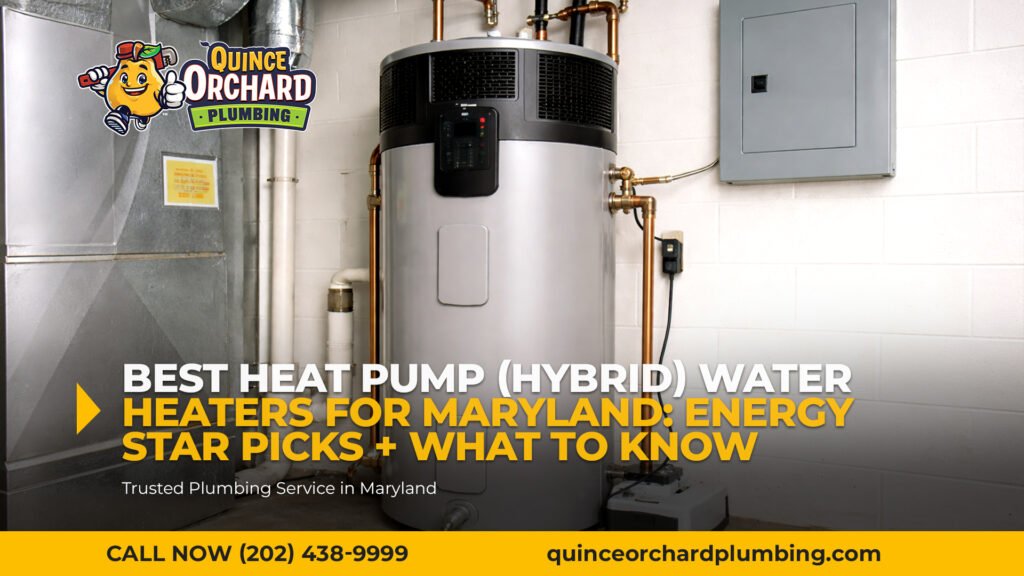
If you live in Maryland, a heat pump (hybrid) water heater can be one of the best “quiet upgrades” you make: lower electric use, strong rebates in some areas, and excellent performance for most homes with a basement or utility room.
In this guide, I’ll show you how to choose the right ENERGY STAR® heat pump water heater for a Maryland home, plus a short list of ENERGY STAR-certified picks (with the exact metrics that matter). This is written for homeowners across Montgomery County—Gaithersburg (20878), Rockville, Germantown, North Potomac, Kentlands, and nearby communities—where many homes have the space and electrical setup that makes HPWHs a great fit.
If you want help sizing and installing one correctly (and avoiding the common “it works, but it’s annoying” mistakes), our team handles it through Water Heater Services.
Heat pump vs. “hybrid” water heater: same thing (most of the time)
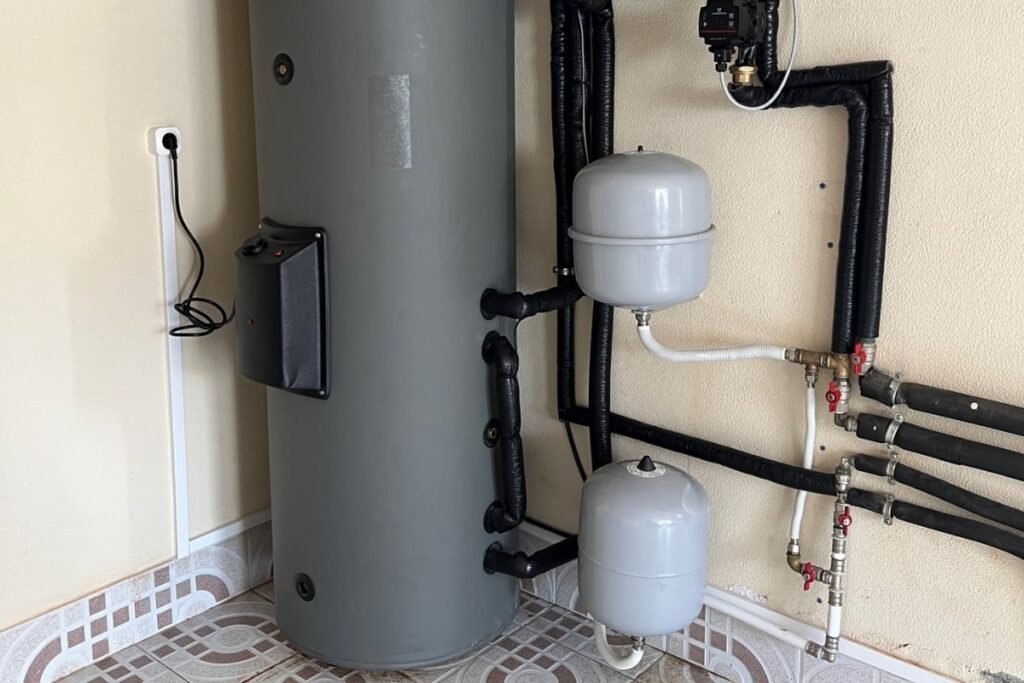
In residential use, “heat pump water heater” and “hybrid water heater” usually refer to the same appliance: it pulls heat from the air and moves it into the tank (like a refrigerator in reverse). Most units also have electric resistance elements that can help during high demand or very cold conditions—hence “hybrid.”
The 3 numbers that matter most
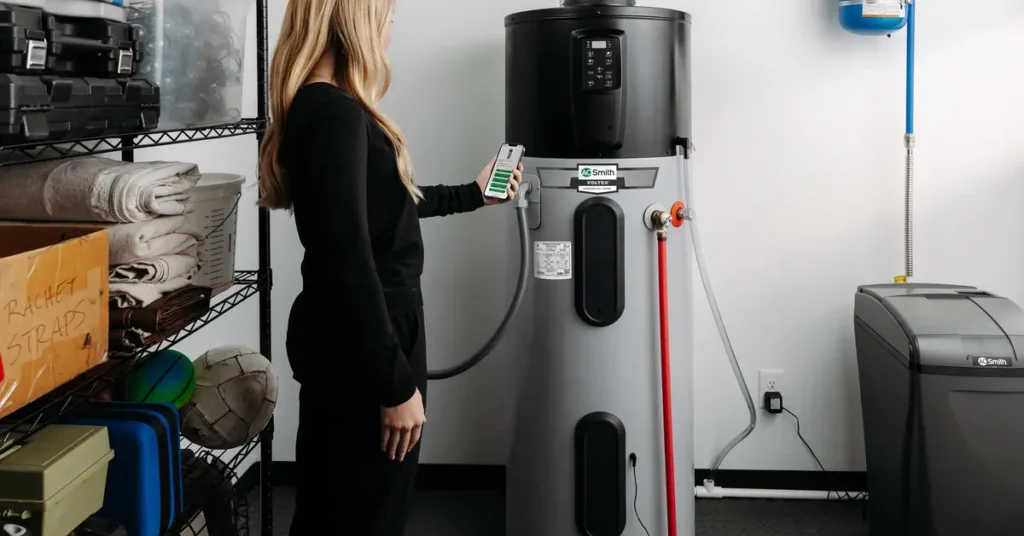
When comparing models, focus on:
1) UEF (Uniform Energy Factor)
UEF is the efficiency metric that lets you compare units apples-to-apples. Higher is better.
2) Tank size (gallons)
Most Maryland households do well in the 50–80 gallon range, depending on how many people and how “spiky” your hot water use is (back-to-back showers + laundry is the classic spike).
3) First Hour Rating (FHR)
This tells you roughly how many gallons of hot water the heater can deliver in the busiest hour. For families, FHR often matters more than tank size.
Maryland-specific “what to know” before you buy
You need airflow and space (and these units are often taller)
Heat pump water heaters need room to breathe and are commonly taller than standard electric tanks. That’s usually fine in unfinished basements (common in Rockville/Gaithersburg), but it can get tight in closets or low-ceiling utility rooms.
They make condensation (you must plan a drain path)
HPWHs create clean condensate water. You’ll typically run a line to a nearby floor drain or add a small condensate pump if needed. This is one of the biggest “surprise” installation items.
Electrical panel capacity can matter
Most standard units are 240V, but some newer designs can work with different amperage requirements. If your panel is already crowded (common in older homes), we’ll confirm your options as part of Water Heater Services.
They cool and dehumidify the space
This is great in a humid Maryland basement in summer. In winter, it can make the installation area cooler—so we plan placement thoughtfully.
Noise is real—but usually manageable
Most homeowners describe a HPWH as similar to a steady fan or dehumidifier. Placement matters a lot (e.g., not right next to a finished bedroom wall).
Need a water heater sized and installed correctly? Call Quince Orchard Plumbing for fast, local help in Montgomery County, Maryland.
ENERGY STAR picks (certified models worth shortlisting)
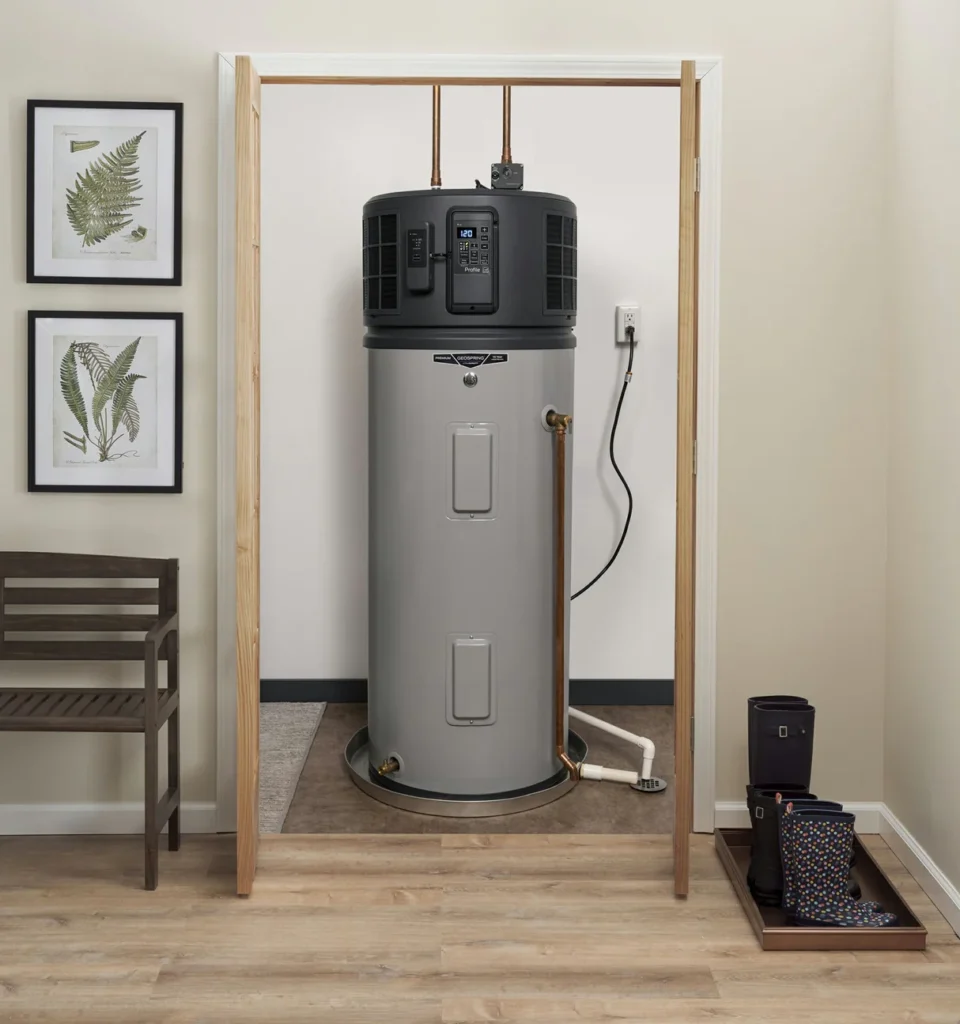
These examples are pulled from the ENERGY STAR certified database. Availability changes by retailer and distributor, so think of these as a shortlist to start comparisons, not the only good options.
High-efficiency 80-gallon class (great for 4–6 people, big demand windows)
- GE Profile PH80S10BNY01 — UEF 4.5, 80 gal, FHR 101
- GE Profile PH80S10BPY01 — UEF 4.4, 80 gal, FHR 101
High-efficiency 50-gallon class (strong for 2–4 people, typical homes)
- GE Profile PH50S10BNY01 — UEF 4.5, 50 gal, FHR 75
- GE Profile PH50S10BPY01 — UEF 4.3, 50 gal, FHR 77
Solid “balanced” picks (efficiency + strong hot water delivery)
- AMERICAN STANDARD WATER HEATERS ASHPWH-80-T — UEF 4.1, 74 gal, FHR 88
- Bradford White RE2HP65-1NCTT** — UEF 4.2, 65 gal, FHR 82
- LG APHWC502D — UEF 4.2, 53 gal, FHR 81
- Friedrich HPLD80-2FD — UEF 4.07, 72 gal, FHR 87
To browse and compare current certified models by size, efficiency, and features, use ENERGY STAR’s Certified Heat Pump Water Heaters Product Finder.
Features that are actually worth paying for
- Vacation mode (easy savings if you travel)
- Leak detection + auto shutoff (huge peace of mind in finished basements)
- Smart scheduling (run the heat pump when power costs are lower, if your plan supports it)
- Ducting capability (helpful in tight spaces or where you want to move cool exhaust air)
DIY vs. call a pro (quick decision)
DIY might be reasonable if:
- You are replacing an existing electric tank in an open, unfinished area,
- You already have a nearby drain solution for condensate,
- You can safely handle electrical shutoff and water connections (and local code requirements).
Call a pro if:
- You’re converting gas → heat pump,
- The unit will sit near finished spaces,
- You need condensate pumping, a pan/drain upgrade, or electrical modifications,
- You want the install to qualify cleanly for rebates/inspections where applicable.
Need a water heater sized and installed correctly? Call Quince Orchard Plumbing for fast, local help in Montgomery County, Maryland.
Where to shop (and how to avoid buying the “wrong” model)
- Start with ENERGY STAR certified models (use the Product Finder above).
- Shortlist 3–5 models by size + UEF + FHR.
- Then check local retailer availability (big box stores, supply houses) and warranty terms.
For independent reviews and lab testing, you can also cross-check on Consumer Reports’ water heater ratings/buying resources (note: some detailed ratings may require a subscription).
Service Area (Maryland only)
Quince Orchard Plumbing serves Gaithersburg (20878), Rockville, Germantown, North Potomac, Darnestown, Montgomery Village, Potomac (north), Derwood, Kentlands, and Washington Grove.