
If your shower feels like a drizzle, a “high pressure” showerhead alone won’t always fix it—especially in older homes and townhomes (very common across Montgomery County, MD). Many properties in areas like Gaithersburg (20878), Rockville, Germantown, North Potomac, Derwood, and Montgomery Village are 25–40 years old, and low-pressure showers are often a mix of fixture design + plumbing conditions.
The good news: you can get a satisfying shower while still saving water. You just need a WaterSense-labeled showerhead that’s engineered to feel stronger at ≤ 2.0 GPM, and you should rule out a few common “hidden” causes first.
What WaterSense means (in plain English)
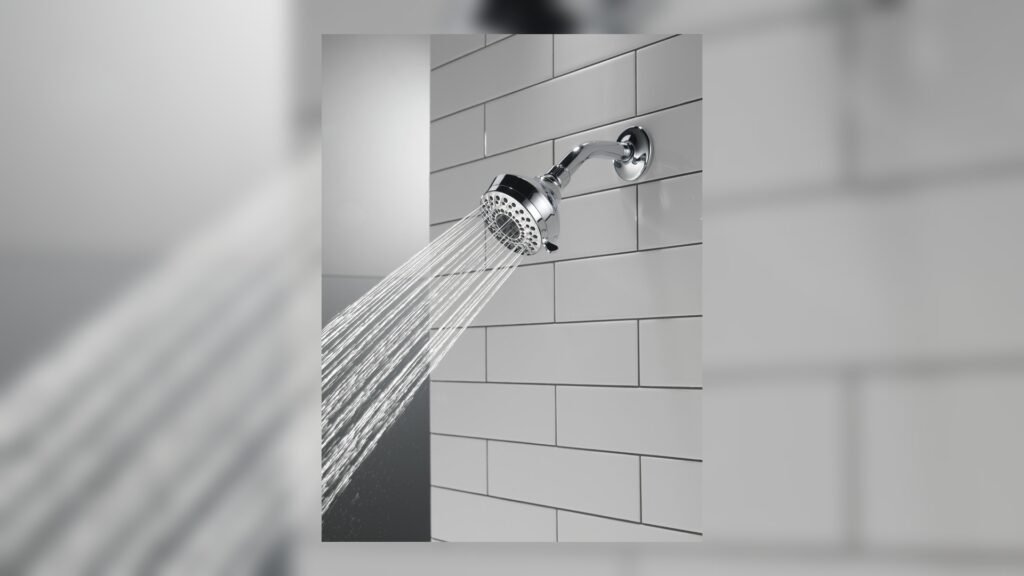
A WaterSense-labeled showerhead is certified to use no more than 2.0 gallons per minute while still meeting performance requirements. In other words, it’s not supposed to feel weak just because it saves water.
For low-pressure homes, that performance piece matters: you want spray designs that deliver better coverage, droplet “weight,” and pattern concentration at a regulated flow rate.
Before you buy: 5 safe checks that often fix “low pressure” fast
Do these first—because if the issue is upstream, even the best showerhead will disappoint.
1) Is it only one shower… or the whole house?
- Only one shower is weak: likely a clogged showerhead, a partially blocked shower arm, or a worn shower valve/cartridge.
- Most fixtures are weak: likely a pressure issue (valve, PRV, supply, or scaling in older piping).
If pressure is low across multiple fixtures, we often end up diagnosing the supply side and doing Water Line Repair work (or related pressure corrections) rather than swapping fixtures repeatedly.
2) Remove the showerhead (carefully) and test the flow
With the showerhead off, turn the water on briefly:
- Strong flow without the head: the showerhead or shower arm is restricted (mineral buildup is common).
- Still weak: likely the valve/cartridge, piping restriction, or pressure regulation.
3) Check for mineral buildup (hard water symptoms)
Look for white crust or uneven spray jets. Many “low pressure” complaints are just scale. Soaking the showerhead in vinegar (if the manufacturer allows it) can help.
4) Verify the shower valve is opening fully
Some single-handle valves don’t open fully if the cartridge is worn or debris is trapped. This is common in older homes around Kentlands, Washington Grove, and parts of Rockville.
5) Quick pressure reality-check (optional but useful)
If you have (or can borrow) a simple hose-bib pressure gauge:
- Typical homes feel best around 50–70 PSI
- Below ~40 PSI often feels weak in showers no matter what you install
- Over ~80 PSI is a red flag (can damage fixtures and appliances)
If you suspect a pressure regulation issue, it’s usually worth a pro diagnosis before buying more fixtures.
Low pressure shower in Gaithersburg, Rockville, or Germantown? Call Quince Orchard Plumbing for fast, local diagnosis and the right fix.
What makes a WaterSense showerhead feel “strong” in low pressure homes?
This is the part most “best showerhead” lists skip.
The 4 features that matter most
- Pressure-compensating flow (more consistent feel when pressure fluctuates)
- Spray pattern engineering (concentrates water in a way that feels stronger)
- Air-induction / droplet design (bigger droplets often feel warmer and more substantial)
- Anti-clog / easy-clean nozzles (performance stays consistent over time)
A quick decision guide
- Want the “most powerful feel” at WaterSense flow? → H2Okinetic / air-induction designs
- Want flexibility for kids/pets/cleaning? → dual head + handheld
- Want adjustable spray strength like a hotel shower? → lever-controlled multi-spray heads
- Have inconsistent pressure (some days better than others)? → pressure-compensating models
7 WaterSense showerhead picks that don’t feel weak (great for low pressure homes)
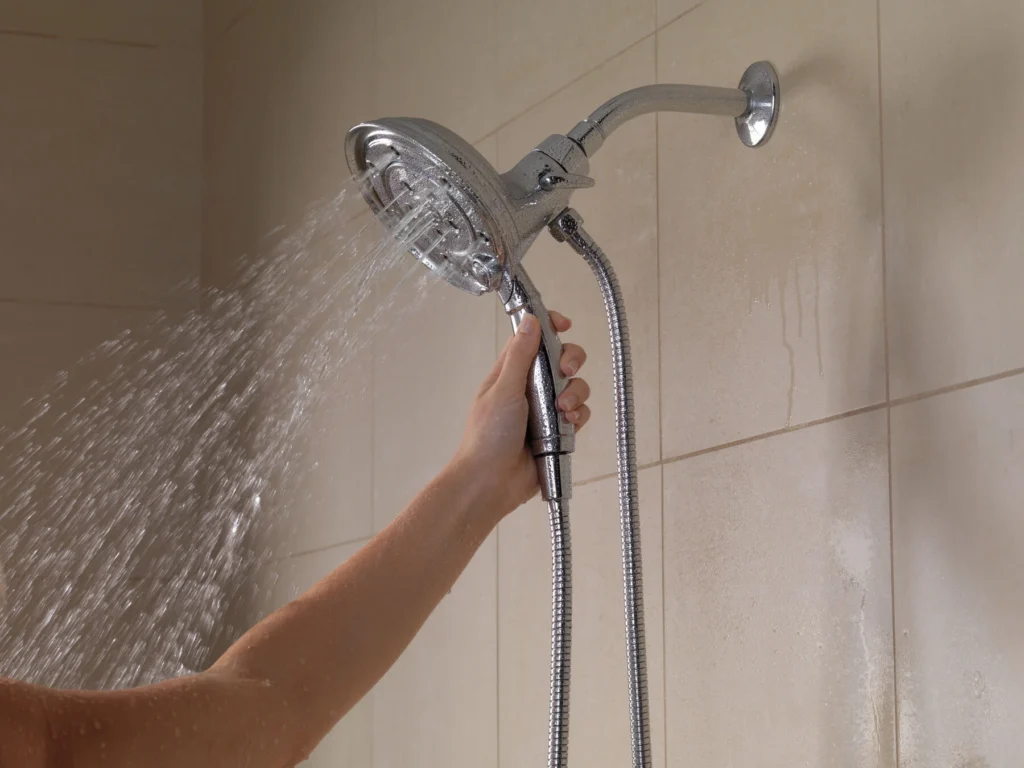
1) Delta H2Okinetic (PowerDrench-style) fixed head — Best overall “strong feel”
Why it works: H2Okinetic designs are made to feel like more water and better coverage at a regulated flow rate.
Best for: homeowners who want a simple upgrade that still feels satisfying in older plumbing.
Good fit in: Gaithersburg, Germantown, and North Potomac homes where pressure feels “meh” but not terrible.
2) Delta In2ition + H2Okinetic dual head — Best combo for families
Why it works: you get a fixed head + handheld (great for rinsing, kids, pets, and cleaning) while still staying WaterSense.
Best for: busy households who want flexibility without sacrificing comfort.
3) Moen Attract with Magnetix (dual head) — Best “easy handheld” setup
Why it works: magnetic docking makes the handheld easy to use daily (not just as a gimmick).
Best for: households that want quick usability and multiple spray options.
4) Speakman Icon Anystream (WaterSense 2.0 GPM) — Best adjustable “hotel-style” spray
Why it works: Speakman’s lever-style adjustment is popular for dialing in a stronger-feeling spray without changing plumbing.
Best for: people who want to fine-tune feel day to day (especially helpful when pressure varies).
5) KOHLER Katalyst (Purist line, WaterSense) — Best “luxury feel” that still saves water
Why it works: air-induction style sprays can feel fuller and more substantial while staying efficient.
Best for: primary bath upgrades in Rockville, Kentlands, or Potomac (north) where comfort and finish quality matter.
6) Waterpik (WaterSense high-performance models) — Best for “massage/targeted spray” feel
Why it works: many WaterSense models focus on spray force and pattern options—helpful when low pressure makes a basic rain spray feel weak.
Best for: anyone who prefers a more focused spray rather than a wide, soft pattern.
7) Niagara Earth (WaterSense, pressure-compensating style) — Best for inconsistent pressure
Why it works: pressure-compensating designs are useful when your available pressure changes (time of day, neighborhood demand, etc.).
Best for: older townhomes in Montgomery Village, Derwood, or Darnestown where pressure can fluctuate.
Pro tip: If you love the look of big “rain” heads, be careful—wide sprays often feel weaker at low pressure unless the spray tech is designed to compensate.
Installation tips (older plumbing-friendly)
Most showerheads are DIY-friendly, but older plumbing adds a few “gotchas.”
Do this to avoid leaks and weak performance
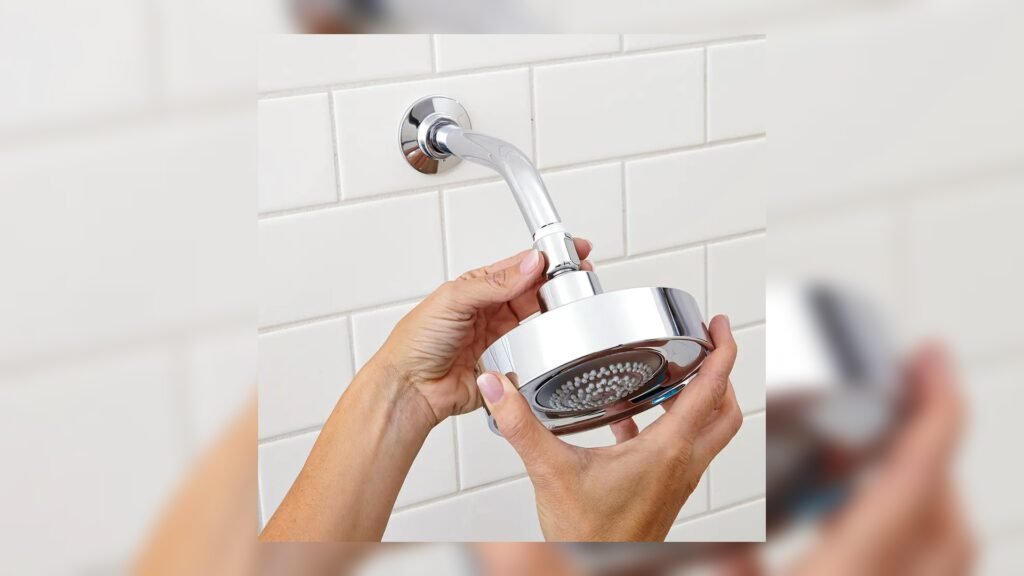
- Use thread seal tape (Teflon tape) on the shower arm threads (2–3 wraps).
- Don’t overtighten—hand-tight + a gentle snug is usually enough.
- If the shower arm is old, rusty, or partially blocked, consider replacing it too.
- If you see debris when removing the old head, flush the line briefly (carefully) before installing the new one.
Skip “flow restrictor removal”
Besides being a bad idea for efficiency and potential code compliance, removing restrictors can create other issues (temperature instability, faster hot water depletion, and more wear on fixtures). If the shower is weak, it’s better to fix the real cause.
Low pressure shower in Gaithersburg, Rockville, or Germantown? Call Quince Orchard Plumbing for fast, local diagnosis and the right fix.
When a new showerhead won’t fix the problem
Call a plumber if any of these are happening:
- Pressure is weak throughout the home
- You have sudden pressure changes (was fine, now it’s not)
- The shower is weak only on hot (could involve the water heater or valve/cartridge)
- You hear banging, rattling, or have frequent leaks
If hot water performance is part of the issue (slow recovery, temperature swings, not enough hot water), our Water Heater Services team can diagnose whether the heater, mixing, or plumbing is the real bottleneck.
If the underlying issue is supply-side restriction, leak, or pressure correction, we can help through Water Line Repair.
FAQs
Do WaterSense showerheads always feel weak?
No—many are designed specifically to maintain a satisfying spray at lower flow, but the spray technology matters.
What’s the best flow rate for low-pressure homes?
Most people prefer 1.75–2.0 GPM WaterSense models with spray tech that improves coverage or droplet feel.
Why does my shower feel weaker than my sink faucet?
Showers rely heavily on valve condition, cartridge flow, and the showerhead’s internal design. A clogged showerhead or aging cartridge can cut flow dramatically.
Are filtered showerheads good for low pressure?
Sometimes—but filtration can add restriction. If you already have low pressure, choose a filtered model carefully (or solve pressure first).
If only one shower is weak, what’s the most common cause?
Mineral buildup in the showerhead/shower arm, or a worn/clogged cartridge.
Should I pick handheld, fixed, or dual?
For low pressure homes, dual gives the most flexibility and often the best real-world satisfaction.
Service Area (Maryland only)
Quince Orchard Plumbing serves Gaithersburg (20878), Rockville, Germantown, North Potomac, Darnestown, Montgomery Village, Potomac (north), Derwood, Kentlands, and Washington Grove.