
If you live in Gaithersburg or anywhere in Montgomery County, MD, you’ve probably seen “low-flow” or “WaterSense” labels on faucets and showerheads at the store. They promise to cut your water use, lower your bills, and still give you a comfortable shower.
But how much can you really save in a typical home in Gaithersburg, Rockville, Germantown, or North Potomac? Is it just a few dollars a year—or does it actually move the needle on your water and energy bills?
In this guide, we’ll walk through:
- What “low-flow” actually means today (for both faucets and showerheads)
- How much water and money you can realistically save
- How to do a quick DIY “usage check” in your own bathroom
- When it makes sense to pair low-flow fixtures with other plumbing upgrades like a new water heater or water line work
All with a local lens on homes served by WSSC Water and similar utilities in Montgomery County.
What “Low-Flow” Really Means Today
Let’s clear up definitions first.
Showerheads
- Standard modern showerhead:
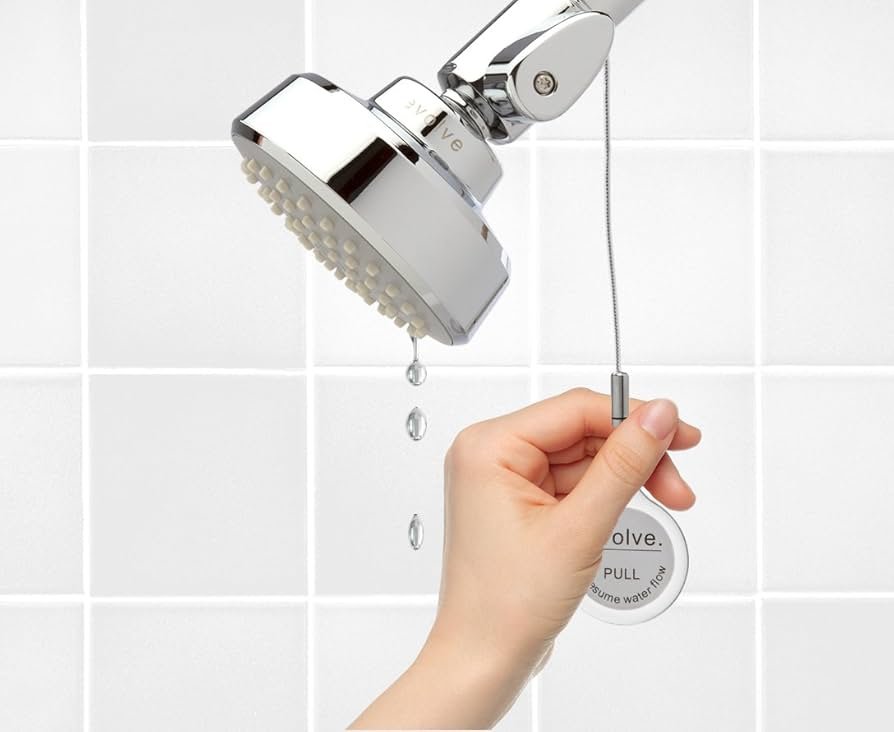
Federal standards cap most showerheads at 2.5 gallons per minute (gpm). US EPA+2US EPA+2 - WaterSense-labeled showerhead:
Must use no more than 2.0 gpm, which is about 20% less water than the federal standard, and still pass performance tests for spray force and coverage. US EPA+2US EPA+2 - High-efficiency low-flow models:
Many high-quality heads now run at 1.8, 1.6 or 1.5 gpm, and some go as low as 1.25 gpm while still delivering a strong, comfortable spray using aeration and pressure-compensating valves. cranachhome.com+2Daniel Molina Site+2
Bathroom Faucets
- Standard bathroom faucet:
Up to 2.2 gpm at typical residential pressure. US EPA - WaterSense-labeled bathroom faucets / aerators:
- Maximum 1.5 gpm, at least 30% less water. US EPA+1
- Many premium faucets run at 1.2 gpm, saving roughly 45% vs. a 2.2 gpm faucet. American Standard+1
- Maximum 1.5 gpm, at least 30% less water. US EPA+1
In other words, “low-flow” doesn’t mean a sad trickle anymore. It means using current federal standards as a baseline and cutting 20–45% of the water use without sacrificing performance.
How Much Water Do Showers and Faucets Actually Use?
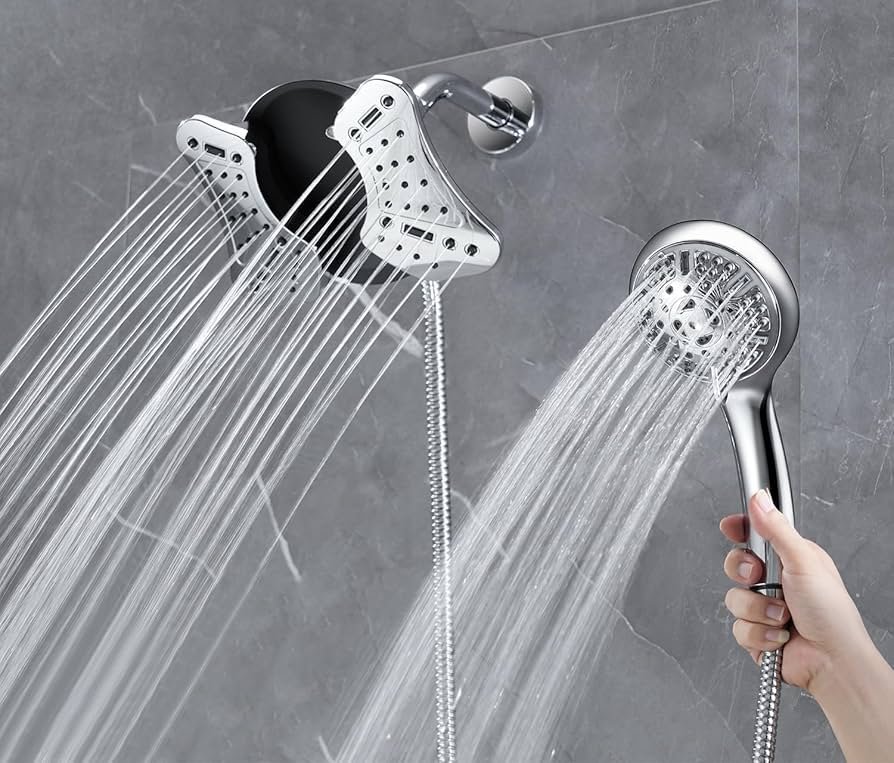
The EPA estimates that showering accounts for nearly 17% of indoor residential water use, adding up to almost 40 gallons per day for the average family. US EPA
Let’s put that into a simple example for a typical Montgomery County household:
- Family of 4
- Each person takes a 10-minute shower once a day
With a standard 2.5 gpm showerhead:
- 10 minutes × 2.5 gpm = 25 gallons per shower
- 4 people × 25 gallons = 100 gallons per day just for showers
Switching to a 1.5 gpm low-flow showerhead:
- 10 minutes × 1.5 gpm = 15 gallons per shower
- 4 people × 15 gallons = 60 gallons per day
That’s a 40-gallon-per-day reduction, or about 14,600 gallons per year, just from showering. cranachhome.com
The EPA’s more conservative calculation says that replacing a single standard showerhead with a WaterSense model can save the average family about 2,700 gallons of water per year, plus more than $75 per year in combined water and energy costs. US EPA+1
If your household takes longer showers, has more people, or upgrades more than one shower, your savings can be significantly higher than that baseline.
Worried about hidden plumbing issues in your new home? Get a full plumbing inspection by trusted local experts — book yours now.
What About Bathroom Faucets?
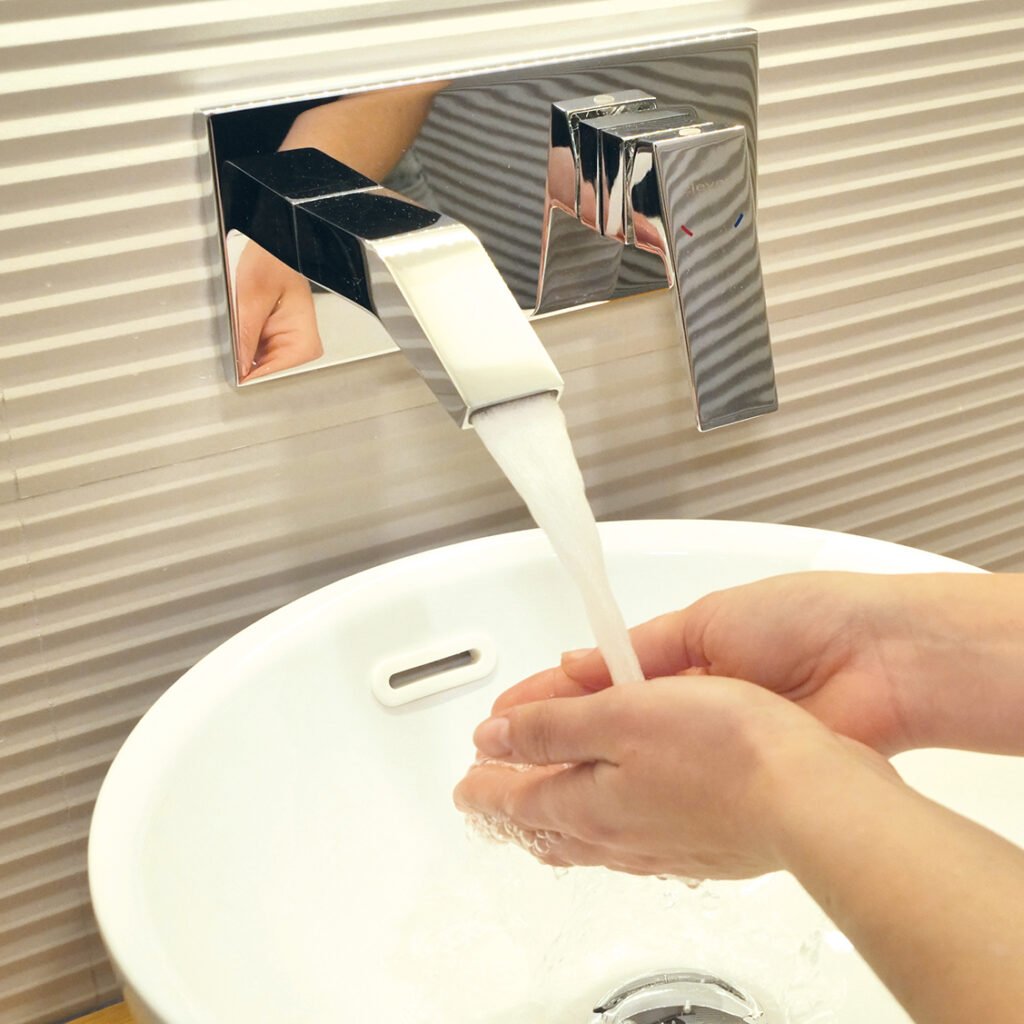
Bathroom sinks get a lot of “small” use that adds up: handwashing, brushing teeth, shaving, quick face rinses, etc.
According to EPA WaterSense:
- Replacing old faucets or aerators with WaterSense-labeled models can save the average family about 700 gallons of water per year—per bathroom—without sacrificing performance. US EPA+2Regional Water Providers Consortium+2
If you update:
- 1 main bathroom faucet → ~700 gallons/year
- 2 bathroom faucets → ~1,400 gallons/year
And because a chunk of that water is hot, you’re also trimming the energy use from your water heater.
Water and Energy Savings in a Montgomery County Context
In Maryland, the average monthly water and sewer bill is roughly in the mid-$40s, depending on usage and local rates. Real Estate Statistics+1
Water heating, according to the U.S. Department of Energy, typically represents about 18% of your home’s energy use, making it one of the biggest energy loads after space heating and cooling. The Department of Energy’s Energy.gov+1
Putting this together:
- A single WaterSense showerhead can save:
- ~2,700 gallons of water per year
- The electricity needed to power a typical home for about 11 days
- >$75 per year in combined water and energy costs, on average. US EPA+1
- ~2,700 gallons of water per year
- A couple of WaterSense bathroom faucets can add another ~700+ gallons per year in savings. US EPA
Realistically, a household in Gaithersburg, Rockville, or Germantown that upgrades:
- 1–2 showerheads, and
- 1–2 bathroom faucets
can often save several thousand gallons of water per year, and tens of dollars per year in water and energy costs—without changing their daily habits at all.
If your household has higher-than-average usage (multiple bathrooms, teenagers, long showers), the savings add up faster.
“But Will My Shower Feel Weak?” – Comfort vs. Conservation
This is the biggest fear we hear from homeowners: “I don’t want to stand under a drizzle just to save a few bucks.”
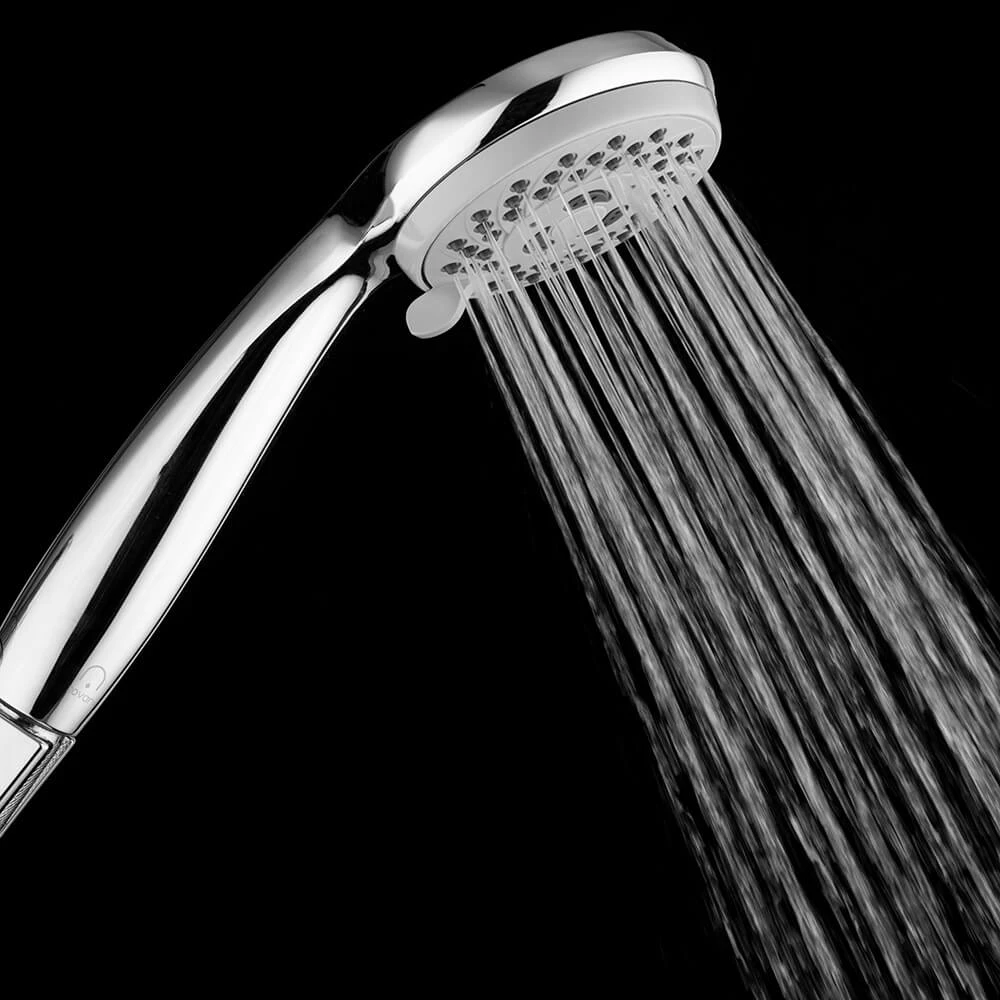
The early low-flow models years ago did feel weak. Modern fixtures are completely different:
- Aerating showerheads mix air with water to create a fuller, softer spray with less water volume. cranachhome.com+2The Department of Energy’s Energy.gov+2
- Laminar-flow heads create separate, solid streams that feel strong even at lower GPM. The Department of Energy’s Energy.gov
- Pressure-compensating valves keep flow steady when pressure fluctuates, which is helpful in older Montgomery County homes or when multiple bathrooms are in use. cranachhome.com+1
- The WaterSense program specifically tests for spray force and coverage to avoid “wimpy” showers—products must be independently certified to meet performance criteria, not just reduce gallons. US EPA+1
In short: if you choose at least a WaterSense-labeled showerhead from a reputable brand, you should get a shower that feels as good—or in many cases better—than your older high-flow model, while using 20–40% less water.
How to Estimate Your Own Savings: A Simple Bathroom Audit
Here’s a quick DIY process you can use in Gaithersburg, North Potomac, or anywhere in Montgomery County to estimate your real savings.
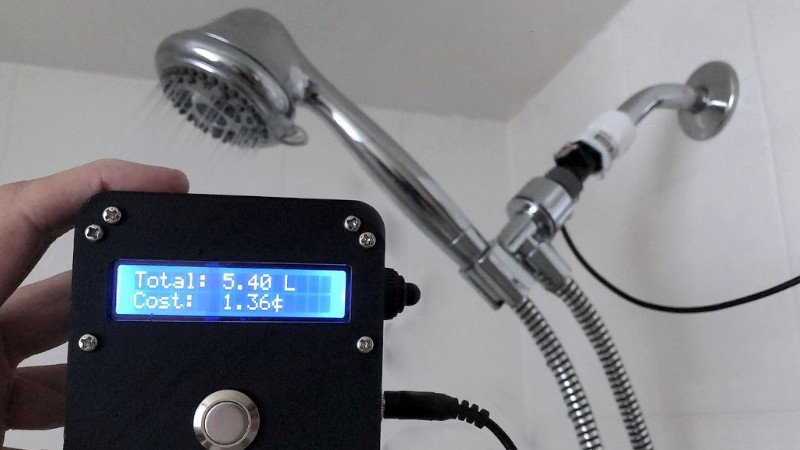
1. Measure Your Current Shower Flow
Use the “bucket test”:
- Grab a container with clear gallon markings (or a known volume).
- Turn the shower on to your normal temperature and pressure.
- Place the container under the shower for exactly 60 seconds.
- Measure how many gallons you collected—that number is your current GPM. cranachhome.com+1
If you see ~2.5 gallons, you’re at the old standard. If you see ~2.0 or below, you may already have a WaterSense or low-flow head installed.
2. Check Your Bathroom Faucets
Look for a marking near the tip of the spout or aerator:
- 2.2 gpm → older standard faucet
- 1.5 gpm or 1.2 gpm → low-flow / WaterSense faucet or aerator US EPA+2US EPA+2
If you can’t find a marking, you can run the same 60-second bucket test in the sink (carefully), or simply plan to upgrade based on age and style.
3. Use the EPA Baselines
Instead of building a complex spreadsheet, you can lean on the EPA estimates:
- 1 showerhead swap → ~2,700 gallons + >$75/year saved. US EPA+1
- Bathroom faucets → ~700 gallons/year for the average family. US EPA+1
Then adjust up or down based on your reality:
- More people, longer showers → you’re likely above the average savings.
- Less frequent use → you’re closer to the baseline or slightly below.
Low-Flow Fixtures vs. Other Plumbing Priorities
Low-flow fixtures are one of the easiest upgrades you can make:
unscrew, swap, done. But they sit inside a larger plumbing picture.
When Low-Flow Fixtures Are a Great First Step
They’re ideal when:
- Your fixtures are older or dated anyway.
- You want instant, low-cost savings without major work.
- You’re trying to lower your utility footprint before a remodel.
- Your current shower has good pressure but obviously uses a lot of water.
In these cases, a low-flow showerhead and faucet upgrade can be your “quick win.”
When You May Need a Plumber in Addition to Low-Flow Fixtures
If you install low-flow fixtures and still have:
- Weak or inconsistent pressure across multiple fixtures
- Sudden temperature swings in the shower
- Running out of hot water quickly, even with shorter showers
- Noticeable leaks at the shower arm, faucet base, or under the sink
then it’s time to look beyond the fixtures themselves.
A licensed plumber can:
- Check for underlying water line or pressure problems, and recommend Water Line Repair if needed.
- Inspect your water heater for age, capacity, and efficiency—pairing low-flow fixtures with updated equipment through Water Heater Services can multiply your savings.
- Make sure any pressure-reducing valves, thermostatic mixing valves, or recirculation systems are set correctly and up to code.
- Evaluate whether any existing or planned upgrades affect backflow risk, and if so, address it with proper Backflow Prevention Services.
Low-flow showerheads and faucets help you use less water. Fixing leaks, correcting pressure problems, and updating an aging heater help ensure that every gallon you do use is doing useful work.
Choosing Low-Flow Fixtures That Actually Feel Good
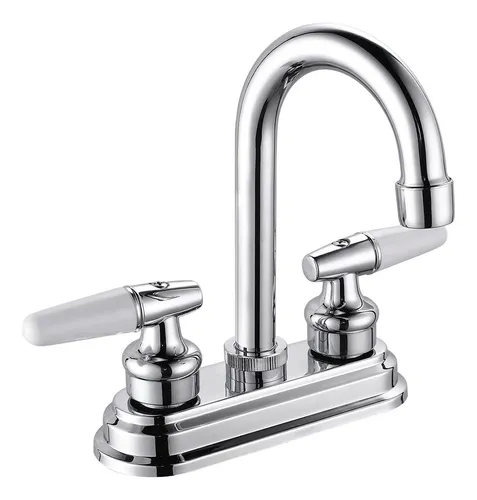
When you’re ready to upgrade, here’s what we recommend as plumbers:
- Look specifically for the WaterSense label on both showerheads and bathroom faucets. US EPA+2US EPA+2
- For showers in Montgomery County homes:
- Aim for 1.8–2.0 gpm if you’re nervous about pressure.
- Consider 1.5 gpm in smaller showers or where pressure is already strong.
- Aim for 1.8–2.0 gpm if you’re nervous about pressure.
- For bathroom faucets:
- A 1.2–1.5 gpm WaterSense faucet is a great balance of comfort and savings. US EPA+2American Standard+2
- A 1.2–1.5 gpm WaterSense faucet is a great balance of comfort and savings. US EPA+2American Standard+2
- Stick with reputable brands and read a few reviews that mention:
- Spray quality
- Ease of cleaning
- Long-term durability
- Spray quality
If you’re planning a more involved bathroom remodel—moving plumbing, upsizing lines, or relocating your water heater—that’s a good moment to loop in a local plumber so the new low-flow fixtures are matched to the rest of the system, not just bolted onto whatever’s there.
Worried about hidden plumbing issues in your new home? Get a full plumbing inspection by trusted local experts — book yours now.
How This Fits into a Bigger Water-Saving Plan
Low-flow faucets and showerheads are only one part of a larger picture that can include:
- Fixing existing leaks in your system (toilet flappers, dripping faucets, underground water lines)
- Upgrading older toilets to high-efficiency models
- Improving basement drainage and sump systems to protect your investment
- Inspecting your sewer line with a Video Camera Sewer Inspection if you’ve had backups or are buying an older home
- Addressing any structural sewer problems with Sewer Line Repair & Replacement
The big picture is simple: you want the water you pay for to arrive reliably, be used efficiently, and leave your home safely. Low-flow fixtures hit the “used efficiently” part in an easy, budget-friendly way.