

Chemical drain cleaners are one of the most misunderstood “quick fixes” in plumbing. Sometimes they help. A lot of the time, they waste money, don’t solve the real problem, and can actually make the situation more dangerous—for you and for the plumber who comes after.
I’m going to break it down clearly: when chemical drain cleaners can be reasonable, when they’re a bad idea, and what to do instead if you want drains that stay clear long-term.
What chemical drain cleaners actually do
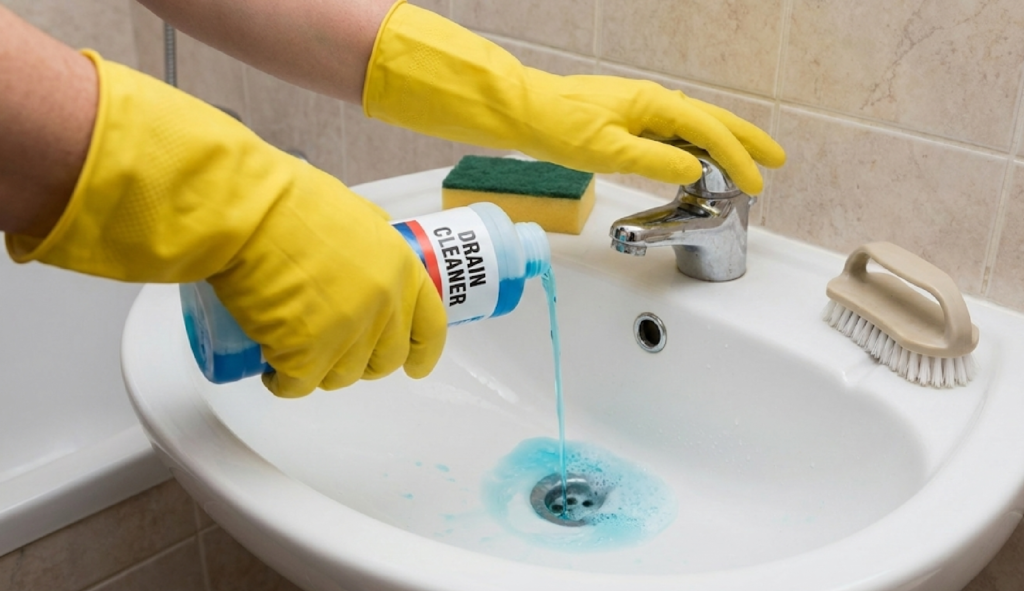
Most chemical drain cleaners fall into a few categories:
- Caustic (lye-based): breaks down organic material like hair/grease.
- Oxidizing (bleach/peroxide types): “burns” through some gunk.
- Acidic: aggressive and fast-acting, but higher risk.
The key point: they work best on soft, organic buildup close to the drain opening—not on major obstructions deeper in the line.
When chemical drain cleaners can actually help
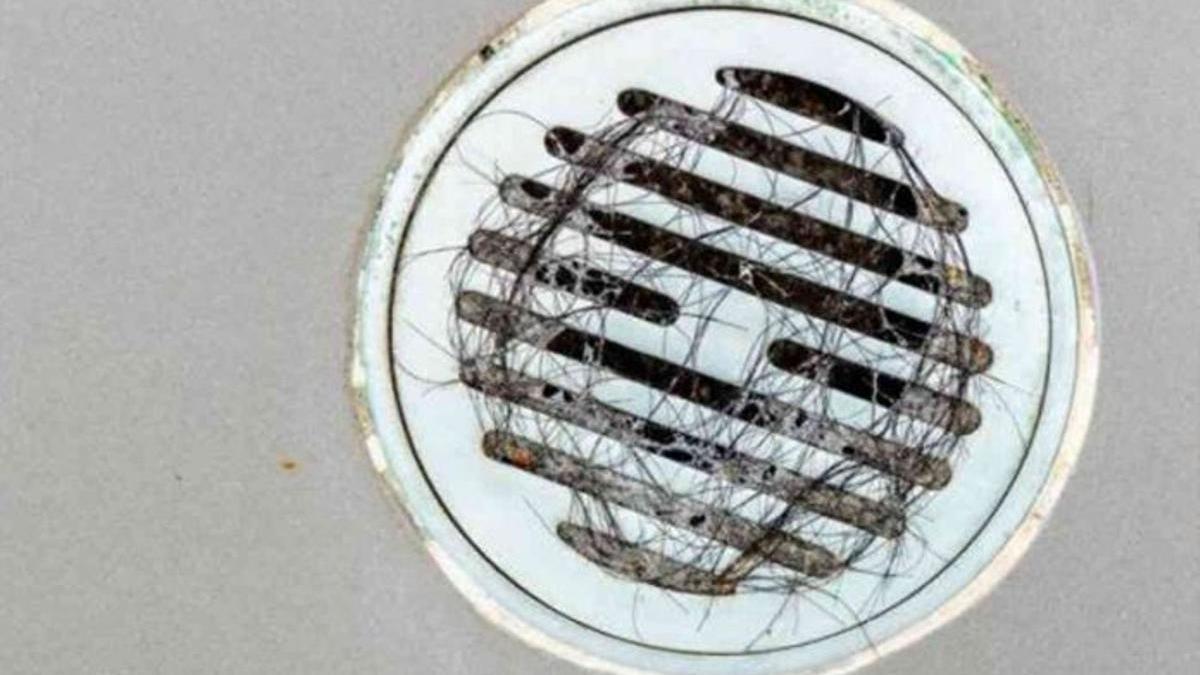
There are situations where a chemical drain cleaner can be a reasonable first attempt—if you’re careful.
✅ Best-case scenarios
- A slow drain (not fully clogged)
- Minor hair/soap buildup in a bathroom sink or tub
- A drain that’s slow but still moving water
✅ If you use one, follow these safety rules
- Use only one product (never mix brands or types).
- Wear gloves + eye protection.
- Ventilate the area.
- Follow label timing exactly (more time is not always better).
- If it doesn’t work once, stop—repeating it usually makes things worse.
When chemical drain cleaners harm more than they help
This is where most homeowners get burned (sometimes literally).
❌ 1) Full clogs (standing water)
If the drain is fully blocked, the chemical often just sits there. That creates:
- chemical pooling (hazard)
- higher chance of splashing during DIY attempts
- a dangerous situation for service later
❌ 2) Recurring clogs
If it clogs again and again, it’s rarely “just hair.” Common root causes include:
- grease buildup deeper in the line
- partial blockage in the main line
- root intrusion
- damaged, offset, or sagging pipe
That’s when the smartest move is diagnosis, not more chemicals:
👉 Video Camera Sewer Inspection
❌ 3) Older or compromised piping
Chemicals can accelerate issues in:
- older metal drain lines
- already-corroded sections
- weak joints or failing seals
If the line is compromised, chemicals won’t “fix” it—repairs will:
👉 Sewer Line Repair & Replacement
❌ 4) Sewer backup symptoms
If you have:
- gurgling drains
- backups at the lowest drain (often basement)
- multiple fixtures affected at once
…that’s not a “pour a bottle and hope” situation. Chemicals can create a hazardous mess without solving the backup.
Start with inspection:
👉 Video Camera Sewer Inspection
❌ 5) Safety risk to you and your home
Chemical cleaners can cause:
- burns to skin/eyes
- damage to fixtures
- fumes in small bathrooms
- violent reactions if mixed with other chemicals
Never mix drain cleaners. Never mix drain cleaner with bleach, vinegar, or ammonia.
The hidden downside: chemicals can make professional service harder

Here’s the part most people don’t consider: if you pour chemicals and then call for help, the technician may be working around active caustic or acidic liquid in the line.
That can:
- slow down the job
- increase safety precautions
- limit what can be done immediately
If you already poured chemicals, tell us before we begin.
Better alternatives that are safer (and often work better)
If you want a clean drain without chemical roulette:
1) Remove and clean the stopper + hair trap
This is the #1 fix for tubs and bathroom sinks.
2) Plunger (used correctly)
A good plunge can move a soft clog far better than chemicals.
3) Hot water flush for mild grease/soap buildup
This won’t solve major clogs—but it can help with early-stage buildup.
4) If it’s recurring: inspect the line
Recurrence is a “diagnose it” signal:
👉 Video Camera Sewer Inspection
5) If the line is damaged: repair it
If inspection shows pipe failure, repairs end the cycle:
👉 Sewer Line Repair & Replacement
Not sure if it’s a simple clog or a bigger sewer issue? Schedule a camera inspection with Quince Orchard Plumbing and we’ll help you solve the problem safely—without guessing.
Quick decision guide
Use this as your rule-of-thumb:
- Slow drain, first time, mild issue → maybe one careful attempt
- Standing water / fully blocked → skip chemicals
- Multiple drains slow/backing up → likely main line; skip chemicals
- Recurring clogs → camera inspection
- Basement backup / sewage smell → stop using water, call a pro