

If your kitchen sink smells bad, you’re not alone. Homeowners in Gaithersburg, Rockville, Germantown, North Potomac, and across Montgomery County deal with mysterious sink odors all the time. Sometimes it’s just old food in the drain; other times, it’s a warning sign of a deeper plumbing issue you don’t want to ignore.
The key is figuring out what kind of smell you’re dealing with and where it’s coming from. That will tell you whether a simple cleaning will solve it—or whether it’s time to call a plumber to look at your drains, venting, or even your sewer line.
In this guide, we’ll break down the most common causes of kitchen sink smells, the DIY fixes that actually work, and when issues in your Montgomery County home should be checked with a professional Video Camera Sewer Inspection or even Sewer Line Repair & Replacement.
What Kind of Smell Is It?
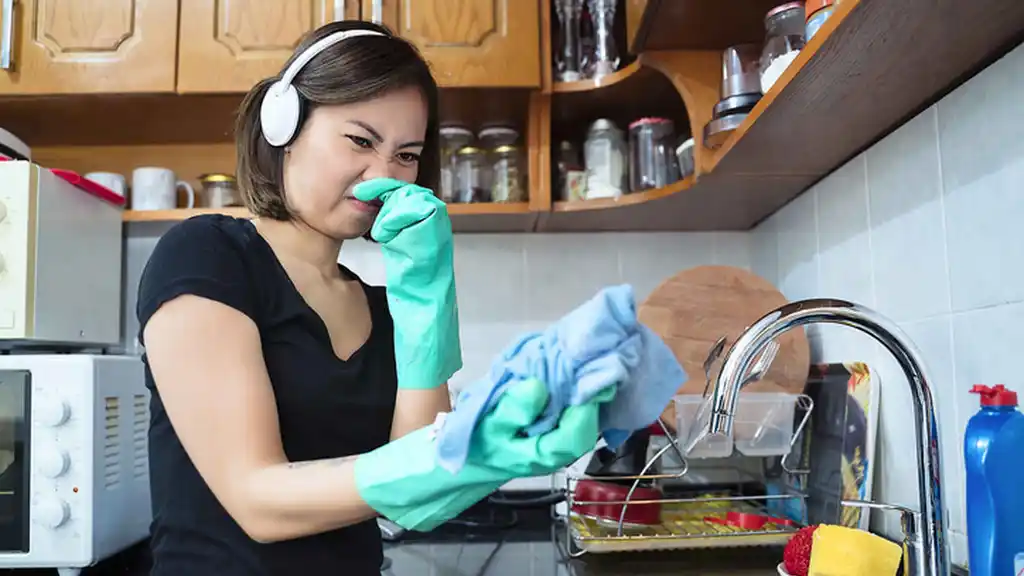
Different smells usually point to different problems. Before you grab bleach or a bottle of drain cleaner, take a minute to notice what you’re smelling:
- Rotten food / sour smell
Often caused by grease, food particles, and biofilm stuck in the drain, garbage disposal, or tailpiece under the sink. - Rotten egg / sulfur smell
Usually related to bacteria breaking down organic material in the drain or P-trap, occasionally tied to water quality or venting issues. - Sewage smell
Smells like an open sewer or porta-potty; this is a red flag for a dry or faulty trap, vent problems, or a deeper issue in the drain or sewer line. - Musty or moldy smell
Can be caused by slow leaks in the cabinet, damp wood, mold growth, or old gunk on the underside of the sink flange and stopper.
Once you can describe the smell, the next step is figuring out exactly where it’s coming from.
Step 1: Find the Real Source of the Smell
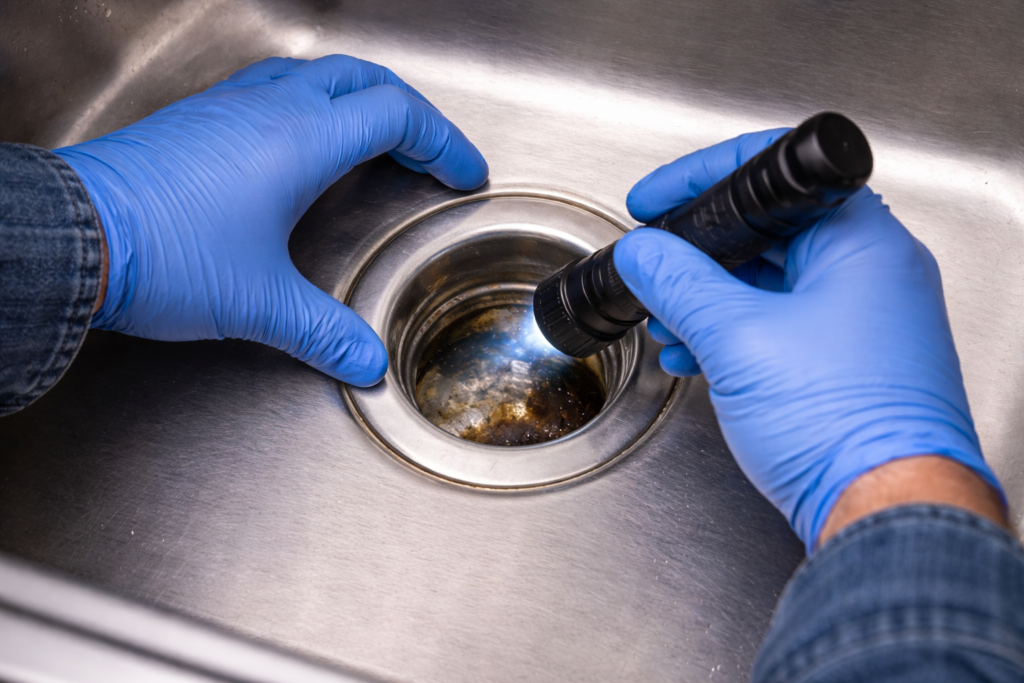
Stand at the sink and check carefully:
- Is the smell strongest right at the drain opening?
- Does it get worse when you run water or the garbage disposal?
- Does it seem to come from the cabinet under the sink (leaks, mold)?
- Does it show up after the dishwasher runs or when another fixture drains?
Check the P-Trap
Under your kitchen sink, there’s a curved section of pipe called the P-trap. It holds a small amount of water to block sewer gas from coming back into your home.
Problems happen when:
- The sink hasn’t been used in a while and the trap water has evaporated.
- A poorly installed or damaged trap can’t hold water properly.
If the trap dries out, sewer gases can move freely into your kitchen, causing that unmistakable “sewer” smell.
Look at the Garbage Disposal
If your kitchen sink has a garbage disposal, it’s a prime suspect for bad smells:
- Grease and food can coat the grind chamber and splash up under the rubber splash guard.
- Stringy foods, coffee grounds, and other debris can get trapped and rot over time.
Don’t Forget the Dishwasher Connection
The dishwasher usually ties into the kitchen drain system through a branch connection or a disposal. If that connection is poorly installed or clogged, dirty water can:
- Back up into the sink when the dishwasher drains
- Leave food debris and residue sitting in the branch, causing smells
- In some cases, even create a minor cross-contamination risk
If you’re seeing dirty water in the sink after the dishwasher runs, or you’re concerned about cross-connections, it’s smart to have a plumber evaluate the setup and, if needed, make corrections as part of professional Backflow Prevention Services.
DIY Fixes for a Smelly Kitchen Sink
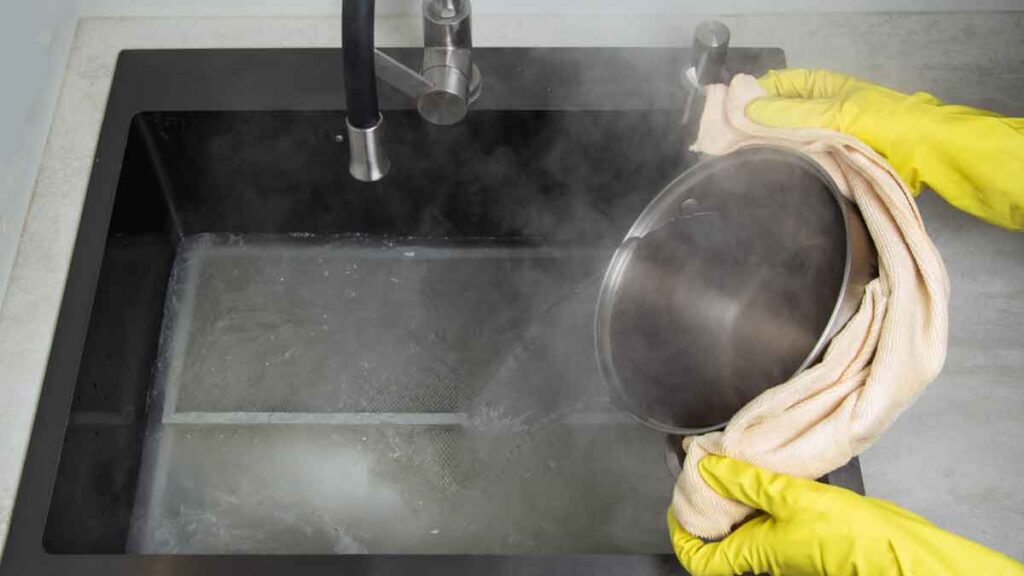
Once you’ve narrowed down where the smell comes from, you can tackle some safe, effective DIY steps.
1. Flush and Re-Fill the P-Trap
If the sewer smell started after a vacation or long period of not using the sink, the fix might be simple:
- Run hot water for a minute or two down the drain.
- If the smell disappears, your trap probably just needed to be refilled.
If the smell comes back quickly or doesn’t go away, the trap may not be holding water properly—or there may be a venting or deeper drain issue that needs professional attention.
2. Deep-Clean the Drain and Stopper
The top few inches of your drain can hold a surprising amount of gunk. To clean it:
- Remove the sink stopper or basket strainer if possible.
- Use a small brush (even an old toothbrush) with dish soap to scrub:
- The underside of the stopper or strainer
- The inside of the drain opening
- Any silicone or rubber parts where slime can grow
- Rinse thoroughly with hot water.
This alone can dramatically reduce sour or musty smells in many sinks around Gaithersburg and Rockville homes.
3. Clean the Garbage Disposal the Right Way
Skip the harsh chemical drain cleaners. Instead, try this approach:
- Turn off the disposal and unplug it or switch it off at the breaker if you’ll be reaching inside.
- Use a long-handled brush to scrub inside the rubber splash guard and upper chamber.
- Run a handful of ice cubes and a small amount of coarse salt through the disposal to help knock buildup off the grinding surfaces.
- Finish by running cold water and a few lemon or orange peels for a fresh scent (optional, not a substitute for cleaning).
If you see cracks, leaks, or severe rust, it may be time to talk to a plumber about repair or replacement rather than trying to mask the smell.
4. Carefully Clean the Trap (If You’re Comfortable)
For DIY-minded homeowners, you can sometimes remove and clean the P-trap yourself:
- Place a bucket under the trap.
- Loosen the slip nuts by hand or with pliers (gently).
- Remove the trap, dump the contents in the bucket, and clean out any sludge or debris.
- Reinstall, making sure washers are seated correctly, and check for leaks as you run water.
If you’re not comfortable with this, that’s a great point to call a local plumber in Montgomery County to do a professional cleaning and inspection instead of risking a leak under the sink.
5. Use Gentle, Plumbing-Safe Cleaners
For ongoing maintenance, enzyme-based or bio-based drain cleaners can help break down organic buildup in the drain line without the harshness of strong chemical drain cleaners.
A few notes:
- Avoid frequent use of corrosive chemical drain openers—they can damage older pipes and disposals.
- Never mix different chemical products in the same drain.
- If a drain is completely blocked or backing up, skip the chemicals and call a plumber instead.
When a Smelly Kitchen Sink Is Actually a Bigger Plumbing Problem

Not every smell is just “dirty disposal” territory. There are times when odors from your kitchen sink are warning you about a more serious plumbing or sewer issue in your Montgomery County home.
1. Persistent Sewage Smell That Won’t Go Away
If you’ve cleaned the drain, run water through the trap, and checked the disposal, but the sink still smells like sewage, it could indicate:
- A venting problem (blocked or improperly installed vent)
- A damaged or improperly installed trap
- A deeper blockage or defect in the main drain or sewer line
When the smell is clearly “sewer gas,” especially if it’s worse after heavy use or rain, it’s time to have the system inspected professionally. A Video Camera Sewer Inspection can check for cracks, roots, or sags in the line that may be letting sewer gas and wastewater linger near the house.
2. Slow Drains and Odors in More Than One Fixture
If you notice:
- Slow draining in the kitchen sink and other sinks or tubs
- Gurgling toilets when the sink drains
- Sewer smells in multiple rooms
you may not have a “kitchen sink problem”—you may have a whole-house drain or sewer problem. That often points to:
- Partial blockage or buildup in the main drain
- Tree roots intruding into the sewer line
- Sagging or broken sections of pipe
In these cases, snaking the kitchen sink over and over won’t fix the underlying issue. A camera inspection and, if needed, Sewer Line Repair & Replacement are usually the real solutions.
3. Dirty Water Backing Up Into the Kitchen Sink
If you see dirty water backing up into the kitchen sink when:
- The dishwasher runs
- The washing machine drains
- A downstairs bathroom is used
you may be dealing with:
- A partially blocked main drain or branch line
- A poorly installed or failing connection between fixtures
- A cross-connection or backflow issue that needs correction
This is more than just a smell problem—it can be a hygiene and safety issue. A licensed plumber can evaluate the layout, correct any improper cross-connections, and recommend options such as proper air gaps, high loops, or other Backflow Prevention Services as needed.
Tired of a smelly kitchen sink? Call Quince Orchard Plumbing today to find and fix the real cause in your Montgomery County home.
How Quince Orchard Plumbing Can Help

For homeowners in Gaithersburg (20878), Rockville, Germantown, North Potomac, Darnestown, Montgomery Village, Potomac (north), Derwood, Kentlands, and Washington Grove, we see the same pattern again and again:
- The kitchen sink starts to smell.
- A few home remedies help, but the problem keeps coming back.
- Eventually, it turns out to be a deeper issue in the drain or sewer system.
When you call Quince Orchard Plumbing, we can:
- Inspect and clean the kitchen drain, trap, and disposal properly.
- Check under-sink piping for leaks, improper slopes, or venting problems.
- Use a Video Camera Sewer Inspection to see the condition of your main line.
- Recommend targeted solutions, from simple repairs to full Sewer Line Repair & Replacement when necessary.
- Evaluate and correct any risky cross-connections through our Backflow Prevention Services.
The goal is simple: get rid of the smell, protect your home, and make sure your plumbing system is working the way it should—without you having to keep guessing or pouring new chemicals down the drain every week.
Service Area: Quince Orchard Plumbing proudly serves Gaithersburg (20878), Rockville, Germantown, North Potomac, Darnestown, Montgomery Village, Potomac (north), Derwood, Kentlands, and Washington Grove.
Tired of a smelly kitchen sink? Let Quince Orchard Plumbing find (and fix) the real cause.
From simple drain cleanings to full sewer inspections and repairs, our licensed team can diagnose persistent kitchen sink odors and recommend the right plumbing fix for your Montgomery County home.