
If you notice toilet leaking at the base after flushing, treat it as a “fix it now” issue—not a cosmetic annoyance. A base leak can soak the subfloor, damage the ceiling below, and create odor or mold over time. In Montgomery County, MD—across Gaithersburg (20878), Rockville, Germantown, North Potomac, and nearby areas—this is one of the most common bathroom leak calls we respond to.
The good news is that base leaks usually come down to a short list of causes. Most often it’s a failed wax ring, but sometimes the real culprit is a damaged or improperly set toilet flange. Below is what a plumber checks first, how to tell the difference, and what to do next.
Toilet leaking at the base after flushing: what it usually means
A toilet should not leak at the base—ever. When it does, the leak is typically happening between the toilet horn (outlet) and the flange, where the wax ring (or wax-free seal) creates the water-tight connection.
In other words, you’re not just dealing with “water on the floor.” You’re dealing with a seal failure that can worsen quickly if the toilet rocks, the flange is broken, or the drain line is partially obstructed.
Wax ring vs. flange damage: the simplest way to tell
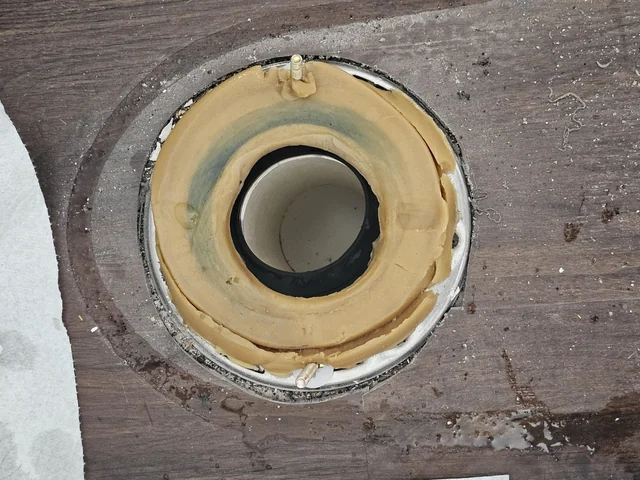
It’s often a wax ring issue if:
- The leak happens right after flushing
- The toilet feels slightly loose or rocks
- The leak started after someone leaned on the toilet or a flooring change
- You see water on the floor but no obvious crack in the bowl/tank
It may be a flange problem if:
- The toilet rocks even after tightening bolts
- The bolts won’t tighten (they spin or pull up)
- The toilet was recently installed and never felt solid
- You have repeated wax ring failures
- The floor around the toilet feels soft, uneven, or damaged
Important: A wax ring can fail because the flange is damaged or set at the wrong height. Therefore, replacing the wax ring alone can be a temporary fix if the flange isn’t corrected.
What a plumber checks first (real checklist)
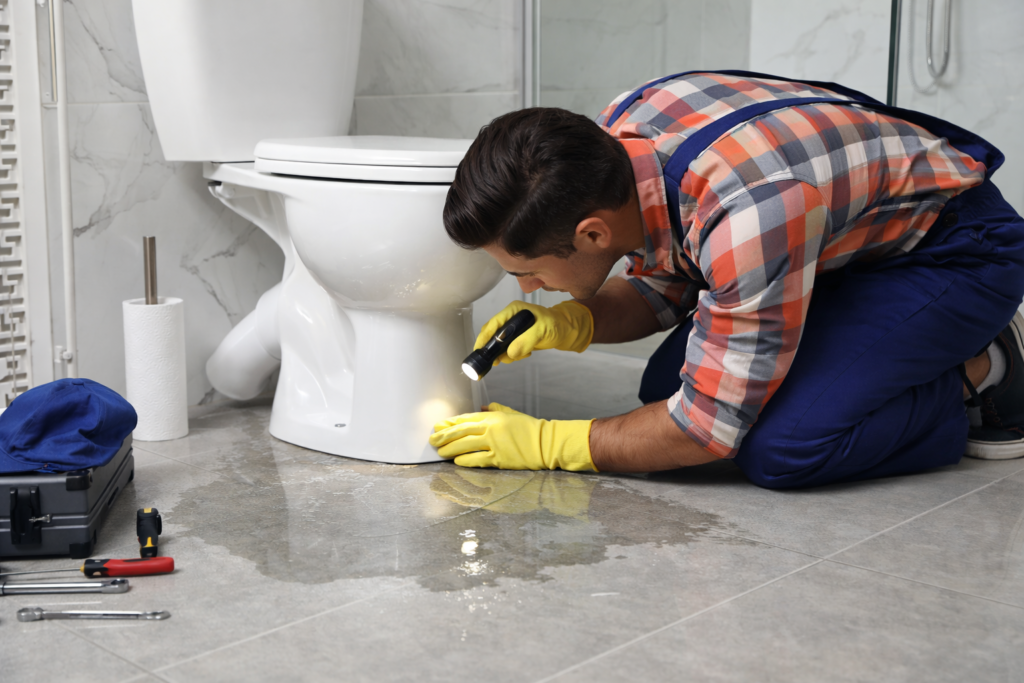
When we arrive for a base leak, we don’t start by guessing. We follow a simple inspection flow.
1) Confirm the leak is from the base (not condensation or a supply line)
- Dry the floor completely
- Flush once and watch the base
- Check the shutoff and supply connection for drips
- Look for tank-to-bowl leaks (if it’s a two-piece toilet)
Tip: Condensation (“sweating”) usually makes the whole tank damp, not a concentrated leak at the base right after flushing.
2) Check for toilet movement (rocking)
A rocking toilet is one of the biggest wax ring killers. If the toilet moves, the seal can’t hold reliably.
- Test gently side-to-side
- Inspect the bolt caps
- Confirm the floor is stable and level
3) Identify flange height and condition
A proper flange sits at the right height relative to the finished floor. Too low, too high, cracked, or corroded—and the seal becomes unreliable.
We look for:
- Cracks or missing flange sections
- Corrosion (especially older metal flanges)
- Proper bolt slots and hold-down strength
- Flange height vs finished floor
4) Inspect the subfloor and flooring around the toilet
If water has been leaking for a while, the subfloor can soften. That causes movement, which causes more leaking—creating a cycle.
Clues include:
- Soft spots
- Warped flooring
- Musty odor
- Stains on the ceiling below (if applicable)
5) Consider drain performance and backup risk
Sometimes a “wax ring leak” is triggered by a downstream restriction that causes water to rise and force leakage at weak points.
If you also have slow drains, gurgling, or backups, we may recommend a Video Camera Sewer Inspection to rule out deeper line issues. If a damaged line is confirmed, Sewer Line Repair & Replacement may be needed.
Common causes of base leaks (beyond wax ring failure)
Loose closet bolts
Bolts that aren’t holding the toilet tight allow movement. Movement breaks the seal. Simple as that.
Improper shimming or no shims on an uneven floor
If the floor isn’t level, the toilet needs shims to eliminate rocking. Otherwise, the wax ring gets compressed unevenly and fails.
Double-stacked wax rings (sometimes used, often done wrong)
Stacking wax rings can work in specific flange-height situations, but it’s easy to misalign. A better fix is correcting flange height or using the right seal design.
Cracked porcelain (less common, but serious)
A hairline crack can leak during flush. If you suspect this, stop using the toilet and have it inspected.
If you have a toilet leaking at the base after flushing, don’t wait for subfloor damage. Call Quince Orchard Plumbing for fast, local help in Montgomery County, MD.
What you should do right now (safe steps)
If your toilet leaking at the base after flushing is active, do this:
- Stop flushing (each flush can worsen subfloor damage)
- Turn off the toilet shutoff valve if needed
- Dry the area and place towels to monitor leak amount
- Avoid tightening bolts aggressively (you can crack porcelain)
- Schedule repair before the floor becomes soft
DIY vs. call a plumber (quick decision)
DIY can be reasonable if:
- You’re comfortable pulling and resetting a toilet
- The floor is solid and the flange is clearly intact
- You can shim properly and tighten bolts correctly
Call a plumber if:
- The toilet rocks, or the floor feels soft
- You suspect flange damage or improper flange height
- The leak has been going on long enough to cause odor or staining
- You also have slow drains, gurgling, or backup symptoms
If you’re seeing multi-fixture drain symptoms, it’s smart to confirm the line condition with Video Camera Sewer Inspection before repeat resets.
Prevention tips (so it doesn’t happen again)
- Don’t ignore small rocking movement—shim it early
- Use a quality seal and confirm flange height
- Tighten bolts evenly (snug, not “cranked”)
- Re-check bolt tightness after a day if the toilet was freshly set
- Address drain slowdowns early to avoid pressure/backups
FAQ: Toilet leaking at the base after flushing
Is a base leak always a wax ring?
Often, yes. However, flange damage, improper flange height, or floor movement can cause repeat failures even with a new ring.
Can I just caulk around the base?
Caulk can hide symptoms and trap water, causing more damage. It doesn’t fix the seal failure.
Why does it leak only when I flush?
Because the flush sends a surge of water through the seal area. If the wax ring or flange connection is compromised, that surge exposes it immediately.
If you have a toilet leaking at the base after flushing, don’t wait for subfloor damage. Call Quince Orchard Plumbing for fast, local help in Montgomery County, MD.
Service Area (Maryland only)
Quince Orchard Plumbing serves Gaithersburg (20878), Rockville, Germantown, North Potomac, Darnestown, Montgomery Village, Potomac (north), Derwood, Kentlands, and Washington Grove.