

If your sewage ejector pump alarm is going off, treat it as a basement bathroom emergency. The alarm usually means the pit water level is too high—either the pump isn’t moving waste out, or it can’t keep up. The right first steps can prevent a messy backup, protect your home, and reduce damage.
Below is a practical, Maryland-homeowner-safe guide for Montgomery County (Gaithersburg 20878, Rockville, Germantown, North Potomac, Derwood, Kentlands, and nearby areas).
What the alarm typically means
Most alarms are triggered by a high-water float inside the ejector basin. Common reasons:
- Power issue (tripped breaker, failed GFCI, unplugged cord)
- Pump failure (burned-out motor, jammed impeller)
- Float switch stuck or tangled
- Discharge line issue (check valve failure, blockage)
- Heavy use + pump can’t keep up
- Main sewer restriction causing slow outflow (less common, but high impact)
If you’re seeing recurring basement drainage issues, a Video Camera Sewer Inspection is often the fastest way to identify restrictions before you end up with a full backup.
Emergency steps: what to do right now (in order)
1) Stop using water immediately
Do not flush and avoid using:
- Basement toilet, shower, sink, washer, utility sink (anything connected to the ejector)
- If the ejector serves only the basement bathroom, keep the rest of the house minimal too until you know what’s happening.
This alone can prevent the pit from overflowing.
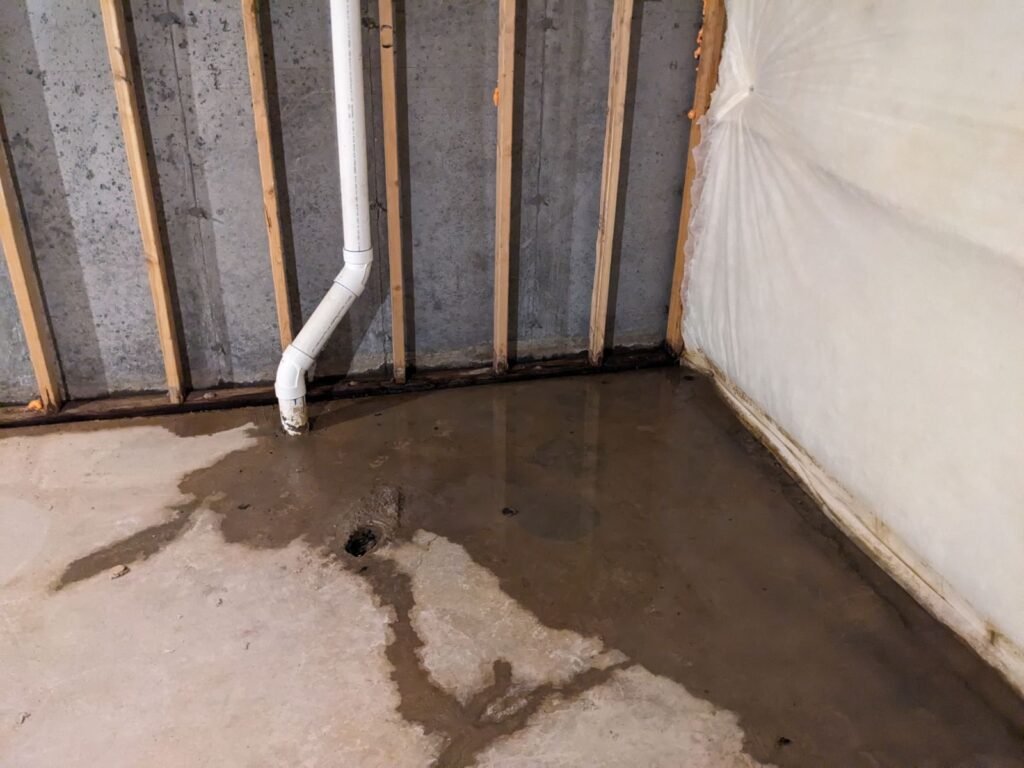
2) Look for signs of active backup
Check quickly (no deep dive yet):
- Is there sewage odor?
- Is water rising around a basement floor drain?
- Is anything backing up into the shower/tub/toilet?
If you see active backup or sewage on the floor, stop and call a plumber—this is no longer a “simple reset” situation. If the problem may relate to the main line, we typically start with Sewer Line Repair & Replacement or a Video Camera Sewer Inspection to confirm the cause.
3) Check if the pump is running
Stand near the basin cover and listen:
- Running sound / vibration = pump is trying
- Silent = power, float, or pump failure
4) Confirm power (fast checks)
- Make sure the pump is plugged in (this happens more than you’d think)
- Check the breaker labeled sump/ejector/basement bath
- Check for a tripped GFCI outlet nearby (reset if safe)
If the area is wet around outlets or cords, don’t touch anything—turn off the breaker and call a pro.
5) Silence the alarm (only after steps above)
Most alarms have a silence button. Silencing is fine—but don’t ignore the cause. If the level keeps rising, the alarm will come back (and the pit may overflow).
Need help fast with a sewage ejector pump alarm or basement backup risk? Call Quince Orchard Plumbing for local service in Montgomery County, Maryland.
Safe homeowner checks (only if the area is dry and you’re comfortable)
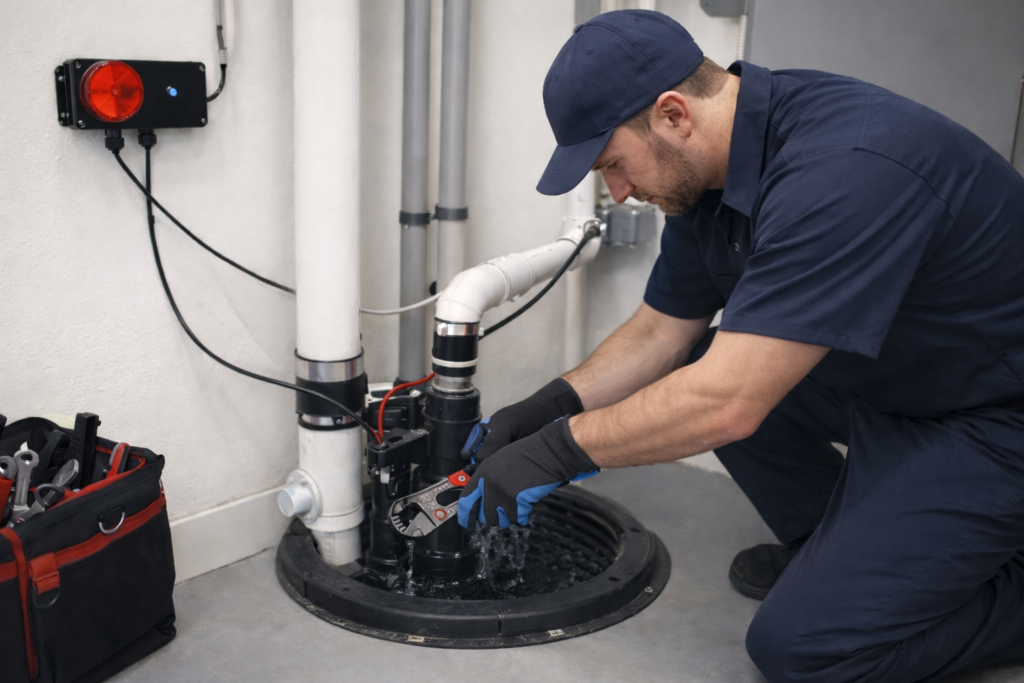
A) Check the alarm panel lights
Many panels show:
- “High Water” (float triggered)
- “Pump Running” (if wired that way)
This can help you understand whether it’s an overflow risk vs a nuisance trigger.
B) Identify the #1 failure point: the float
If you can safely open the lid (some lids are bolted/sealed), the most common issue is:
- Float stuck against the basin wall
- Float tangled in cords
- Debris interfering with movement
If you’re not 100% comfortable, stop here. A sewage pit is not a “bare hands” DIY project.
C) If the pump is running but level isn’t dropping
Likely causes:
- Discharge blockage
- Failed check valve (water falls back in)
- Pump impeller jammed or worn
This is typically a service call, not a reset.
Quick troubleshooting table
| What you see | Likely cause | What to do |
|---|---|---|
| Alarm on, pump silent | Power issue, failed float, dead pump | Check breaker/GFCI/plug; call if still silent |
| Pump runs, alarm still on | Not pumping out / backflow | Stop water use; call for diagnosis |
| Alarm keeps returning after “silence” | Level still rising or float issue | Treat as active issue, not an alarm problem |
| Sewage smell / water on floor | Backup is happening | Avoid contact, stop water use, call immediately |
| Repeated alarms in storms | Inflow/infiltration or sewer restriction | Consider Video Camera Sewer Inspection |
When to replace vs repair an ejector pump (simple rule)
You can often repair if:
- It’s clearly a float switch problem
- It’s a wiring/power/connection issue
- The pump is otherwise in good shape
You should consider replacement if:
- The pump is older and has repeated failures
- The motor hums but can’t move water (internal failure)
- You’ve had a sewage overflow event (reliability becomes priority)
- The pump can’t keep up with typical basement use even when everything is “working”
If the underlying issue is a main sewer restriction, repairs to the ejector alone won’t solve it—this is where Sewer Line Repair & Replacement and/or a Video Camera Sewer Inspection can save you from repeat emergencies.
Prevent the next alarm: upgrades that actually matter
1) Install a high-quality alarm and test it
Test the high-water alarm quarterly. Batteries (if present) should be replaced on a schedule.
2) Add a backup plan (especially for finished basements)
Options include:
- Backup pump systems (where applicable)
- Battery backup for alarm/controls
- Generator/inverter plan if your area experiences outages during storms
3) Keep discharge components serviceable
A lot of failures come down to:
- Check valve issues
- Blocked discharge
- Poor access for maintenance
4) If you’ve ever had drain gurgling, slow whole-house drains, or odor
Don’t wait for the next alarm—get a Video Camera Sewer Inspection to rule out main line restrictions or root intrusion.
5) After any sewage overflow, consider backflow/cross-connection safety
Flooding and contamination events can create risks in certain plumbing setups. If you’re concerned, an evaluation via Backflow Prevention Services can help ensure your potable water system remains protected.
Need help fast with a sewage ejector pump alarm or basement backup risk? Call Quince Orchard Plumbing for local service in Montgomery County, Maryland.
Service Area (Maryland only)
Quince Orchard Plumbing serves Gaithersburg (20878), Rockville, Germantown, North Potomac, Darnestown, Montgomery Village, Potomac (north), Derwood, Kentlands, and Washington Grove.