

Water damage is one of the fastest ways to turn a “small plumbing issue” into a five-figure renovation—especially in Maryland homes with finished basements, utility rooms, or second-floor laundry. The smartest setup in 2026 is a two-layer defense:
- Whole-home smart shutoff valve (stops catastrophic leaks fast)
- Leak detectors placed where leaks actually start (so you catch problems early)
This guide is written for homeowners in Montgomery County, MD—Gaithersburg (20878), Rockville, Germantown, North Potomac, Derwood, Kentlands, and nearby areas—where winter freeze risks, older shutoff valves, and basement mechanical rooms are common.
If you want this planned and installed cleanly (and tested), our team can help through Water Line Repair and Water Heater Services.
First: smart shutoff vs leak detector (what each one does)
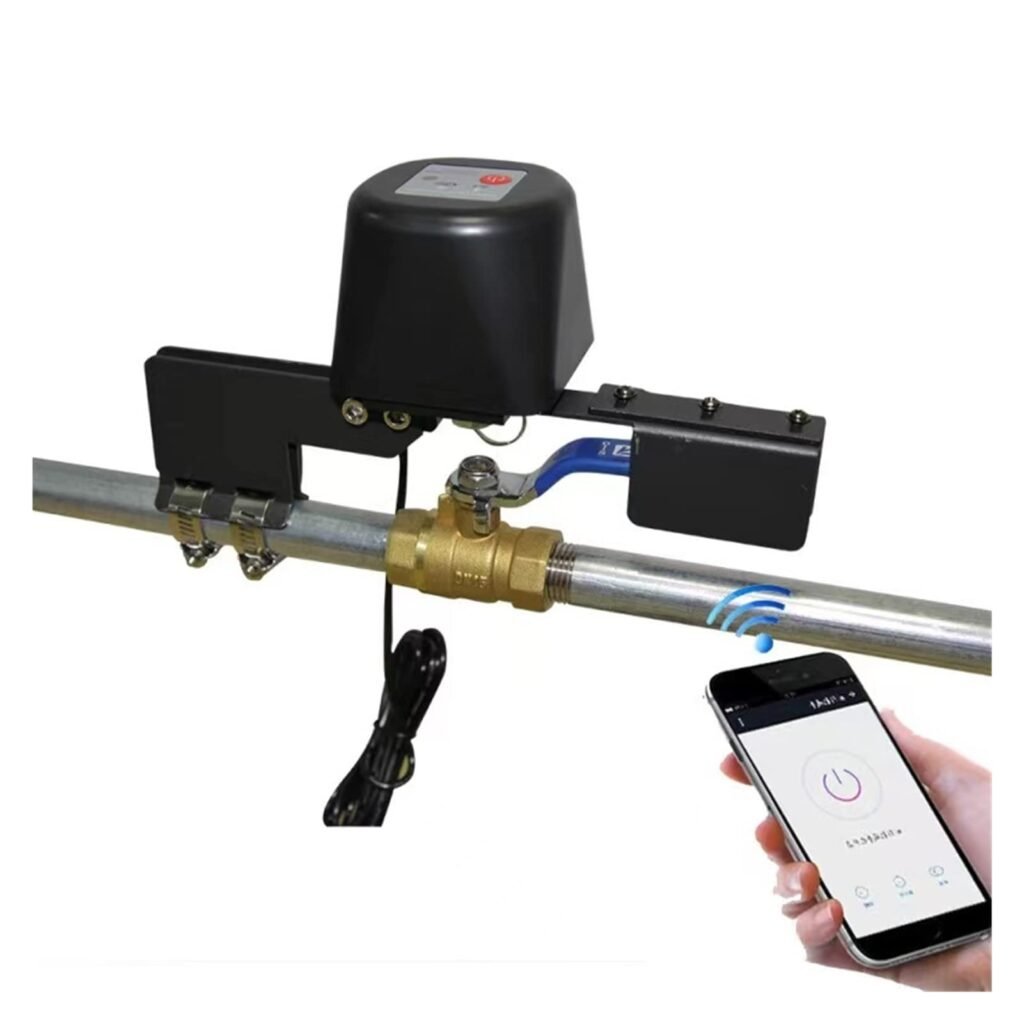
Smart water shutoff valve (whole-home)
Installed on the main water line. It monitors flow/pressure patterns and can automatically shut off water during a major leak (depending on settings and device).
Best for: burst pipes, failed hose bibs, water heater blowouts, supply line ruptures, “nobody’s home” disasters.
Leak detectors (point sensors)
Small sensors placed near common leak points (water heater pan, under sinks, behind toilets, near sump pit overflow point). They alert you fast—some can trigger an automatic shutoff if paired to a valve/controller.
Best for: slow drips, under-sink leaks, toilet supply leaks, early detection before mold and flooring damage.
Pro rule: If you can only do one thing today, start with leak detectors in the highest-risk spots. If you want the strongest protection, add the whole-home shutoff.
Want real flood protection—not just alerts? Call Quince Orchard Plumbing for smart shutoff valve and leak detector planning in Montgomery County, Maryland.
What to look for in 2026 (features that actually matter)
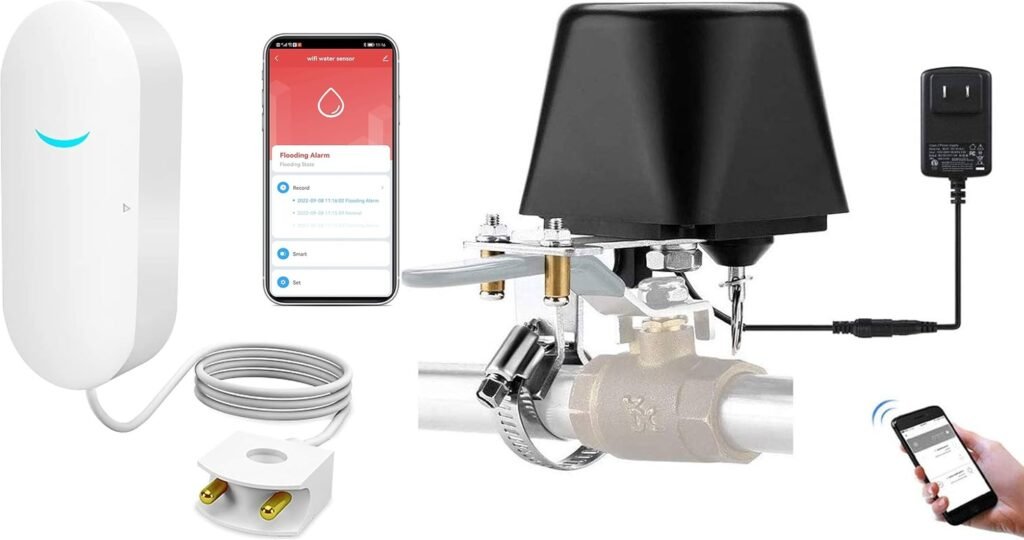
For whole-home shutoff valves
- Automatic shutoff (not just alerts)
- Works during Wi-Fi loss (local protection is a plus)
- Optional battery backup (storms + outages often happen together)
- Reliable leak detection logic (pressure/flow analytics + learning)
- Correct sizing for your main line (commonly 3/4″ or 1″ in many homes)
- Professional install recommended (main line work is not a “trial and error” DIY)
For leak detectors
- Loud local alarm + phone alerts
- Temperature/humidity (bonus) if you want freeze warnings
- Long range if you have a bigger home or detached garage
- Easy battery access + low-battery alerts
- Integration (pairing to shutoff is ideal, but not required)
2026 Pro picks: whole-home smart shutoff valves

These are widely recognized options that fit different home situations and budgets.
1) Flo by Moen Smart Water Shutoff
Best for: homeowners who want strong automation + detailed monitoring
Why it’s a top pick: automatic shutoff for major leaks, usage insights, and an ecosystem that can scale (valve + detectors).
2) Phyn Plus v2 Smart Water Assistant + Shutoff
Best for: homeowners who want advanced detection and a strong “no nonsense” shutoff system
Why it’s a top pick: pressure-based leak detection and whole-home shutoff, with a strong reputation among smart shutoff options.
3) YoLink Valve Controller + “Bulldog” Valve Robot (retrofit style)
Best for: when you want shutoff automation without cutting the main line (fits certain setups)
Why it’s a top pick: can pair with leak sensors and trigger shutoff; good range in some home layouts. Requires correct planning so it’s reliable.
4) Leak Defense System (smart shutoff + sensors approach)
Best for: a system built around sensors + shutoff logic
Why it’s a top pick: often used in more “systemized” installs where multiple leak points are monitored.
5) “Monitoring-only” add-on (if shutoff isn’t possible yet)
If your main shutoff is in a tough location or you’re not ready for main-line work, a monitoring-first option can still add value—just remember it won’t physically stop water without a valve.
2026 Pro picks: leak detectors (best places to start)
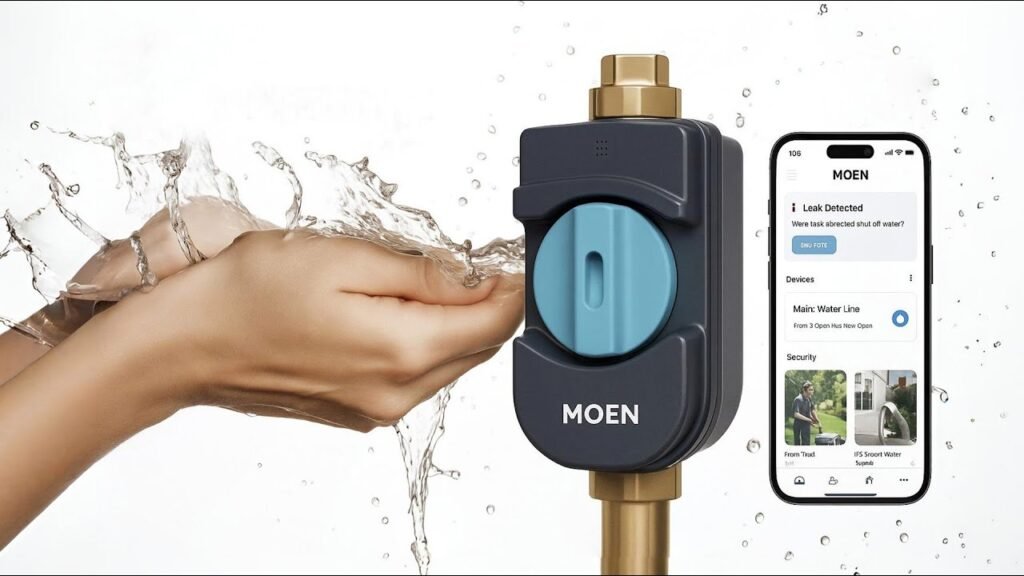
1) Flo by Moen Smart Water Detector
Great for basements and utility rooms because it can detect water + humidity/temperature (useful for freeze risk awareness). Pairing it with a shutoff system gives you the best outcome.
2) First Alert water leak alarm style detectors
Simple, loud, and effective—perfect for under-sink placement and quick alerts.
3) YoLink leak sensors (long-range ecosystem style)
Good if your home layout makes Wi-Fi sensors unreliable in far corners.
4) A “multi-sensor” kit approach (kitchen + baths + basement)
In real homes, the best move is usually 3–6 sensors deployed intelligently, not a single sensor in one spot.
The placement plan that prevents real flood damage (copy/paste checklist)

Priority 1: basement mechanical area
- Water heater pan / base area
→ Protect and maintain via Water Heater Services - Sump pit area (or next to the pit if sealed lid)
- Near the main water entry / main shutoff area
Priority 2: kitchen + laundry
- Under kitchen sink (garbage disposal + supply lines)
- Behind dishwasher (if accessible)
- Laundry machine supply box / behind washer
Priority 3: bathrooms
- Behind toilets (supply line + fill valve leaks)
- Under vanity sinks
Pro tip: Put at least one sensor where you’ll hear it, not only where it might leak.
Want real flood protection—not just alerts? Call Quince Orchard Plumbing for smart shutoff valve and leak detector planning in Montgomery County, Maryland.
DIY vs calling a pro
DIY is fine for:
- Placing leak detectors
- Testing alarms
- Setting up notifications and routines
Call a pro for:
- Any main-line shutoff installation (cutting/press-fitting/valve work)
- Replacing a failing shutoff valve
- Verifying your main line size, pressure behavior, and correct valve placement
- Coordinating protection around water heaters and basement mechanical rooms
→ Water Heater Services
FAQ
Should I get a smart shutoff even if I already have leak detectors?
Yes—detectors alert you, but the valve can stop the water when you’re asleep or away.
Do smart shutoff valves work if Wi-Fi goes out?
Some systems keep protective behavior even during Wi-Fi loss, but you should treat Wi-Fi as a risk factor and plan accordingly.
What’s the single best “starter kit” approach?
3–6 leak sensors (basement + kitchen + laundry) now, then add a whole-home shutoff valve next.
Service Area (Maryland only)
Quince Orchard Plumbing serves Gaithersburg (20878), Rockville, Germantown, North Potomac, Darnestown, Montgomery Village, Potomac (north), Derwood, Kentlands, and Washington Grove.