

If you’re dealing with recurring clogs, slow drains, gurgling sounds, or a basement drain that backs up during heavy rain, a sewer camera inspection is usually the fastest way to stop guessing. Instead of “try this drain cleaner” or repeated snaking that doesn’t last, a camera inspection shows you exactly what’s happening inside the pipe—roots, cracks, a belly (sag), heavy buildup, or a partial collapse.
This guide is written for homeowners across Montgomery County, MD—including Gaithersburg (20878), Rockville, Germantown, North Potomac, Darnestown, Montgomery Village, Potomac (north), Derwood, Kentlands, and Washington Grove—where many homes have older sewer materials and long runs that can hide problems for years.
If you want it inspected professionally, start here: Video Camera Sewer Inspection.
What is a sewer camera inspection (and what it isn’t)?
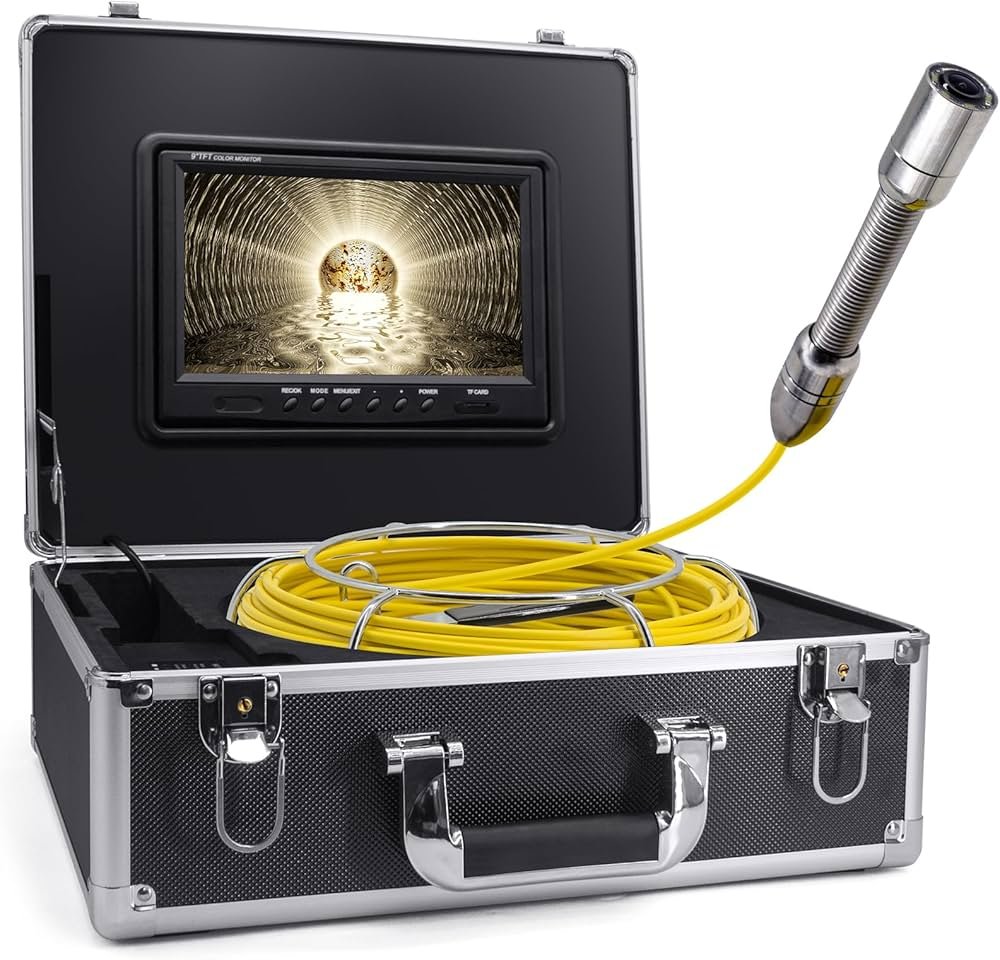
A sewer camera inspection uses a waterproof camera on a flexible cable to record the inside of your sewer line. It helps confirm:
- the cause of backups or slow drains
- the location of defects (sometimes with distance markers)
- whether cleaning will solve it or if repair is needed
A camera inspection is not the same as “snaking.” Snaking may restore flow temporarily, but it often doesn’t tell you why the line keeps failing.
What a sewer camera inspection can find
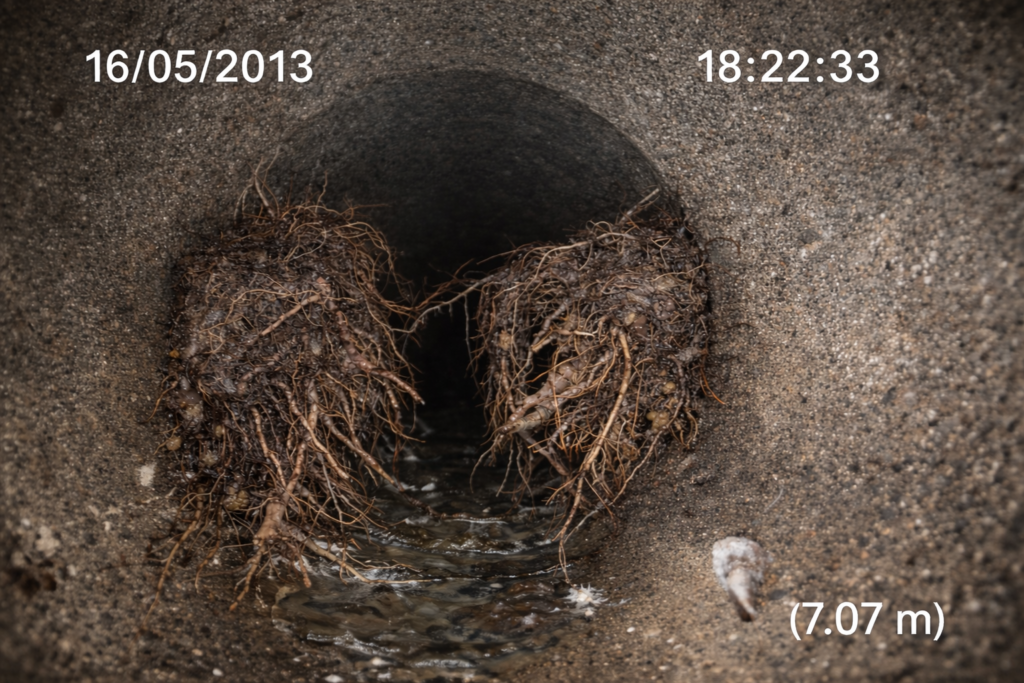
Here are the most common issues we see in Maryland homes:
1) Tree roots
Roots are one of the top causes of recurring clogs—especially where older clay or cast iron lines have joints. A camera shows:
- whether roots are minor (cleanable) or severe (damaging the pipe)
- how far into the line the roots extend
2) Cracks, offsets, and separated joints
Small cracks can become big problems over time. Offsets happen when one pipe segment shifts slightly, catching paper and creating repeat clogs.
3) “Bellies” (sags) in the line
A belly is a low spot where water and waste sit instead of flowing out. Snaking can’t fix slope issues—only confirms temporary flow.
4) Heavy buildup and scaling (especially old cast iron)
Old cast iron can develop internal scaling that narrows the pipe diameter. A camera can show how restricted the line is and whether cleaning methods like hydro-jetting are appropriate.
5) Grease, wipes, foreign objects
The camera can identify obstructions that keep coming back—so the solution isn’t “snake it again,” it’s “remove the cause and correct habits.”
6) Collapsed or failing pipe sections
If the pipe is collapsing, a camera inspection is critical to avoid wasted money on repeated cleanings and to plan the safest repair.
Need answers fast? Call Quince Orchard Plumbing for a sewer camera inspection in Montgomery County, MD.
When you need a sewer camera inspection in Maryland

A camera inspection is strongly recommended if you have any of these patterns:
You have recurring clogs
- You’re snaking the line more than once a year
- The same bathroom or floor drain keeps backing up
- Plunging “works” but the issue returns quickly
Multiple fixtures are slow or gurgling
If the tub, toilet, and sink are all slow (or you hear gurgling), that’s often a main line issue—not a single fixture problem.
Sewage smell in the basement or around drains
Odors can come from partial blockages, venting issues, or standing waste in a belly.
Basement floor drain backs up in storms
That can be a surcharge/backwater scenario or a restricted line that fails when flow increases. A camera inspection tells you which.
You’re considering sewer repair or replacement
A camera inspection prevents unnecessary work and helps confirm whether you need:
- cleaning only
- a spot repair
- trenchless options (where feasible)
- full replacement
If the camera shows a structural defect, the next step is often Sewer Line Repair & Replacement.
How the inspection typically works
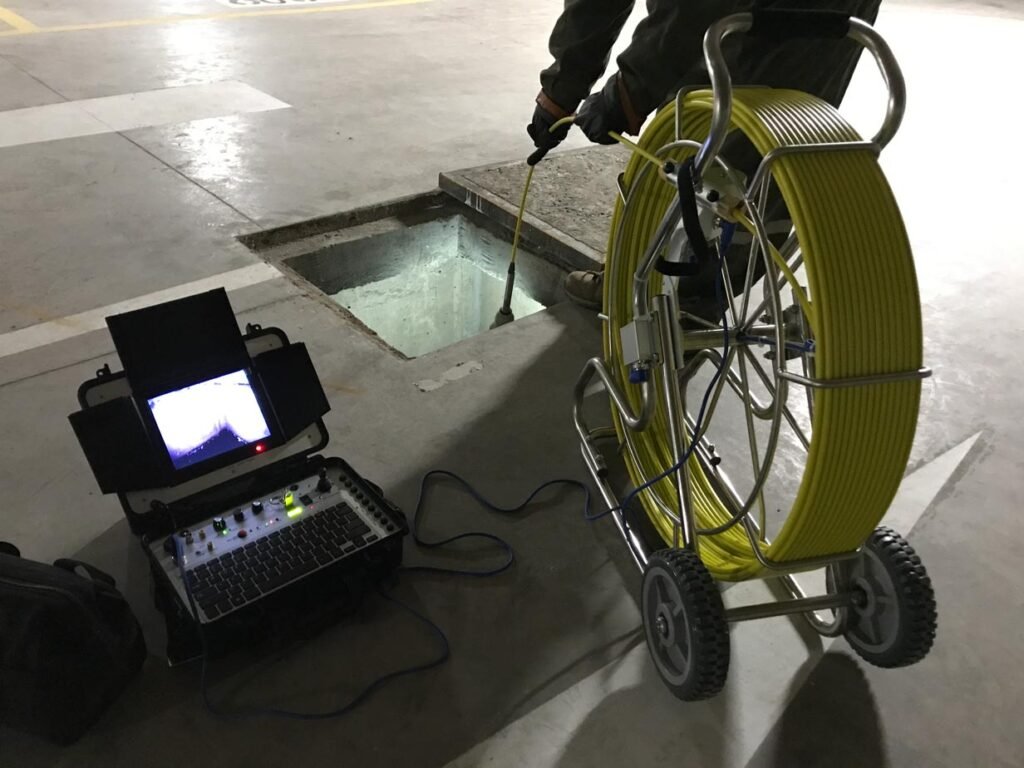
Step 1) We access the line
Common access points:
- an exterior or basement cleanout
- a main cleanout near the foundation
- sometimes removing a toilet (when there’s no cleanout access)
Step 2) We run the camera and record the findings
We document what we see and explain what’s actually causing the symptoms (not just “there’s a clog”).
Step 3) You get a clear plan
Depending on the condition, recommendations might include:
- targeted cleaning
- root removal + maintenance plan
- hydro-jetting (when appropriate)
- spot repair
- partial/full line replacement
How to prepare (homeowner checklist)
Use this checklist to make the inspection faster and more accurate:
1) Avoid heavy water use for 2–3 hours beforehand (best practice)
If possible, don’t run:
- laundry
- long showers
- dishwasher cycles
This helps the camera see standing water issues more clearly.
2) Locate and clear access to the cleanout
If you know where your cleanout is, clear the area:
- move storage bins away
- make sure there’s floor space to work
- keep pets away from the work zone
3) Write down your symptoms (this helps diagnosis)
- Which fixtures are affected?
- Does it happen during rain?
- How often does it occur?
- Any recent work done (snaking, drain cleaners, renovations)?
4) Tell us if you have a basement bathroom or ejector pump
Basement plumbing can change the troubleshooting approach.
5) If you’ve had sewage backup, don’t “clean it up and pretend it didn’t happen”
Mention it. Backups often indicate a bigger issue that will repeat until diagnosed.
Need answers fast? Call Quince Orchard Plumbing for a sewer camera inspection in Montgomery County, MD.
What happens after the camera inspection?
If the line is structurally sound
We may recommend a cleaning approach (and how to prevent repeats).
If we find damage or failure
You’ll usually have two tracks:
- repair the defective section, or
- replace/rehabilitate the line depending on severity and location
For confirmed structural issues, we handle next steps here: Sewer Line Repair & Replacement.
DIY vs calling a pro
DIY might be okay if:
- you’re just checking a short accessible drain line
- you understand you may not reach the main line
- you’re comfortable interpreting what you see (many homeowners aren’t)
Call a pro if:
- you’ve had backups, odors, or multi-fixture slow drainage
- you suspect roots, old cast iron scaling, or a belly
- you want accurate location + a real repair plan
Start here: Video Camera Sewer Inspection.
Service Area (Maryland only)
Quince Orchard Plumbing serves Gaithersburg (20878), Rockville, Germantown, North Potomac, Darnestown, Montgomery Village, Potomac (north), Derwood, Kentlands, and Washington Grove.