

A basement drain backup after heavy rain is one of the most stressful plumbing problems because it can happen fast and cause damage quickly. However, a few safe checks can reduce the mess and help you figure out whether the issue is a sewer surcharge, a clogged house line, or a basement system problem.
This guide is written for homeowners in Gaithersburg (20878) and nearby Montgomery County areas like Rockville, Germantown, North Potomac, Darnestown, Montgomery Village, Potomac (north), Derwood, Kentlands, and Washington Grove.
Basement drain backup: first steps during heavy rain
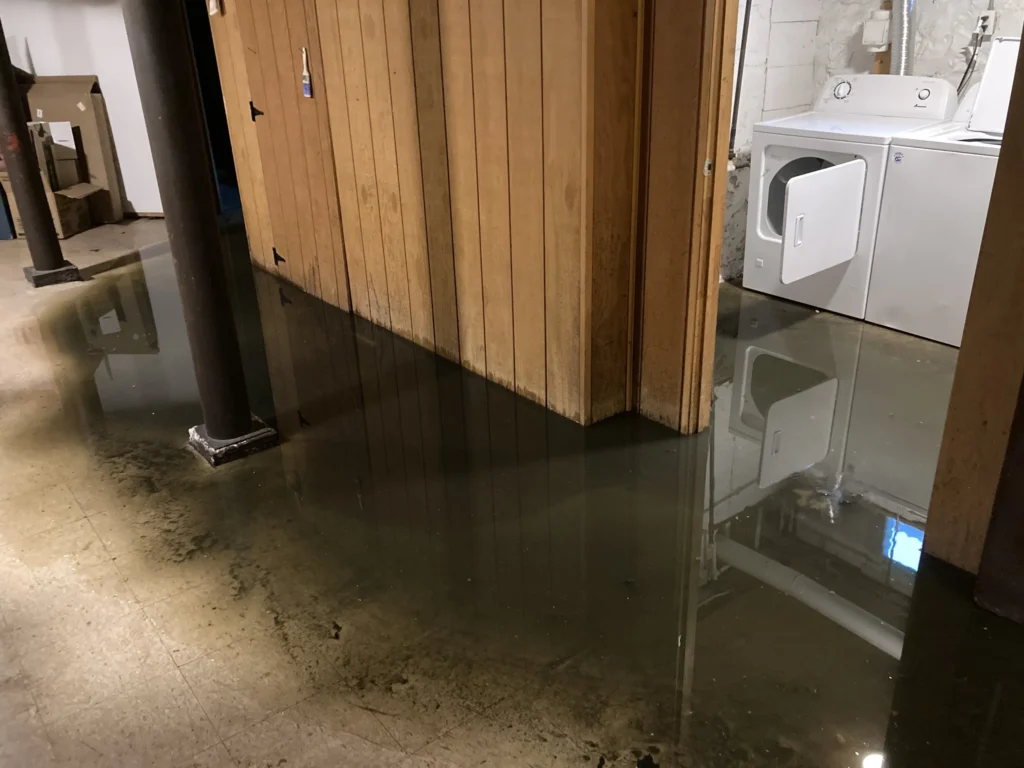
If you suspect a basement drain backup, take these steps right away:
- Stop using water in the home.
Avoid showers, laundry, dishwashers, and flushing toilets. Otherwise, you may push more water into a system that can’t drain. - Keep people and pets away from the area.
Since sewage can carry contaminants, treat any dirty water as unsafe. - Protect belongings if it’s safe to do so.
Move rugs, boxes, and anything porous off the floor. If the water looks clear and has no odor, you can use towels or a wet/dry vac. - Check whether other drains are affected.
If multiple fixtures are slow or gurgling, that usually points to a main line restriction. - Skip chemical drain cleaners.
They rarely solve sewer backups and can make service more dangerous.
Is it sewage or clear water?

Before troubleshooting, identify what’s coming up.
Signs it’s sewage (treat as urgent)
- Strong sewage odor
- Brown/gray water or visible waste
- Toilet bubbling or gurgling when other fixtures drain
- Multiple fixtures slowing down at the same time
Signs it might be clear water
- No odor
- Clear water that appears only around storms
- Water near foundation seepage areas or near a sump pit
If it’s sewage, call a plumber. If it’s clear water, act quickly anyway to prevent mold. For cleanup guidance after flooding, EPA has a helpful resource here: Flooded Homes Cleanup Guidance (EPA).
Need help with a basement drain backup after heavy rain? Call Quince Orchard Plumbing for a sewer camera inspection and clear next steps in Gaithersburg and Montgomery County, MD.
Basement drain backup after heavy rain: the most common causes
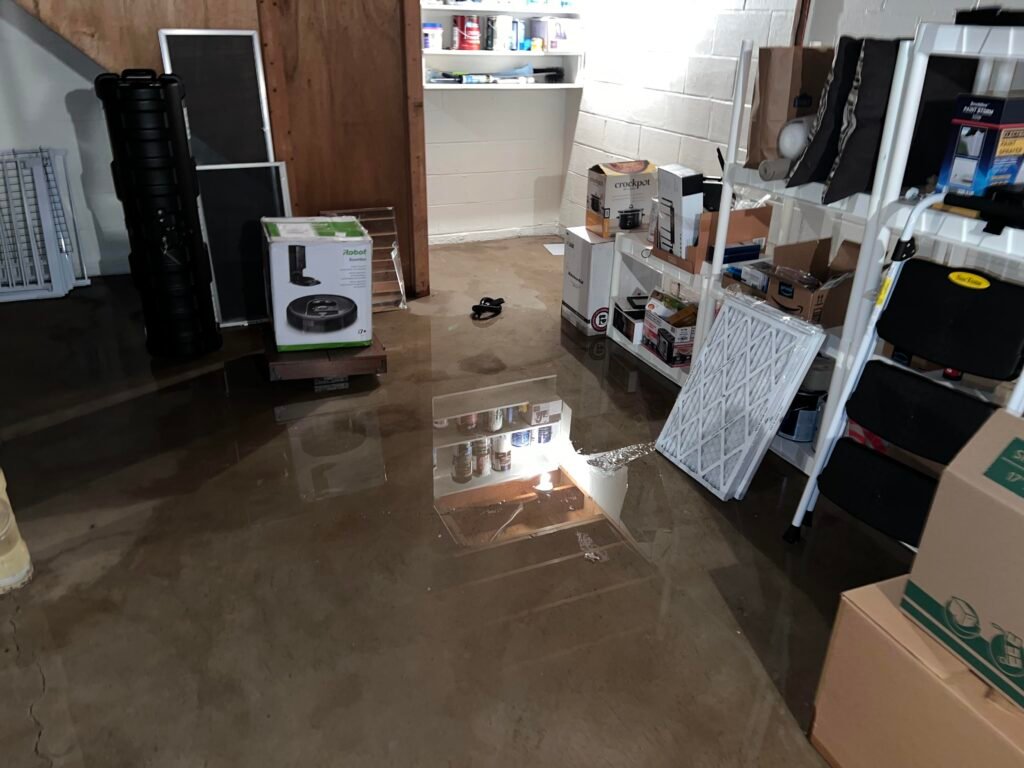
1) Municipal sewer surcharge (storm overload)
During intense rain, the sewer system can surcharge. As a result, wastewater may push backward into the lowest opening—often a basement floor drain.
Local note: WSSC Water explains sewer backups can be caused by issues in the main or the service line and responsibility can vary. Sewer Blockages & Backups (WSSC Water).
Clue: backups happen during or right after storms, then improve later.
2) Partial blockage in your house sewer line (roots, buildup, offset)
Heavy rain can increase flow and expose a restriction that’s “almost fine” on normal days. Therefore, you get backups when demand rises.
If you want certainty fast, schedule Video Camera Sewer Inspection.
3) Sewer line belly (sag) or grade issue
A belly is a low spot that holds water and solids. Snaking may help temporarily; however, the symptom often returns because the slope problem remains.
If the camera confirms structural defects, repairs usually fall under Sewer Line Repair & Replacement.
4) Basement bathroom ejector pump issue
If you have a basement bathroom, it may rely on a sewage ejector pump. When it fails, backups can appear quickly.
Clue: ejector alarm, sewage smell near the pit, or basement fixtures are the only ones affected.
5) Not a drain backup at all (water heater or supply leak nearby)
Sometimes the “backup” is actually water from a mechanical leak near the floor drain. If you see water around the heater, start with Water Heater Services.
Basement drain backup: quick checks you can do safely
These checks won’t solve everything, but they speed up diagnosis.
Check 1: Are multiple fixtures slow or gurgling?
- Yes: likely main line restriction or surcharge.
- No: could be localized or basement-system related.
2: Does the basement drain backup happen only after heavy rain?
- Only after rain: surcharge risk or infiltration patterns.
- Anytime: restriction/damage becomes more likely.
3: Locate the cleanout (don’t open if sewage is present)
If you know where the sewer cleanout is, clear access so a plumber can work faster.
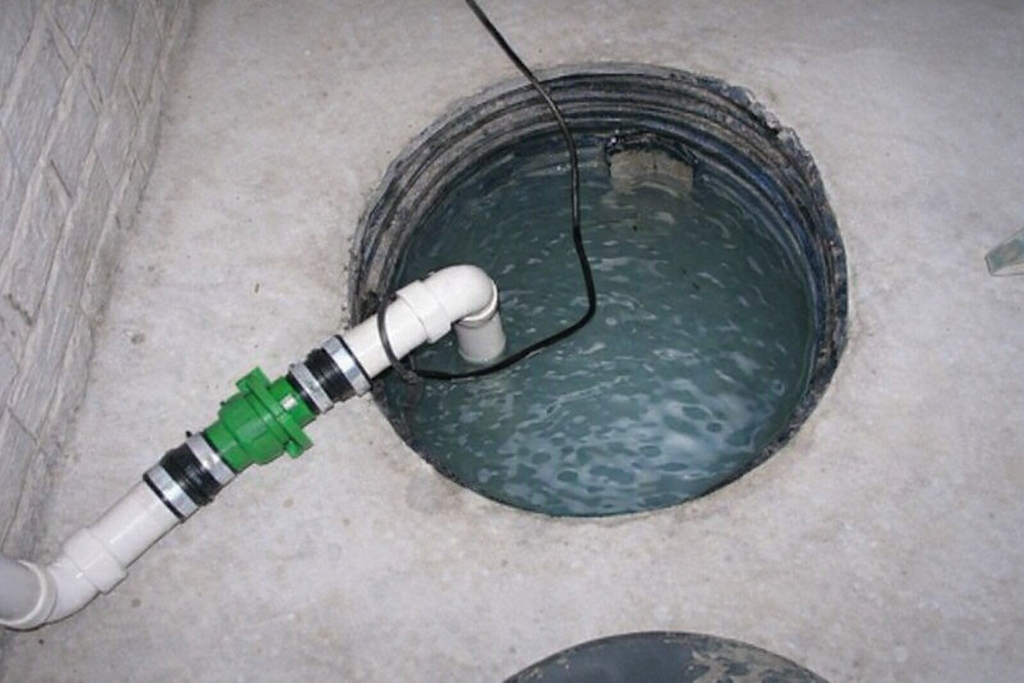
Check 4: Confirm the sump pump works (if you have one)
A sump issue can raise water levels and look like a drain problem. Meanwhile, a true sewer backup usually brings odor and dirty water.
When to call for a basement drain backup
Call immediately if:
- There’s sewage odor or dirty water
- Water is rising fast or spreading
- You see any electrical risk (near outlets/equipment)
- Backups have happened more than once in the last year
- More than one drain/fixture is affected
For diagnosis, start here: Video Camera Sewer Inspection.
If damage is confirmed, you’ll likely need: Sewer Line Repair & Replacement.
For general background on why sanitary sewers overflow and what contributes to it (wipes/FOG, system issues), EPA explains it here: Sanitary Sewer Overflow FAQ (EPA).
Need help with a basement drain backup after heavy rain? Call Quince Orchard Plumbing for a sewer camera inspection and clear next steps in Gaithersburg and Montgomery County, MD.
Service Area (Maryland only)
Quince Orchard Plumbing presta servicios en Gaithersburg (20878), Rockville, Germantown, North Potomac, Darnestown, Montgomery Village, Potomac (norte), Derwood, Kentlands y Washington Grove .