

If your kitchen sink won’t drain but other drains are fine, the clog is usually isolated to the kitchen branch line—most often the P-trap, garbage disposal, dishwasher connection, or a grease-heavy section of pipe. In Montgomery County, MD (Gaithersburg 20878, Rockville, Germantown, North Potomac, and nearby areas), we see this pattern constantly, especially in homes that use the disposal regularly.
The good news is that kitchen-only clogs are often fixable with the right steps. However, some symptoms point to a deeper blockage that needs professional tools. Below are 6 common causes, plus what actually works (and what to skip).
Kitchen sink won’t drain but other drains are fine: a 60-second diagnosis
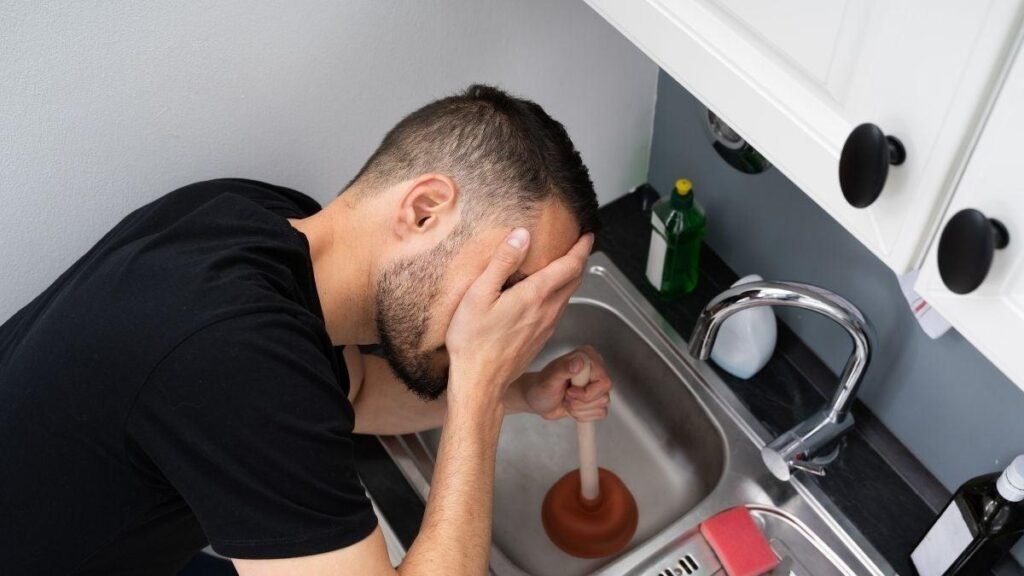
Before you take anything apart, run these quick checks:
- Does the disposal spin, or does it just hum? A hum usually signals a jam.
- Does the sink back up instantly or slowly? Instant backup often points to a close blockage (trap/disposal elbow).
- Does the dishwasher drain into the sink? If yes, the clog may be at the dishwasher tie-in.
- Do you hear gurgling in the sink or nearby toilet? That can hint at a deeper restriction.
- Are any other drains slowing down today? If yes, treat it as a bigger line issue.
If the problem is truly isolated, the fixes below will usually get you moving again.
Cause #1: A clogged P-trap (the most common kitchen-only blockage)
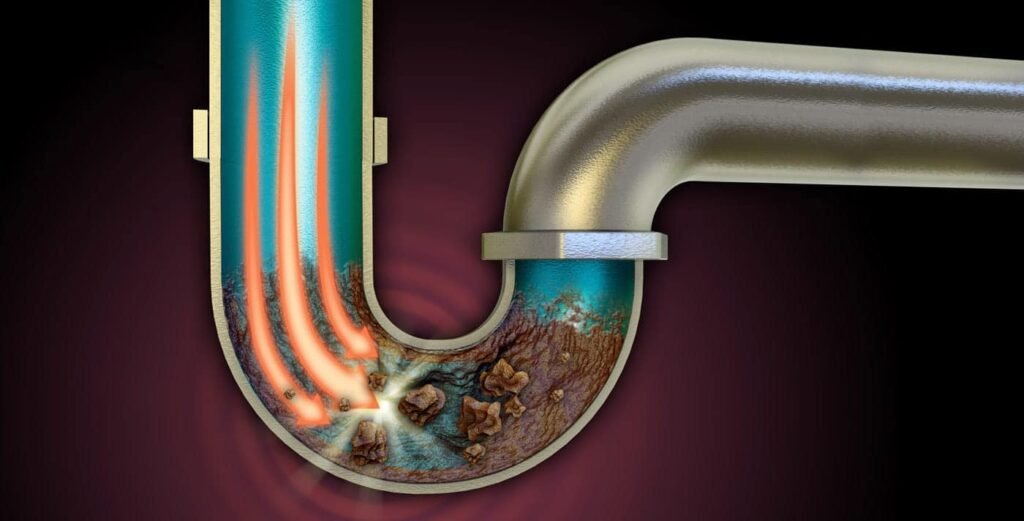
The P-trap is designed to hold water and block sewer gases. Unfortunately, it also catches grease, coffee grounds, and food debris. As a result, the sink drains slower—then stops.
What you’ll notice
- Water sits in the sink and barely moves
- A stale or greasy smell under the cabinet
- Other fixtures in the house drain normally
What actually works
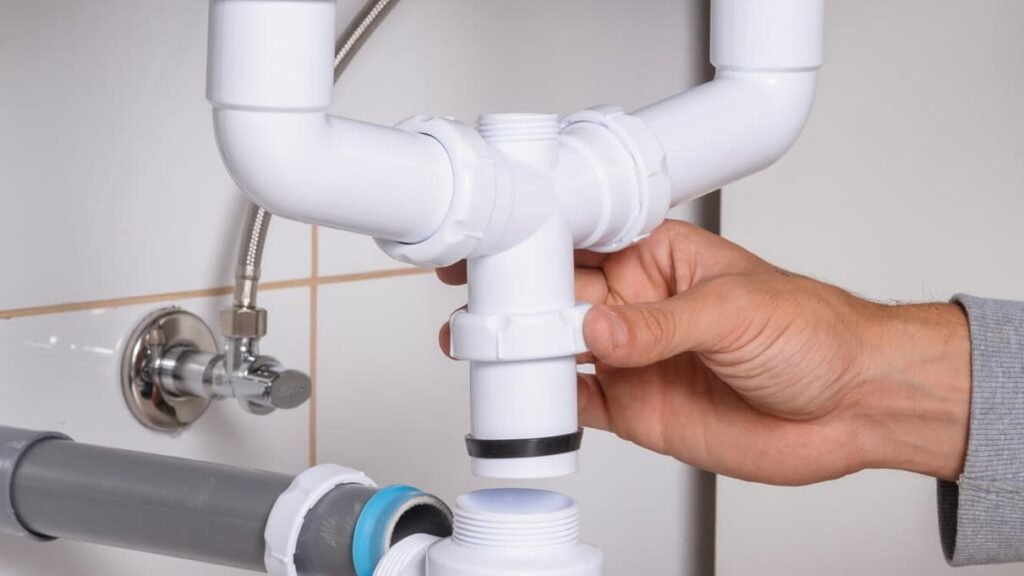
- Place a bucket under the trap
- Loosen the slip nuts carefully
- Remove the trap and clean it out completely
- Reinstall and test slowly for leaks
Pro tip: If the trap is packed with greasy sludge, buildup is often further down the line too. Therefore, you may need a snake next.
If your kitchen sink won’t drain but other drains are fine and DIY steps aren’t working, call Quince Orchard Plumbing for fast, local help in Montgomery County, MD.
Cause #2: A garbage disposal jam or clogged elbow
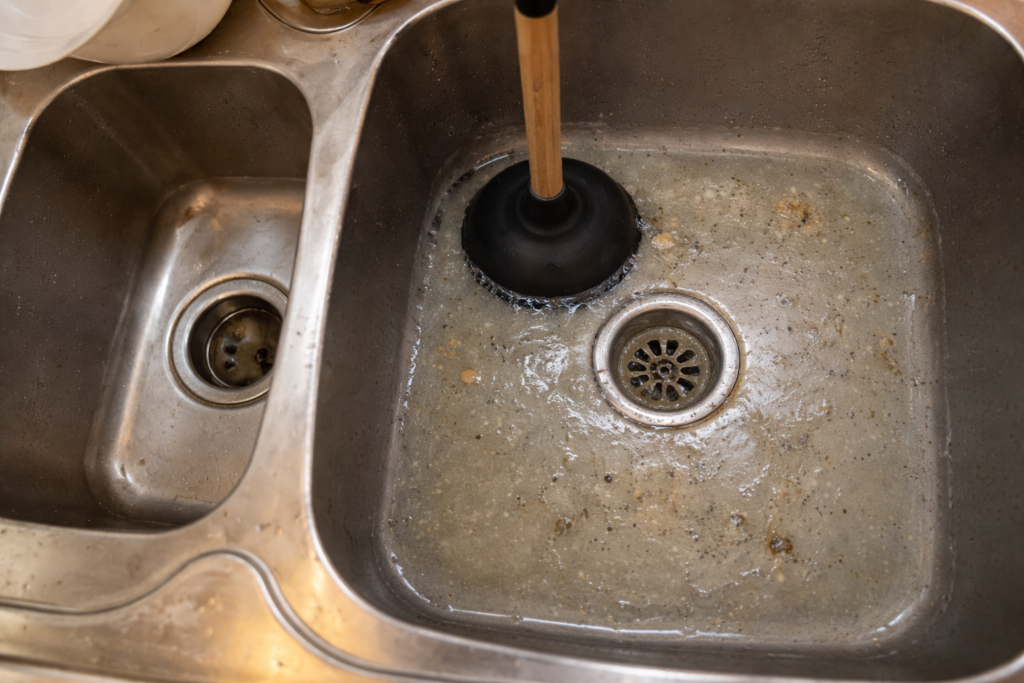
Disposals don’t “eliminate” food—many clogs happen right after the disposal where paste-like debris collects. Meanwhile, a jammed disposal can stop drainage entirely.
What you’ll notice
- Disposal hums but doesn’t spin
- Water backs up quickly when you run the faucet
- Reset button pops often
What actually works
- Turn off power (switch and/or breaker)
- Use the hex key underneath to rotate the flywheel
- Clear visible debris with tools (never hands)
- Press reset, then run cold water while testing
If the disposal still won’t clear and the sink stays full, the blockage may be in the elbow or branch drain.
Cause #3: Dishwasher tie-in blockage (or a knockout plug issue)
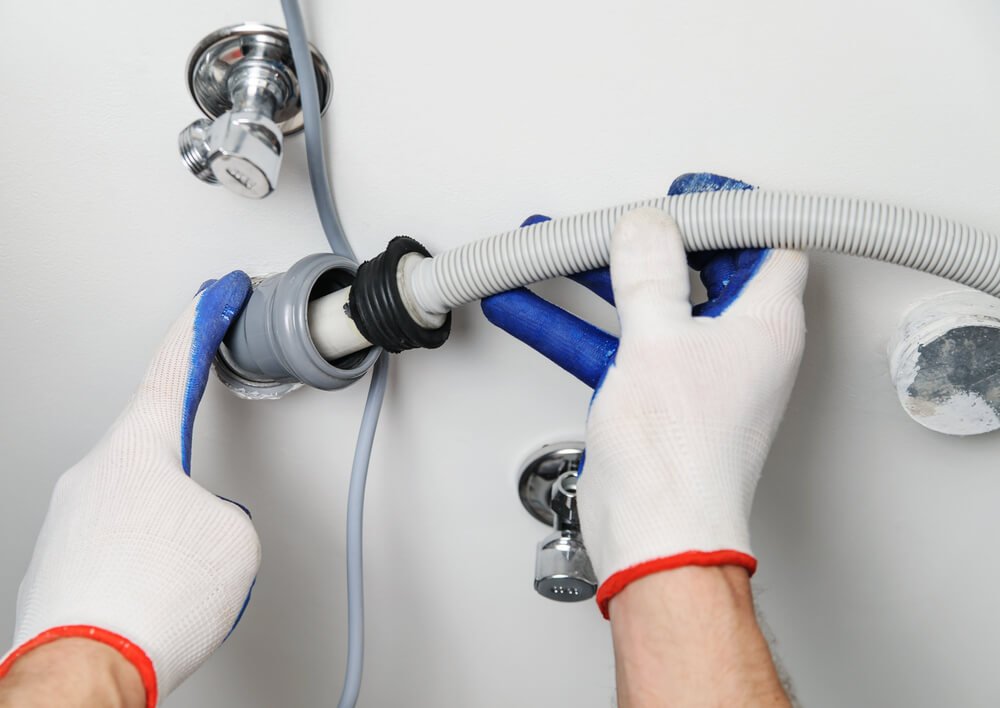
Many dishwashers drain into the disposal or tailpiece. Consequently, a blockage there can send dishwasher water back into the sink. Also, after a new disposal install, a knockout plug left in place can prevent dishwasher draining.
What you’ll notice
- Sink fills when the dishwasher runs
- Dishwasher drains poorly or leaves standing water
- Gurgling during the dishwasher drain cycle
What actually works
- Check the dishwasher drain hose connection
- Confirm the disposal knockout plug was removed (if applicable)
- Clear the disposal inlet and branch line if needed
Cause #4: Grease buildup in the kitchen branch drain (FOG)
Kitchen drains handle fats, oils, and grease (FOG). Over time, that coating narrows the pipe until one small debris event creates a full blockage. Because of that, grease clogs often recur if you only “poke a hole” through them.
Local guidance on FOG is helpful here: WSSC Water – Fats, Oils & Grease.
What you’ll notice
- Slow drains that worsen over weeks
- Temporary improvement after plunging, then re-clogging
- Strong odor from the drain area
What actually works
- Mechanical clearing (trap clean + snake) first
- Then flush with hot tap water + dish soap (not boiling)
- Prevention: stop pouring grease down the drain (cool it, container it, trash it)
Cause #5: Venting issue or a failing AAV (air admittance valve)
Every drain needs air to flow properly. If venting is restricted—or an AAV fails—the sink can drain slowly, gurgle, or stall. In other words, the “clog” might be airflow-related rather than solid debris.
What you’ll notice
- Gurgling sounds while draining
- Water level rises and falls oddly
- Occasional sewer smell near the sink cabinet
What actually works
- Confirm the AAV is present, accessible, and functioning (if your setup uses one)
- If the sink drains better with certain conditions, venting may be involved
- When in doubt, have a plumber verify venting safely (misdiagnosis here is common)
Cause #6: A deeper blockage in the kitchen branch (or an early main line warning)
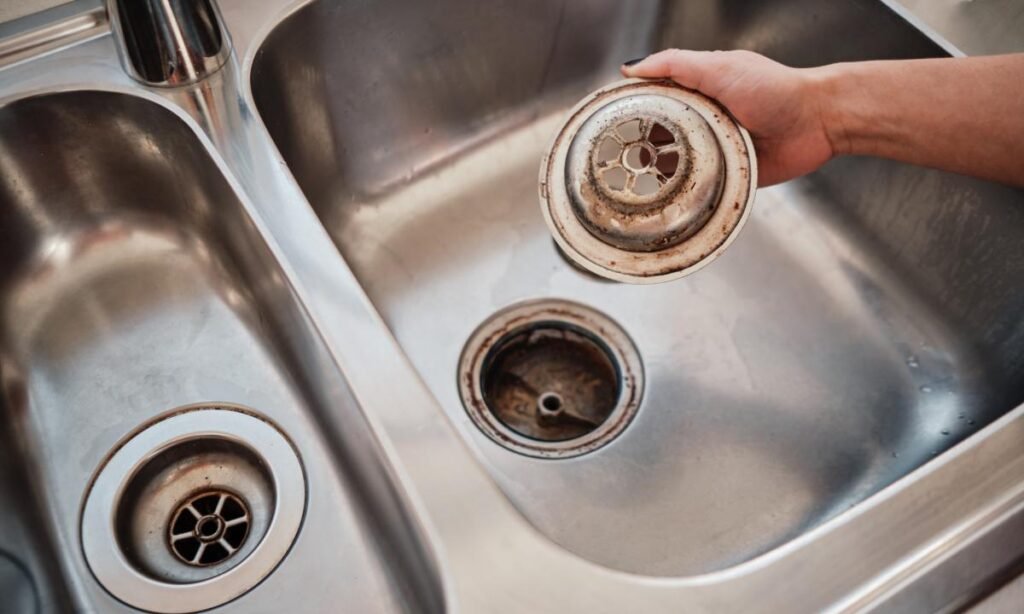
Sometimes the blockage is beyond the trap and disposal—deeper in the branch line before it joins the main. Additionally, a developing main line restriction can start with one “lowest or heaviest-use” drain showing symptoms first.
What you’ll notice
- Snaking the trap area doesn’t improve flow
- The clog returns quickly (days or weeks)
- You hear gurgling in a nearby toilet or see bubbles
- Another drain occasionally slows at the same time
What actually works
If the clog is deeper or recurring, the fastest path is to locate it precisely. That’s where Video Camera Sewer Inspection saves time, because it shows exactly what’s inside the line (grease, buildup, roots, belly, or damage). If the line is compromised, Sewer Line Repair & Replacement is the long-term fix.
What actually works (safe DIY order of operations)
When your kitchen sink won’t drain but other drains are fine, do the following in order:
- Plunge correctly
- Add 1–2 inches of water
- If double-basin, seal the other side with a stopper/wet rag
- Plunge in short bursts for 15–20 seconds
- Check the disposal
- Unjam + reset + cold-water test
- Clean the P-trap
- Bucket, remove trap, clean, reinstall
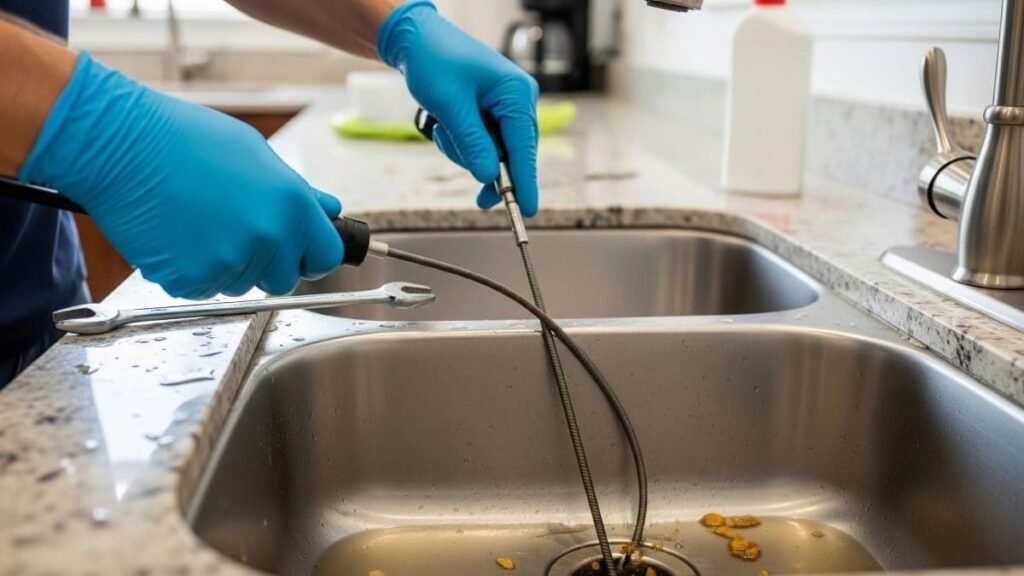
- Snake the branch line
- Hand auger into the wall pipe (slow feed + rotation)
- Pull back debris and flush
- Skip harsh chemical drain cleaners
They can burn skin, damage components, and complicate professional clearing. For safety context: Poison Control – caustic chemical risks.
DIY vs. call a plumber (quick decision)
DIY is usually fine when:
- The clog is clearly in the trap/disposal area
- Cleaning the trap improves drainage
- There’s no gurgling toilet or other drain involvement
Call a plumber when:
- The clog returns repeatedly
- Snaking doesn’t restore flow or hits a hard stop
- You suspect a deeper branch or main line issue
- You want a definitive answer (camera inspection)
If you want the “no guessing” route, Video Camera Sewer Inspection is typically the quickest way to confirm the real cause.
Prevention tips (so this doesn’t keep happening)
- Avoid pouring grease down the drain (ever)
- Use a sink strainer to catch debris
- Run cold water during disposal use and 10–15 seconds after
- Do a weekly hot tap water + dish soap flush
- Keep fibrous foods (celery, onion skins) out of the disposal
FAQ: Kitchen sink won’t drain but other drains are fine
Why is only my kitchen sink clogged?
Because kitchen drains collect grease and food debris, the clog often forms in the trap, disposal elbow, or kitchen branch line while other drains remain clear.
Should I use boiling water to clear a kitchen clog?
Hot tap water can help after mechanical clearing. However, boiling water can be risky for some piping and seals; therefore, use hot tap water + soap instead.
Why does the sink back up when the dishwasher runs?
That usually points to a partial blockage at the dishwasher tie-in, disposal connection, or branch line. A missed knockout plug is also common after new disposal installs.
If your kitchen sink won’t drain but other drains are fine and DIY steps aren’t working, call Quince Orchard Plumbing for fast, local help in Montgomery County, MD.
Service Area (Maryland only)
Quince Orchard Plumbing serves Gaithersburg (20878), Rockville, Germantown, North Potomac, Darnestown, Montgomery Village, Potomac (north), Derwood, Kentlands, and Washington Grove.