
When homeowners ask us about the best shower valves for consistent temperature, the reason is almost always the same: sudden hot/cold swings when someone flushes a toilet, runs the dishwasher, or turns on another faucet. In Montgomery County, MD—especially in Gaithersburg (20878), Rockville, Germantown, and North Potomac—these temperature shifts are common in older bathrooms, builder-grade setups, and remodels where the valve was never upgraded.
Fortunately, you don’t have to “live with it.” Instead, you can choose a shower valve designed to stabilize temperature, and then install it correctly so it performs the way it should.
In this guide, we’ll compare pressure-balance vs thermostatic valves, explain which one fits your home, and walk you through an install plan that prevents hidden leaks and repeat repairs.
Best shower valves for consistent temperature: what “consistent” really means
A steady shower temperature depends on two things working together:
- Stable hot and cold supply (pressure and flow)
- A valve that reacts correctly when the supply changes
In other words, a great valve can’t fully overcome a bigger supply problem. For example, if water pressure is unstable throughout the home (not just the shower), the best long-term fix may start upstream. In that case, our Water Line Repair team can help diagnose restrictions, failing shutoffs, or supply issues that affect multiple fixtures.
Best shower valves for consistent temperature: pressure-balance vs thermostatic
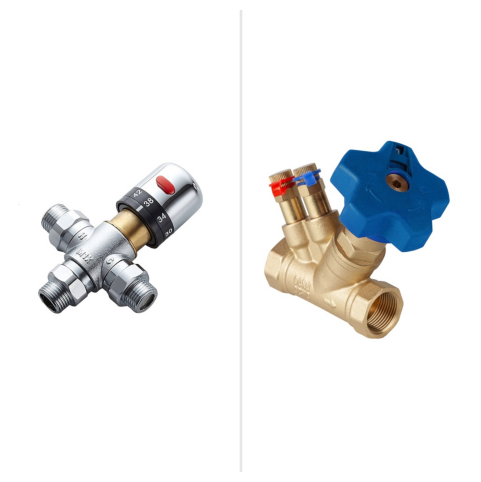
Both valve types can improve comfort. However, they solve the problem differently.
Pressure-balance shower valves (how they work)
A pressure-balance valve keeps shower temperature safer by balancing pressure changes between hot and cold. So, when cold pressure drops (someone opens another fixture), the valve reduces hot flow too. As a result, you’re less likely to get a sudden blast of very hot water.
Pros
- Typically more affordable
- Great protection against sudden “hot spikes”
- Common replacement option for standard remodels
- Usually simple controls (often one handle)
Cons
- Temperature stability improves, but it may not feel “perfect” in every scenario
- Some models limit volume control (depending on trim design)
Best for: most homes that want a reliable upgrade without going premium.
Thermostatic shower valves (how they work)
A thermostatic valve regulates the hot/cold mix to maintain a target temperature more precisely. Therefore, it typically offers better comfort during longer showers and in showers with multiple outputs.
Pros
- More precise temperature control
- Often separates temperature and volume control
- Excellent for multi-head systems or comfort-first remodels
Cons
- Higher upfront cost
- More complex planning for retrofits
- Still needs a healthy hot water source to shine
Best for: homeowners who want the most stable temperature experience and are investing in a higher-end shower.
Quick comparison: which one should you choose?
| Feature | Pressure-Balance | Thermostatic |
|---|---|---|
| Best benefit | Anti-scald stability | “Set and hold” temperature |
| Comfort | Good | Excellent |
| Cost | Lower | Higher |
| Controls | Often single-handle | Often separate temp/volume |
| Multi-head showers | Sometimes | Commonly preferred |
Practical takeaway: If your goal is safer, more stable showers for everyday use, a pressure-balance valve is often the best value. On the other hand, if you want premium comfort and dialed-in temperature control, thermostatic is usually the better choice.
Signs the shower valve is the real problem (not the showerhead)
A showerhead replacement won’t fix these issues:
- Temperature swings when other fixtures run
- Sudden bursts of hot water (scald risk)
- Handle that’s stiff, inconsistent, or difficult to set
- Dripping showerhead even when “off” (often a worn cartridge)
- Weak shower flow with normal flow elsewhere (could be valve/cartridge restriction)
Also, if hot water is inconsistent across the house—long waits, fast cooling, or temperature drift—your water heater may be part of the equation. In that situation, our Water Heater Services can help evaluate settings, recovery, and performance.
For safety context, you can reference: CPSC hot water scald safety.
Need help choosing or installing the best shower valves for consistent temperature? Call Quince Orchard Plumbing for fast, local help in Montgomery County, MD.
Install guide: how to replace a shower valve safely (rough-in to trim)
Replacing a shower valve is different from swapping a faucet because the valve sits inside the wall. For that reason, planning and leak testing are non-negotiable.
Before you start, confirm what you have
- Shower-only or tub/shower combo?
- Diverter at the tub spout or built into the valve?
- Access panel available (or will you open tile/drywall)?
- Pipe type: copper, PEX, or older galvanized?
Install steps (high-level, real-world sequence)
- Shut off the home’s water supply and drain the lines
- Open wall access (backside panel, drywall, or tile cut-out)
- Remove the old valve body and inspect the supplies
- Set the new valve to correct depth (critical for trim fit)
- Connect hot/cold supplies and the outlet(s) to shower/tub
- Pressure-test for leaks before closing the wall
- Secure the valve with proper bracing (prevents movement)
- Rebuild the wall and waterproof correctly
- Install trim, cartridge, handle(s), and set the anti-scald limit stop
Why depth matters: If the valve sits too deep or too shallow, the trim may not seal correctly. Consequently, you can end up with hidden moisture damage even if it “works.”
For a standards reference on temperature/pressure control valves, see: ASSE standards overview.
DIY vs. call a plumber (fast decision)
DIY can be reasonable when:
- You have easy access from behind the wall
- You’re confident with PEX/copper connections
- You can pressure-test properly
- You’re replacing like-for-like with a similar layout
Call a plumber when:
- Tile is involved and waterproofing must be perfect
- Old piping is corroded or restricted
- You’re upgrading to thermostatic or adding multiple outputs
- Pressure seems unstable across the home (supply-side diagnosis needed)
If pressure issues show up throughout the house, addressing stability first via Water Line Repair often saves time and money.
Troubleshooting: still getting hot/cold swings after replacement?
If you upgraded and the shower still isn’t stable, these causes are common:
1) Partially closed or failing shutoff valves
Sometimes shutoffs don’t open fully, and the flow becomes unpredictable. As a result, the valve can’t mix consistently.
2) Debris in the cartridge
After plumbing work, sediment can lodge in the cartridge. Therefore, the mixing behavior can drift until the cartridge is cleaned or replaced.
3) Water heater temperature and recovery issues
If hot water is inconsistent, the valve can’t “create” stable hot water. In that case, schedule Water Heater Services to verify safe temperature, delivery, and recovery. For DOE guidance on temperature settings, see: U.S. Department of Energy – water heater temperature.
4) Supply restrictions (older lines)
Older or partially restricted lines can cause uneven pressure. Consequently, the shower may change when other fixtures run.
Need help choosing or installing the best shower valves for consistent temperature? Call Quince Orchard Plumbing for fast, local help in Montgomery County, MD.
FAQ: Best shower valves for consistent temperature
Which is better for consistent temperature: pressure-balance or thermostatic?
Thermostatic usually provides the most consistent temperature. However, a quality pressure-balance valve is often the best value for most homes.
Will a thermostatic valve fix low shower pressure?
Not always. If low pressure is caused by restrictions or supply issues, you’ll need to fix the cause first. That’s why Water Line Repair can be the right next step.
Can a bad shower valve cause constant dripping?
Yes. A worn cartridge or damaged valve components can cause dripping even when the shower is “off.”
Service Area (Maryland only)
Quince Orchard Plumbing serves Gaithersburg (20878), Rockville, Germantown, North Potomac, Darnestown, Montgomery Village, Potomac (north), Derwood, Kentlands, and Washington Grove.