
A water heater expansion tank helps protect your plumbing from pressure spikes caused by thermal expansion. As a result, it can reduce relief valve dripping, noisy pipes, and wear on fixtures—especially in homes with a closed system.
Water heater expansion tank: what it does (and why you might need one)
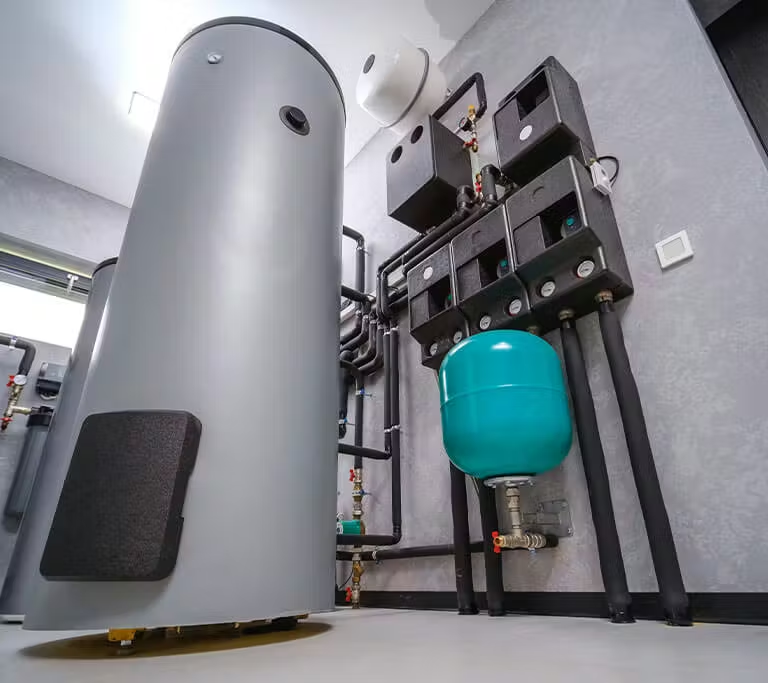
When water heats, it expands. In an open system, that extra volume can push back toward the supply. However, in a closed system (often created by a PRV, check valve, or backflow device), pressure can rise quickly and stress the water heater and connected fixtures.
For a helpful overview of water heating basics, see DOE:
https://www.energy.gov/energysaver/water-heating
If you want a pro to confirm your system type and install correctly, start here: Water Heater Services.
Water heater expansion tank: signs you may need one
You may benefit from an expansion tank if you notice:
- The T&P relief valve drips intermittently
- Pressure feels “spiky” or inconsistent
- You hear banging pipes after hot water runs
- You have a PRV or backflow device on the main line
Additionally, if whole-home pressure seems high or unstable, a PRV issue may be involved. In that case, start with Water Line Repair.
Water heater expansion tank sizing: how to choose the right size
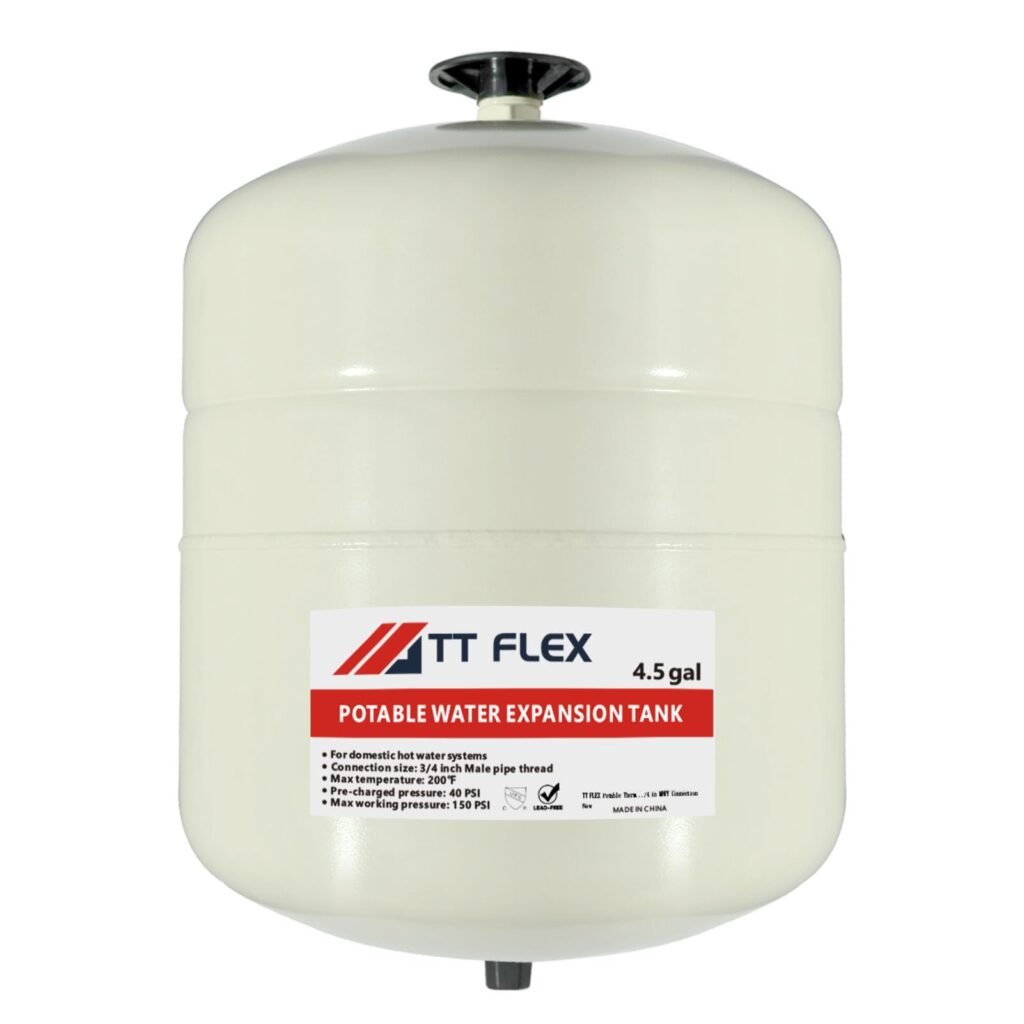
Sizing is mainly about:
- Water heater gallons
- Static water pressure (PSI)
- Whether you truly have a closed system
Step 1: Find static PSI
First, stop all water use. Then, check pressure at a hose bib with a gauge. Finally, write that PSI down.
Step 2: Match precharge to PSI
Next, set the expansion tank air precharge to match your home’s static PSI. Otherwise, the tank won’t accept expansion properly.
Step 3: Use a sizing chart (best practice)
Instead of guessing, use a proven chart. Amtrol’s sizing guide is a solid reference:
https://s3.supplyhouse.com/product_files/Amtrol%20-%20142-149%20-%20Sizing%20Guide.pdf
In general, many 40–50 gallon heaters pair with a smaller tank class, while larger heaters or higher PSI often need a bigger tank. Therefore, the chart is the safest way to avoid undersizing.
Need the right water heater expansion tank size and a clean install? Call Quince Orchard Plumbing for Water Heater Services in Montgomery County, MD.
5 reliable picks (2026)
Choose the correct size class first, and then pick the brand/model you can service easily later.
- Amtrol Therm-X-Trol (ST series)
- Watts PLT series (PLT-5 / PLT-12)
- A. O. Smith expansion tank (common 2-gallon class)
- Everbilt thermal expansion tank (common 2-gallon class)
- Rheem/Ruud expansion tank options (multiple size classes)
Water heater expansion tank install: what matters most
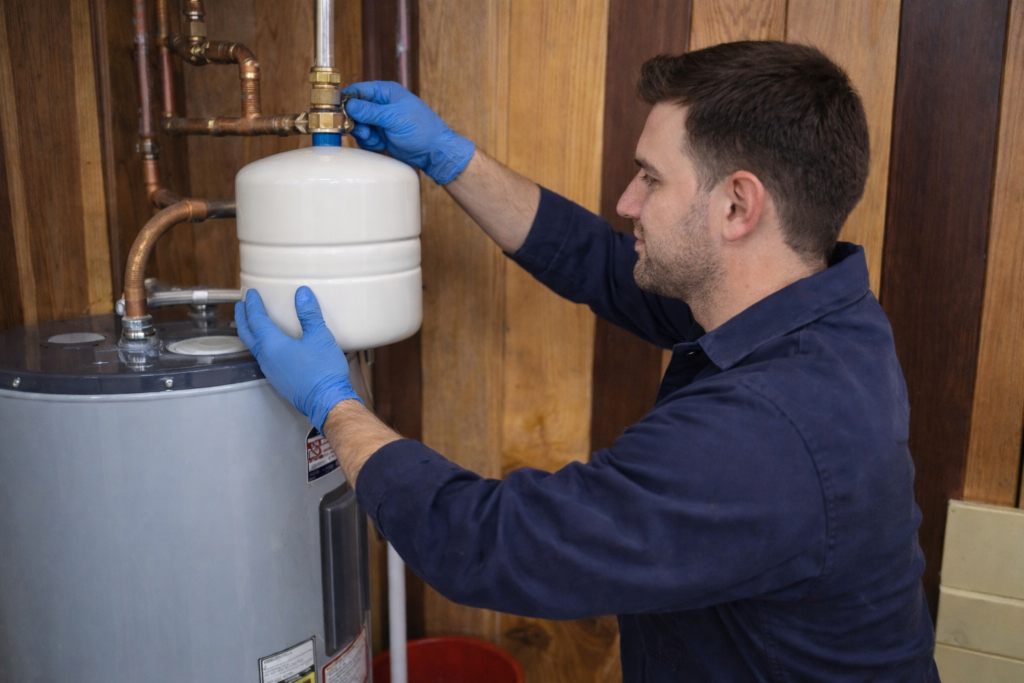
Even a correctly sized tank can underperform if the install is sloppy.
- First, set precharge correctly before pressurizing the system.
- Next, support the tank properly because it gets heavy when full.
- Additionally, place it where it’s serviceable (don’t bury it behind finished walls).
- Finally, confirm the real cause is thermal expansion—not a failing PRV or abnormal pressure.
If you suspect high pressure or a failing PRV, we can help through Water Line Repair.
Common mistakes to avoid
- Undersizing the tank (relief valve dripping continues)
- Skipping precharge adjustment (tank can’t accept volume)
- Hanging the tank unsupported
- Ignoring high pressure from a PRV issue
DIY vs call a pro
DIY may be reasonable if:
- You can safely shut off water/power
- You can measure PSI and adjust precharge
- You can mount and support the tank correctly
Call a pro if:
- You’ve had relief valve discharge, hammer, or pressure swings
- Shutoffs are old/corroded
- You want sizing done right the first time
Start here: Water Heater Services.
Need the right water heater expansion tank size and a clean install? Call Quince Orchard Plumbing for Water Heater Services in Montgomery County, MD.
Service Area (Maryland only)
Quince Orchard Plumbing serves Gaithersburg (20878), Rockville, Germantown, North Potomac, Darnestown, Montgomery Village, Potomac (north), Derwood, Kentlands, and Washington Grove.