
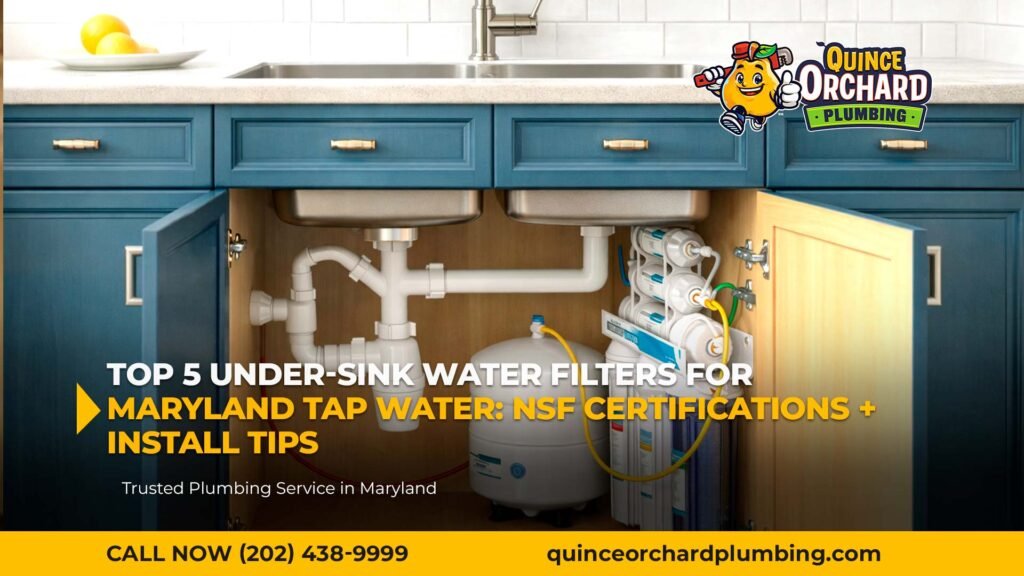
Under sink water filters Maryland homeowners choose can make a noticeable difference in taste and peace of mind—especially at the kitchen faucet. In Montgomery County areas like Gaithersburg (20878), Rockville, Germantown, North Potomac, and Kentlands, many families want better drinking water without committing to a whole-house system. Because the “best” filter depends on what you’re trying to reduce, this guide focuses on NSF certifications, practical buying criteria, and installation steps that prevent leaks and low flow.
Under sink water filters Maryland: start with your water quality baseline
Before you buy anything, it helps to understand what you’re treating. Water quality can vary by neighborhood and provider; therefore, your local Consumer Confidence Report (CCR) is the best starting point.
- Local utility reference (Montgomery County area): WSSC Water – Water Quality
- General guidance on drinking water contaminants: EPA – Drinking Water Information
Once you know whether your main concern is chlorine taste, sediment, lead risk, or “overall improvement,” choosing the right filter type becomes straightforward.
SF certifications that actually matter (skip the marketing noise)
Instead of relying on vague claims like “lab tested,” look for NSF/ANSI certifications. These standards verify what a filter can reduce and under what conditions.
Here’s the quick cheat sheet:
- NSF/ANSI 42: improves taste/odor (often chlorine) and reduces some aesthetic issues
- NSF/ANSI 53: health-related reductions (commonly lead, cysts, etc., depending on the filter)
- NSF/ANSI 401: selected “emerging contaminants” (pharmaceuticals/chemicals)
- NSF/ANSI 58: reverse osmosis (RO) systems (broad reduction profile; also creates wastewater)
- NSF/ANSI 372: lead-free materials compliance (important for components)
To verify a specific product claim, use: NSF Certified Products Search
Need help installing under sink water filters Maryland homeowners rely on—or dealing with low pressure, leaks, or line issues under the sink? Call Quince Orchard Plumbing for fast, local help in Montgomery County, MD.
Top 5 picks: under sink water filters Maryland homeowners typically prefer
Rather than pushing one brand, I recommend choosing the right filter category first. After that, compare models by certifications, flow rate, replacement cost, and cartridge availability.
1) High-performance carbon block (best for taste + strong daily flow)
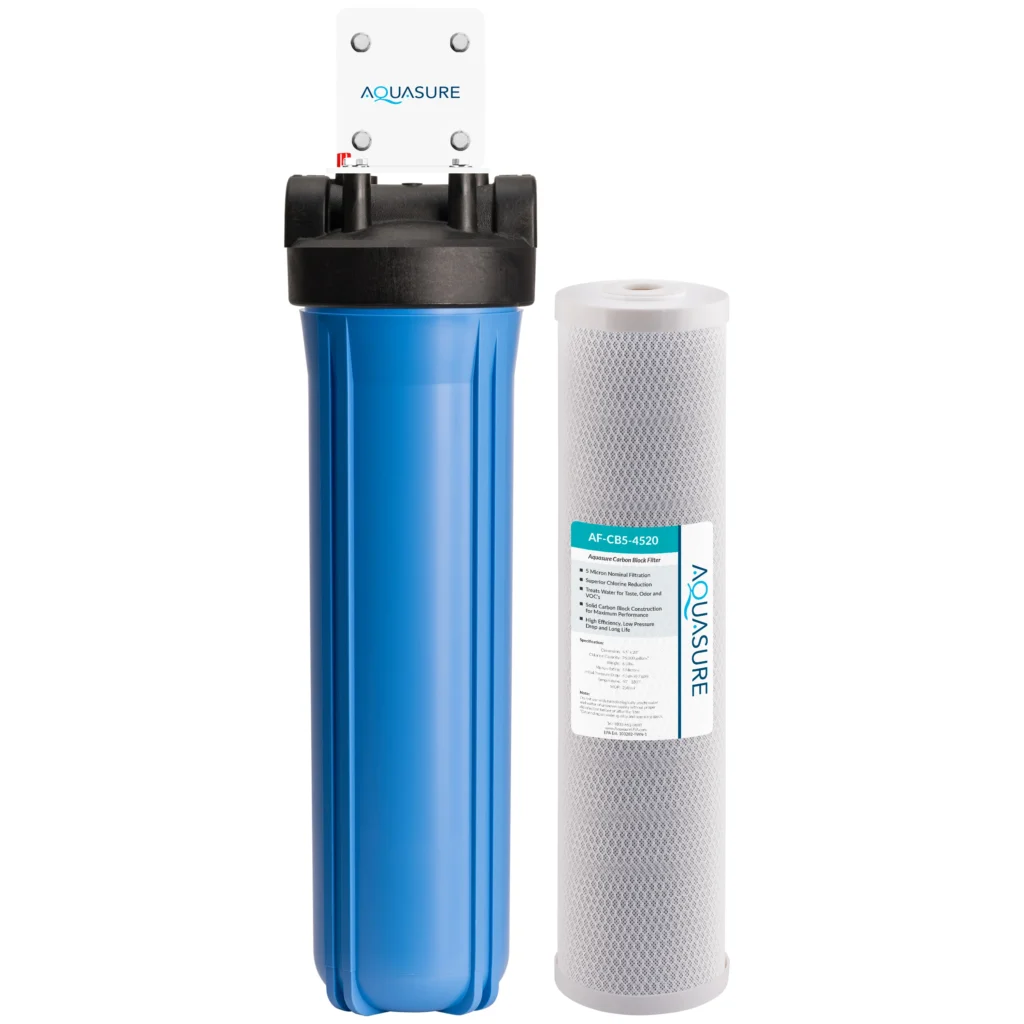
Best for: chlorine taste/odor, better flavor, and targeted reductions
Look for: NSF 42 + (ideally) NSF 53; add NSF 401 if you want broader coverage
Why it works: carbon block systems often keep a “normal faucet feel” without RO wastewater.
Install tip: mount the bracket into solid cabinet framing so vibration doesn’t loosen fittings over time.
2) Reverse osmosis (RO) system (best for broad reduction)
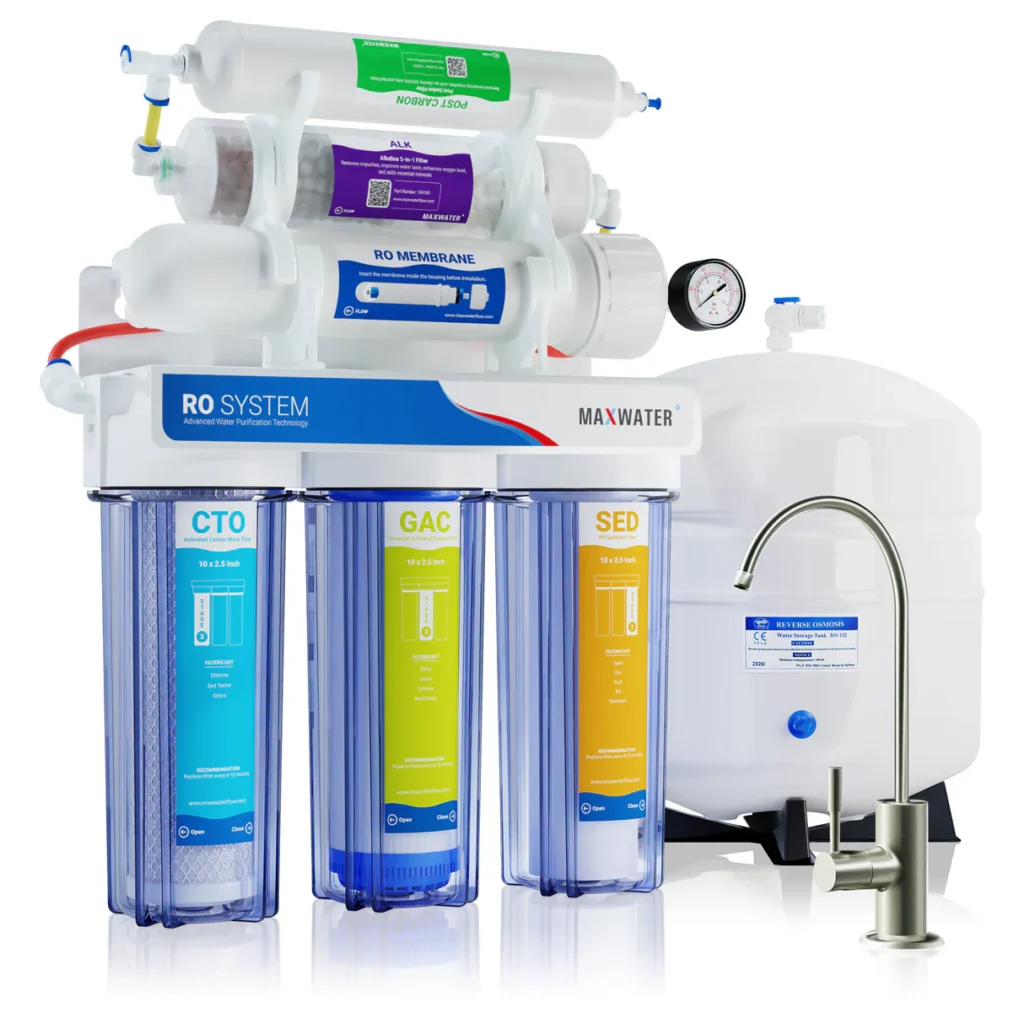
Best for: homeowners who want the most comprehensive under-sink option
Look for: NSF 58 + a clear maintenance schedule
Why it works: RO can reduce a wider range of dissolved solids and contaminants.
Trade-off: RO usually creates wastewater and may require a drain connection; consequently, installation quality matters more than with simple carbon systems.
If your home already struggles with low pressure, RO can feel slow. In that case, it’s smart to address supply stability first. When pressure issues affect multiple fixtures, Water Line Repair can help rule out restrictions before you invest.
3) Ultra-filtration (UF) (best “middle ground” without RO)
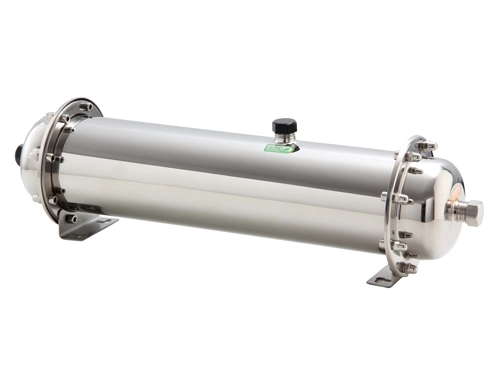
Best for: households that want excellent clarity while keeping strong flow
Look for: micron rating + relevant NSF claims (varies by model)
Why it works: UF can be a practical compromise—better filtration than basic systems, simpler than RO.
4) Quick-change cartridge systems (best for easy maintenance)
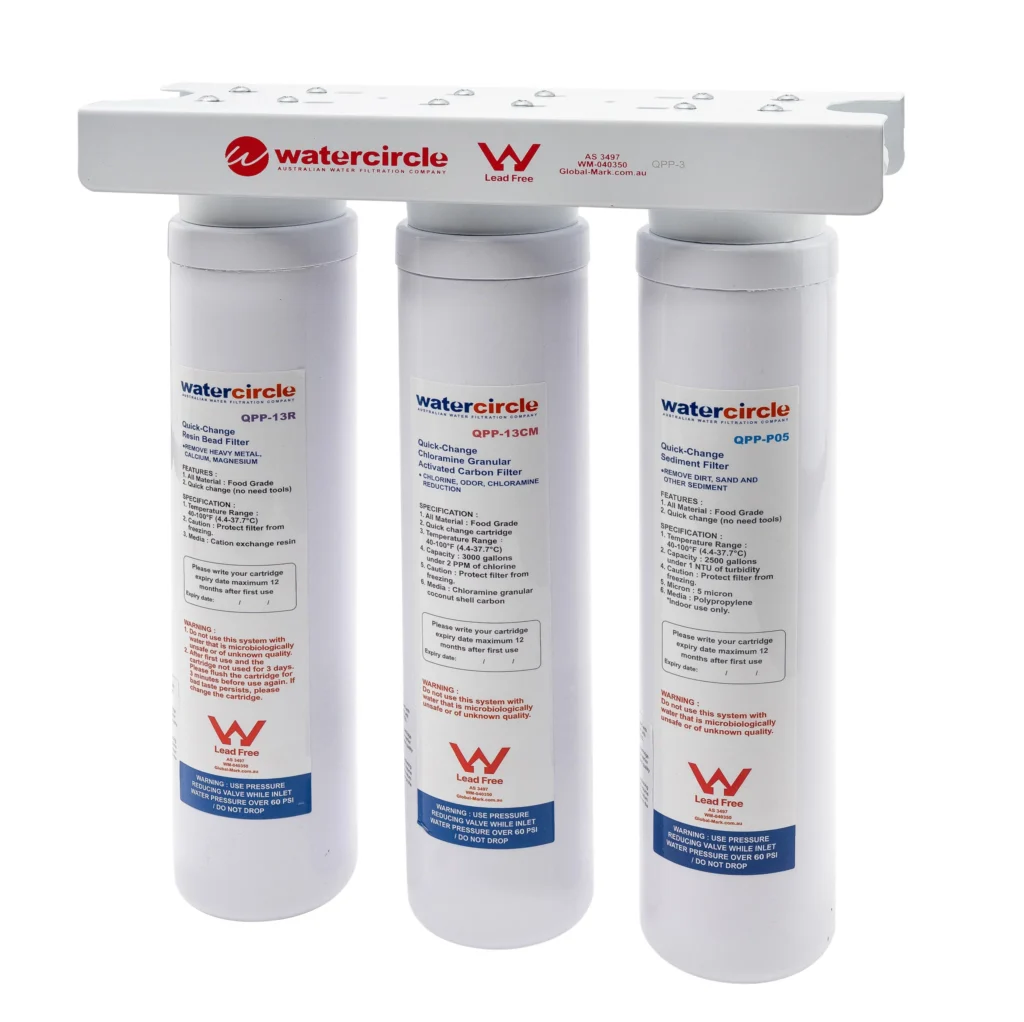
Best for: busy families, rentals, and anyone who wants clean swaps
Look for: NSF certifications + replacement schedule you’ll actually follow
Why it works: quick-change designs reduce mess and increase compliance.
Practical rule: pick a system with widely available cartridges. Otherwise, the “best” unit becomes a problem the first time replacements are hard to find.
5) High-capacity multi-stage systems (best for large households)
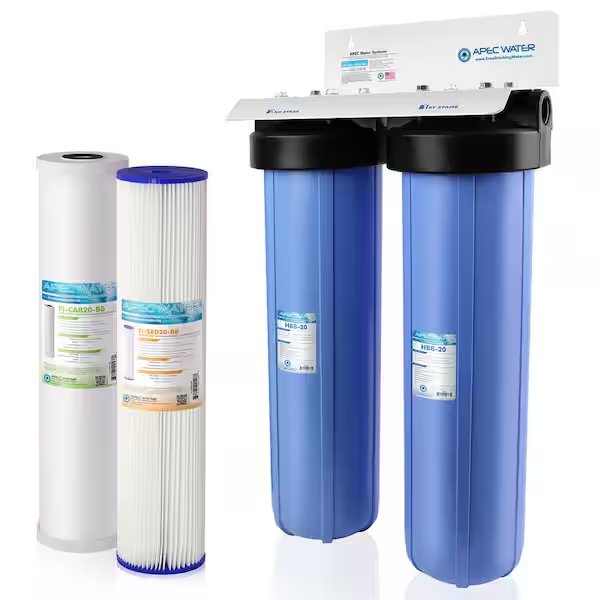
Best for: families that drink a lot of filtered water
Look for: high capacity rating + stable mounting design
Why it works: fewer cartridge changes and consistent performance over time.
Install tip: leave clearance for cartridge removal. In addition, avoid cramming the system into a corner where service becomes impossible.
Installation tips that prevent leaks, low flow, and cabinet damage
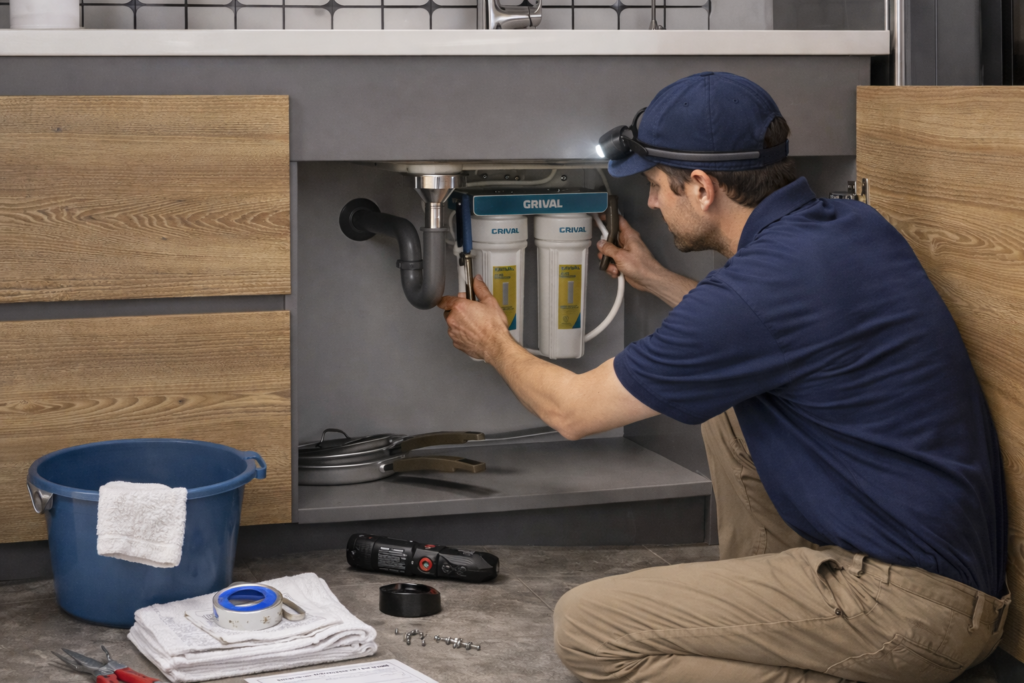
Most under-sink filter issues come from rushed installs. For that reason, use this checklist and you’ll avoid the most common mistakes.
Tools & supplies
- Adjustable wrench
- Bucket + towels
- PTFE tape (only if manufacturer allows)
- Drill + screws for mounting bracket
- Flashlight/headlamp
Under-sink installation checklist
- Shut off the cold water valve under the sink
- Open the faucet to relieve pressure
- Place a bucket under the shutoff and connections
- Inspect the shutoff for corrosion or dripping
- Mount the bracket into solid cabinet structure (not thin backing)
- Cut tubing cleanly and square (no crushed ends)
- Seat push-fit connections fully (you should feel it “set”)
- Turn water on slowly and check each joint for seepage
- Flush per manufacturer instructions (especially carbon filters)
- Re-check after 10–15 minutes and again later that day
Two “silent leak” warnings
- Slow drips can soak cabinet wood and create swelling or mold over time.
- Over-tightening threaded fittings can distort seals; instead, tighten to spec.
If the shutoff valve is old or won’t fully close, replacing it first often prevents a disaster. Similarly, if you suspect supply-side issues, Water Line Repair can help stabilize flow and pressure.
DIY vs. pro install (quick decision)
DIY is usually fine when:
- The shutoff valve works smoothly and doesn’t leak
- There’s enough cabinet space to mount and service the unit
- You’re comfortable checking for leaks and flushing correctly
Call a plumber when:
- The shutoff is stuck, dripping, or corroded
- You’re installing RO and need a proper drain connection
- Cabinet space is tight and routing lines is tricky
- You want the install pressure-tested and documented
If an RO drain connection or persistent odors point to drain issues, a Video Camera Sewer Inspection can confirm what’s happening inside the line. When repairs are needed, Sewer Line Repair & Replacement is the next step.
Need help installing under sink water filters Maryland homeowners rely on—or dealing with low pressure, leaks, or line issues under the sink? Call Quince Orchard Plumbing for fast, local help in Montgomery County, MD.
FAQ: Under sink water filters Maryland homeowners ask about
Do I really need NSF certification?
Yes. NSF certification is a more reliable benchmark than vague “tested” claims; therefore, it’s the best way to compare performance apples-to-apples.
Which is better: carbon, UF, or RO?
Carbon is great for taste and targeted reduction with strong flow. UF is a solid middle ground. RO usually offers broader reduction, although it can be slower and creates wastewater.
How often should I replace cartridges?
It depends on capacity and usage. However, many households replace every 6–12 months (or per manufacturer guidance) to avoid flow loss and performance drop.
Will an under-sink filter reduce water pressure?
It can if cartridges clog, the system has low flow capacity, or supply pressure is already weak. Consequently, flow specs and a healthy shutoff valve matter.
Service Area (Maryland only)
Quince Orchard Plumbing serves Gaithersburg (20878), Rockville, Germantown, North Potomac, Darnestown, Montgomery Village, Potomac (north), Derwood, Kentlands, and Washington Grove.